In today’s hyper-competitive digital landscape, brands must go beyond one-time promotions and adopt smarter strategies to nurture leads and build lasting customer relationships. Marketing automation plays a crucial role in this process, and while email drip campaigns have long been a popular choice, WhatsApp drip campaigns are rapidly surpassing them in engagement and effectiveness. With significantly higher open and response rates, WhatsApp offers a more direct, personal, and immediate way to communicate with customers.
WhatsApp drip campaigns allow businesses to send a series of pre-scheduled, automated messages based on time delays or user actions such as sign-ups, purchases, or inactivity. These campaigns help guide prospects through the customer journey by delivering relevant content at the right moment , whether it’s onboarding messages, product education, reminders, offers, or follow-ups. Because WhatsApp is a platform people check multiple times a day, messages are seen faster and acted upon more often than traditional emails.
Using WhatsApp for drip marketing also enables two-way communication, allowing customers to respond, ask questions, and engage in real time. This creates a conversational experience that builds trust and improves customer satisfaction. In this guide, we’ll explore what a drip campaign is, why WhatsApp is ideal for automation, how to set up an effective drip campaign, best practices to maximize results, and the tools that can help you automate and scale your workflows efficiently,turning casual leads into loyal customers.
What is WhatsApp Drip Campaign?
A WhatsApp Drip Campaign is an automated marketing strategy where businesses send a series of scheduled WhatsApp messages to users over a period of time based on specific triggers or actions. These triggers can include events such as signing up for a service, making a purchase, abandoning a cart, or remaining inactive for a certain duration. Instead of sending one-off messages, drip campaigns deliver timely, relevant content step by step, guiding users through different stages of the customer journey.
Drip campaigns are highly effective because they leverage WhatsApp’s high open rates and real-time engagement. Businesses can use them to onboard new users, educate customers about products, send reminders, share offers, and re-engage inactive leads. With personalization, automation workflows, and interactive messaging, drip campaigns help improve conversions, strengthen relationships, and maintain consistent communication without manual effort.
Why Use WhatsApp Drip Campaign for Engagement?
If engagement is your goal,whether that’s click‑throughs, conversions, or active customer interactions,drip campaigns deliver results that traditional channels struggle to match.WhatsApp is no longer just a messaging app,it’s a powerful business communication channel. Here’s why drip campaigns on WhatsApp are essential for modern marketing:
- Automated Follow-Ups and Efficiency: WhatsApp drip campaigns allow you to automate follow-ups, removing the need to manually message every individual, even for abandoned carts, reminders, or next-step prompts. This dramatically reduces repetitive work and improves consistency.
- Extremely High Engagement: WhatsApp boasts open rates as high as 98%,which far exceeds typical email open rates. This means your messages are not just delivered,they’re actually read.
- Enhanced Personalization: With drip automation, you can tailor messages based on user behavior, preferences, purchase history, or interaction stage. Personalized messaging fosters deeper connections and conversion potential.
- Saves Time and Improves Productivity: Once your drip sequence is set up, the system sends messages on schedule, freeing up your team’s time to focus on higher-value tasks.
- Better Brand Recall: Through relevant and timely messaging, customers remember your brand, even if they don’t purchase immediately. This keeps your business top-of-mind for future needs.
Step-by-Step Guide to Creating an Effective WhatsApp Drip Campaign
Setting up automated WhatsApp drips differs from sending manual broadcasts. Below are the practical steps,inspired by the AiSensy blog outline:
1. Choose a Reliable Automation Platform: WhatsApp’s native app doesn’t support advanced drip workflows, so start by selecting a WhatsApp Business API provider or automation tool that supports drip campaigns.
2. Register and Verify Your Business Account: Once you’ve selected the provider, register your business and connect your WhatsApp Business API.This typically requires verification with Meta (Facebook) Business Manager.
3. Create and Approve Message Templates: WhatsApp requires pre-approved templates for automated messaging. Go to your dashboard and design templates relevant to your campaign goals (welcome messages, reminders, offers, etc.).
4. Build the Drip Sequence: Using the platform’s campaign builder:
- Name your campaign for easy tracking.
- Select the pre-approved templates you created.
- Define triggers- e.g., user signup, purchase, inactivity, cart abandonment.
- Set time intervals between messages.
This ensures users receive messages at the right stage and time without overwhelming them.
5. Define Audience and Segments: Sync your existing database or implement a dedicated whatsapp crm software so audiences are grouped based on purchase behavior, user demographics, or lifecycle stages. By organizing your contacts this way, you can deliver highly personalized automated messages that resonate with each specific group’s needs.
6. Activate and Monitor:Turn on the campaign and start monitoring key metrics, like delivery rates, open rates, replies, and conversions, to optimize performance.
Essential Strategies for WhatsApp Automated Sequences
To maximize the impact of your drip campaigns, follow these strategic tips:
- Provide Opt-In & Opt-Out Options: Always ask users to opt into messaging, and make it easy for them to opt out. This builds compliance and trust, and reduces spam complaints.
- Segment Your Audience: Segment contacts based on interaction stage or behavior, this ensures messages are relevant and personalized.
- Keep Messages Relevant & Valuable: Each message should offer value, whether it’s a tip, personalized recommendation, or essential update. Avoid unnecessary repetition.
- Optimize Timing Between Messages: Too many messages too soon can overwhelm users; too few can lose momentum. Look at engagement patterns to find optimal intervals.
- Track Performance & Iterate: Monitor the campaign metrics and improve your sequences over time. Use insights to refine messaging, triggers, and timing.
- Keep Content Fresh & Non-Repetitive: Repetition reduces engagement. Use varied content formats like quick replies, multimedia, and interactive buttons where relevant.
A Quick Comparison: Best WhatsApp Drip Campaign Tools
| Tool | Best Use Case | Automation Capability | Targeting & Segmentation | Analytics Provided | Integrations | Pricing (USD approx.) |
| QuickReply.ai | D2C & ecommerce brands | Advanced lifecycle and event-based drips | Purchase behavior, tags, engagement levels | Conversion & revenue tracking | Shopify, WooCommerce, CRMs | $35–40/month |
| Wati | Sales & support teams | Trigger-based flows and chatbots | Tag-based contact grouping | Conversation and agent analytics | Shopify, HubSpot, Zapier | $49/month |
| AiSensy | Small businesses & startups | Scheduled and basic drip sequences | Tags and simple filters | Delivery, reads, replies | Shopify, WooCommerce | $12–15/month |
| Interakt | SMB ecommerce stores | Order updates and onboarding drips | Lifecycle-based segmentation | Engagement-focused reporting | Shopify, WooCommerce | $30–40/month |
Top 4 WhatsApp Drip Campaign Tools
A Drip Campaign Tools helps businesses automate a series of scheduled WhatsApp messages based on time or user actions. It enables brands to nurture leads, onboard customers, send reminders, and follow up automatically without manual effort. With personalization and automation workflows, these tools ensure the right message reaches the right customer at the right time.
1.QuickReply.ai
Rating: 4.8/5
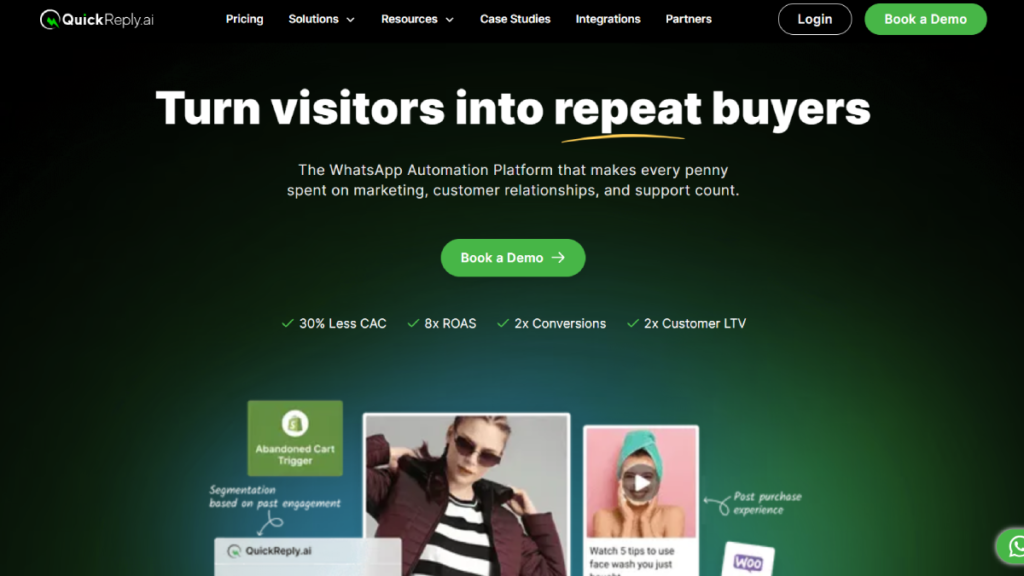
QuickReply.ai is a WhatsApp marketing and automation platform built primarily for D2C and ecommerce brands looking to scale customer engagement and revenue through lifecycle-based messaging. The platform is used by 1,000+ ecommerce brands across 25+ countries and leverages the official WhatsApp Business API to deliver high message reliability and compliance. WhatsApp campaigns created via QuickReply.ai typically benefit from industry-wide benchmarks such as 90–98% open rates and significantly higher click-through rates compared to email marketing. The tool enables brands to automate abandoned cart reminders, post-purchase follow-ups, re-engagement drips, and promotional sequences while tracking revenue attribution directly from WhatsApp interactions. Its focus on behavioral triggers and ecommerce events makes it a strong choice for performance-driven businesses.
Core Capabilities
- Automated WhatsApp Drip Campaigns: Schedule and trigger multi-step messages based on user behavior, ensuring timely engagement without manual follow-ups.
- Visual Bot & Human Handoff:Create intelligent chatbots with conditional logic, while seamlessly routing complex queries to live agents.
- Segmentation & Personalization : Target users based on behavior, purchase history, and engagement patterns for highly relevant and effective campaigns.
- Analytics & Revenue Tracking : Monitor delivery, open, click metrics, and attribute sales to campaigns to optimize performance and measure ROI.
2. Wati
Rating: 4/5
Wati is a WhatsApp Business API platform designed for sales-driven and customer support-focused teams that need structured automation combined with human collaboration. It supports trigger-based messaging, chatbot automation, and bulk broadcasts while allowing multiple agents to manage conversations from a shared inbox. According to WhatsApp usage data, businesses using automated chat flows can reduce response time by up to 60%, which aligns well with Wati’s focus on faster lead handling and customer service efficiency. The platform integrates with popular tools like Shopify, HubSpot, and Zapier, making it suitable for businesses that rely on CRM-led workflows and internal team coordination rather than pure ecommerce automation.
Core Capabilities
- Trigger‑Based Automated Messaging: Create automated WhatsApp workflows that send relevant messages based on user actions like sign‑ups, queries, and tag updates.
- Shared Team Inbox: Centralize all WhatsApp conversations in one dashboard, enabling multiple agents to respond, assign chats, and track responses efficiently.
- Audience Segmentation & Tagging:Group contacts using tags and custom filters, allowing targeted messaging that increases engagement and reduces irrelevant broadcasts
3. AiSensy
Rating: 4/5
AiSensy is a WhatsApp marketing solution targeted at small businesses, startups, and growing brands that want to adopt WhatsApp automation with minimal technical complexity. The platform highlights WhatsApp’s strong engagement metrics, including up to 98% open rates and 45–60% click-through rates, making it an effective channel for broadcasts and basic drip campaigns. AiSensy supports scheduled message sequences, chatbot-based interactions, abandoned cart reminders, and simple segmentation using tags. It also enables businesses to collect payments and generate leads directly inside WhatsApp, helping reduce friction in the customer journey for sales and support use cases.
Core Capabilities
- Automated Message Sequences: Schedule and trigger WhatsApp messages based on events like sign‑ups or cart abandonments.
- Contact Segmentation & Tagging:Group users using simple tags to send personalized outreach.
- Lead Capture Widgets & QR Codes: Grow your contact list with embedded website tools and interactive QR codes
4. Interakt
Rating: 4/5
Interakt is a prominent customer engagement and automation system favored by small businesses, especially those operating on Shopify and WooCommerce. It excels at streamlining repetitive communication like order tracking, cart recovery, and welcome sequences using the gupshup whatsapp api to ensure high delivery rates. Since social messaging sees far better open rates than traditional email, the platform enables brands to stay connected with buyers more effectively. Beyond automation, it provides a centralized dashboard for multiple team members to handle inquiries, blending sales, service, and logistics into a single workflow.
Core Capabilities
- Lifecycle Automation: Auto‑send messages at key stages like onboarding, delivery, and retention.
- Segmentation & Targeted Messaging:Filter contacts based on purchase behavior and engagement.
- Shopify & WooCommerce Integrations:Sync store data to personalize WhatsApp outreach
Conclusion
WhatsApp drip campaigns are one of the most effective ways for businesses to engage users through timely and personalized automation. Compared to email or SMS, using the whatsapp business cloud api once delivers significantly higher open and response rates. This makes it ideal for nurturing leads, onboarding users, recovering abandoned carts, and re-engaging inactive customers. When planned strategically, these sequences reduce manual follow-ups and improve the overall customer experience. They also help drive higher conversions across marketing, sales, and support teams.
The success of a message sequence depends heavily on the automation platform you choose. Tools like QuickReply.ai, Wati, AiSensy, Interakt, Respond.io, and Twilio offer different advantages for developers and marketers alike. Some focus on ease of use and affordability, while others provide advanced workflows, analytics, and enterprise-level integrations. The right platform should match your business size, growth stage, and automation goals. With the right infrastructure in place, WhatsApp can become a scalable and revenue-driven engagement channel. This gives businesses a long-term advantage in customer communication and retention.
FAQS
They are automated sequences of WhatsApp messages sent to users over time based on triggers or schedules.
Once a user enters the campaign (e.g., by opting in), messages are sent at predefined intervals or based on user actions.
They nurture leads, improve engagement, automate follow-ups, and guide users through the buyer journey.
Yes, advanced automation like drip campaigns typically requires API-based tools.