
Customer communication has evolved rapidly, with today’s customers expecting instant, personalized, and seamless interactions. WhatsApp has become one of the most preferred business communication channels due to its speed, directness, and real-time engagement.
However, as message volumes increase, managing conversations manually becomes inefficient. This is where WhatsApp CRM software plays a critical role by centralizing chats, automating routine responses, and organizing customer data to help teams deliver consistent and high-quality communication.
Whether for eCommerce, services, education, healthcare, or real estate, a dedicated WhatsApp CRM solution enables faster responses, smoother operations, and higher customer satisfaction. In this blog, we explore why businesses need WhatsApp CRM, review the top tools, and explain how to choose the right solution for long-term growth.
Why Businesses Need WhatsApp CRM Software
Customers no longer want to wait hours, or even minutes, for a response. While WhatsApp enables real-time communication, handling hundreds of chats manually can quickly reduce service quality. WhatsApp CRM software solves this by providing a structured system to manage conversations efficiently.
Key Reasons to Use WhatsApp CRM Software
As customer expectations rise, businesses must respond faster, communicate better, and stay consistent across every interaction. WhatsApp CRM software bridges the gap between high customer demand and operational efficiency. Here’s why businesses across industries rely on it.
- Fast Communication That Meets Modern Expectations
Over 70% of customers expect a response within 5 minutes when contacting a business online. WhatsApp CRM enables instant replies through automated messages, chatbots, and smart routing, cutting response time, boosting satisfaction, and building trust from the first interaction. - Centralized Customer Data in One Dashboard
All customer chats, contact details, order history, and interaction timelines are stored in a single dashboard. This ensures personalized, consistent responses and full conversation context, even when handled by multiple agents. - Higher Productivity Through Automation
Automation handles FAQs, order updates, reminders, payments, and follow-ups. Chatbots work 24/7, workflows auto-assign chats, and scheduled messages nurture leads, reducing manual workload by 40–60% and freeing teams for high-value conversations. - Team Collaboration on One WhatsApp Number
Multi-agent access allows sales, support, and marketing teams to collaborate on a single WhatsApp number. Internal chat assignments, notes, and ownership tracking prevent duplicate replies and speed up resolution. - Data-Driven Insights for Better Decisions: WhatsApp CRM analytics track delivery and read rates, response times, agent performance, conversions, and campaign results. Businesses using CRM insights effectively report up to 20% higher conversion rates and improved customer retention.
How to Choose the Best WhatsApp CRM Software
Not all WhatsApp CRM tools are the same. Choosing the wrong one can lead to poor deliverability, compliance risks, and limited scalability. Here are the key factors to consider before selecting a solution:
- Official WhatsApp Business API (Essential): Always choose a platform that uses the official WhatsApp Business API to ensure high deliverability, policy compliance, and account security. Unofficial tools may cause bans and loss of customer trust.
- Ease of Use: The CRM should be intuitive and easy to navigate. A simple interface reduces training time and improves team productivity.
- Automation & AI Capabilities: Look for chatbots, automated workflows, and AI-powered replies. Automation helps scale communication without losing personalization.
- Multi-Agent Support: For teams, the CRM should support multiple agents, role-based access, chat assignment, and internal tagging for smooth collaboration.
- Integrations: Choose a CRM that integrates with tools like HubSpot, Zoho, Shopify, WooCommerce, and helpdesk systems to ensure a unified customer experience.
- Transparent Pricing & Scalability: Evaluate subscription costs, message charges, and long-term scalability to avoid unexpected expenses as your business grows.
- Analytics & Reporting: Strong reporting on engagement, agent performance, conversions, and ROI is essential for continuous improvement.
Choosing the right WhatsApp CRM is a strategic decision. The right platform enables faster communication, smarter automation, better collaboration, and sustainable business growth.
Top WhatsApp CRM Software Solutions
Below are the best CRM software tools, explained in a consistent, professional format for easy comparison.
1. HubSpot WhatsApp Integration
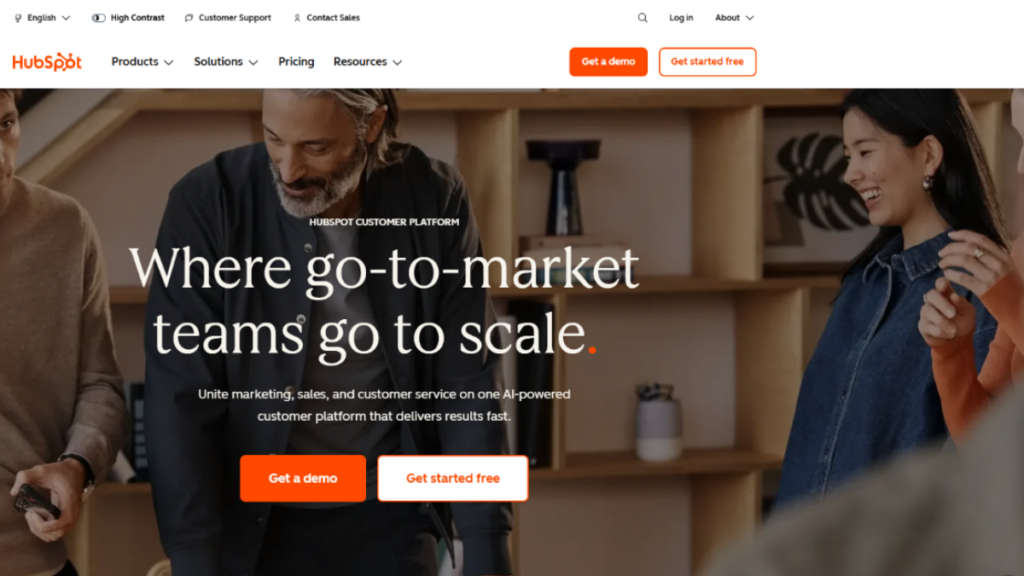
HubSpot WhatsApp Integration enables businesses to manage WhatsApp conversations directly within the HubSpot CRM platform, creating a unified communication and sales ecosystem that centralizes customer interactions and automates workflows.
At its core, HubSpot’s integration allows teams to send and receive WhatsApp messages, automate responses, and track every interaction across sales, marketing, and support channels. Conversations are linked to contact timelines, deals, and tickets, providing full visibility into customer behavior and enabling personalized engagement. With built-in analytics and contact segmentation, teams can nurture leads, coordinate follow-ups, and measure performance without toggling between tools.
Moreover, this integration supports WhatsApp templates, media messages, and personalized replies, thereby ensuring reliable and professional communication that helps businesses build trust and drive conversions.
Active Users: Over ~184,000+ businesses globally
Best For: Growing teams, Sales & Marketing alignment
Compatibility: HubSpot CRM, Marketing Hub, Service Hub
Pricing: Free tier available; paid plans from ~$20/month
Pros
✅ Integrated directly into the HubSpot ecosystem, no need to switch platforms
✅ Combines marketing, sales, and support workflows in one place
✅ Contact timelines link WhatsApp chats to deals and tickets
Cons
❌ Can be expensive as your team grows
❌ Some advanced automation features require higher-tier HubSpot plans
❌ Setup may be complex for non-technical users at first
2. Zoho CRM WhatsApp Integration

Zoho CRM WhatsApp Integration connects WhatsApp conversations with the Zoho CRM platform, streamlining communication and enhancing customer engagement. Unlike standalone messaging, this integration ensures that every chat is stored in customer records, giving agents full context before replying.
Businesses can send personalized messages, trigger WhatsApp notifications based on CRM events (e.g., lead creation or deal stage changes), and automate replies with templates. Zoho also supports document sharing, chat assignment, and automated follow-ups, which accelerate lead nurturing and improve support responsiveness.
With built-in performance tracking and contact insights, teams can optimize communication and close deals faster without leaving the CRM dashboard.
Active Users: ~250,000+ companies worldwide
Best For: Small to mid-sized teams, sales-driven organizations
Compatibility: Zoho CRM Suite, Zoho Desk, Zoho SalesIQ
Pricing: Starts at ~$14/user/month
Pros
✅ Deep integration with Zoho CRM and ecosystem tools
✅ Affordable pricing for small and growing teams
✅ Automates based on CRM events and triggers
Cons
❌ CRM interface may feel complex to new users
❌ Limited external integrations compared to specialised CRM platforms
❌ Advanced features require higher pricing tiers
3. Respond.io

Respond.io is a centralized messaging platform designed for high-volume WhatsApp CRM management. It provides a shared inbox where multiple agents can handle conversations, assign chats, and collaborate without missing context.
Respond.io supports advanced automation, including welcome messages, routing rules, lead qualification workflows, and real-time follow-ups. Its robust integration ecosystem syncs customer data with major CRMs, eCommerce platforms, and support tools to streamline operations across systems.
The analytics module helps teams track response time, agent productivity, engagement trends, and campaign effectiveness. With features like labels, broadcast messaging, segmentation, and approved WhatsApp templates, Respond.io empowers teams to scale communication efficiently and consistently.
Active Users: ~10,000+ businesses globally
Best For: Mid to large enterprises, omnichannel teams
Compatibility: Salesforce, HubSpot, Shopify, Zendesk, and more
Pricing: Starting at ~$79/month
Pros
✅ Centralized shared inbox for all messaging channels
✅ Powerful automation workflows and routing rules
✅ Excellent scalability for large teams and enterprises
Cons
❌ Higher starting price point
❌ Some features require technical setup or onboarding
❌ Interface may be overwhelming for non-technical users at first
4. Wati

WATI (WhatsApp Team Inbox) is a WhatsApp CRM software built on the official WhatsApp Business API that focuses on simplicity and automation. It provides a collaborative inbox where teams can coordinate responses, assign messages, and maintain consistent communication through a single WhatsApp number.
WATI’s automation tools include chatbots, bulk messaging, and workflow triggers. Customer profiles store interaction history, tags, and notes, enabling personalized responses and streamlined follow-ups. It integrates with platforms like Shopify, WooCommerce, HubSpot, and others, allowing eCommerce and service businesses to automate tasks like order updates, abandoned cart reminders, and customer care workflows.
The platform’s easy-to-use dashboard and analytics help teams monitor message performance, customer engagement, and team productivity.
Active Users: ~8,000+ businesses worldwide
Best For: Small & mid-sized businesses, eCommerce brands
Compatibility: Shopify, WooCommerce, HubSpot, custom integrations
Pricing: Starts at ~$39/month
Pros
✅ Very user-friendly and easy to learn
✅ Multi-agent inbox with automated message assignment
✅ Affordable pricing for small to mid-sized businesses
Cons
❌ Advanced automation features are limited compared to enterprise tools
❌ Analytics is less extensive than more advanced platforms
❌ Customization options are relatively basic
5. Gallabox
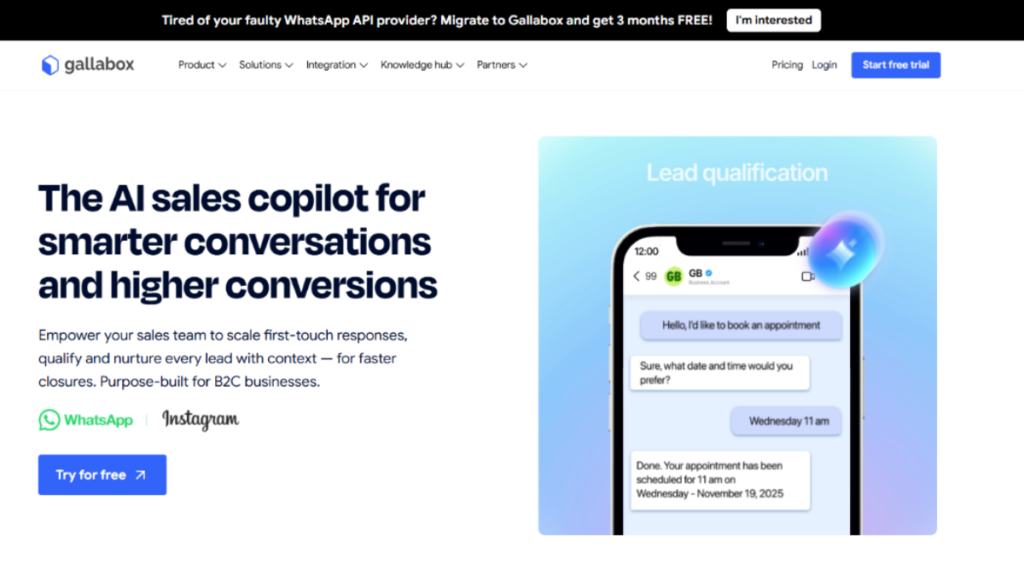
Gallabox is a WhatsApp CRM and automation platform designed to help sales and support teams manage large volumes of customer conversations efficiently. It provides a centralized inbox that enables teams to collaborate, assign chats, and respond faster with full visibility into customer interactions.
Gallabox offers no-code automation tools, including chatbots, auto-responses, lead capture workflows, and follow-up triggers. It supports WhatsApp broadcasts, template messaging, and contact segmentation, making it suitable for marketing and engagement campaigns.
The platform integrates with popular CRMs and business tools, allowing seamless data sync and workflow automation. Its reporting features give insights into agent performance, customer engagement, and campaign outcomes, helping businesses optimize communication strategies.
Active Users: 7,000+ businesses
Best For: Sales teams, customer support, growing SMBs
Compatibility: HubSpot, Zoho CRM, Google Sheets, Zapier, and more
Pricing: Starting at ~$29/month
Pros
✅ Easy-to-use interface with no-code automation
✅ Affordable pricing for small and mid-sized teams
✅ Strong WhatsApp broadcast and CRM features
Cons
❌ Limited advanced AI capabilities
❌ Omnichannel support is basic
❌ Reporting depth may be limited for large enterprises
6. Zoko
Zoko is a WhatsApp-first CRM platform built specifically for eCommerce brands, enabling them to manage sales, support, and marketing conversations at scale. It offers a shared team inbox where multiple agents can respond to customer queries, assign chats, and maintain full conversation context.
Zoko provides automation features such as abandoned cart recovery, order updates, auto-replies, and workflow-based messaging. With deep integration into Shopify and other eCommerce tools, it syncs customer data, orders, and purchase history directly into WhatsApp conversations, helping teams drive higher conversions.
Its analytics dashboard allows businesses to track campaign performance, response times, sales attribution, and agent productivity. Features like broadcast messaging, segmentation, message templates, and catalog sharing make Zoko a strong solution for WhatsApp-driven commerce.
Active Users: 5,000+ eCommerce brands
Best For: D2C brands, Shopify-based businesses
Compatibility: Shopify, WooCommerce, payment gateways, CRM tools
Pricing: Starting at ~$39/month
Pros
✅ Built specifically for WhatsApp eCommerce use cases
✅ Strong Shopify and order management integration
✅ Effective automation for sales and cart recovery
Cons
❌ Limited omnichannel support outside WhatsApp
❌ Advanced automation features on higher plans
❌ Less suitable for non-eCommerce businesses
7. Interakt

Interakt is a WhatsApp CRM software tailored for small and medium businesses, especially eCommerce and service-oriented companies. It provides a shared inbox, broadcast messaging, automation tools, and customer segmentation, all optimized for seamless WhatsApp communication.
Interakt enables automatic order updates, abandoned cart reminders, payment confirmations, and transactional alerts. Customer profiles store chat history, engagement data, and behaviors to deliver personalized follow-ups and improve retention.
The platform integrates with Shopify, WooCommerce, and other eCommerce systems, making it easy to automate post-purchase engagement, re-engagement campaigns, and promotional broadcasts. Analytics help teams monitor delivery rates, open statistics, and conversion performance.
Active Users: ~10,000+ businesses worldwide
Best For: eCommerce brands, small businesses
Compatibility: Shopify, WooCommerce, Zapier
Pricing: Starts at ~₹999/month (~$12–$15)
Pros
✅ Affordable and easy to use, great for SMBs
✅ Deep eCommerce integrations with Shopify and WooCommerce
✅ Automated order updates, cart reminders, and greetings
Cons
❌ Features are limited compared to larger CRM platforms
❌ Not built for complex enterprise workflows
❌ Reporting capabilities are basic
8. Twilio WhatsApp API
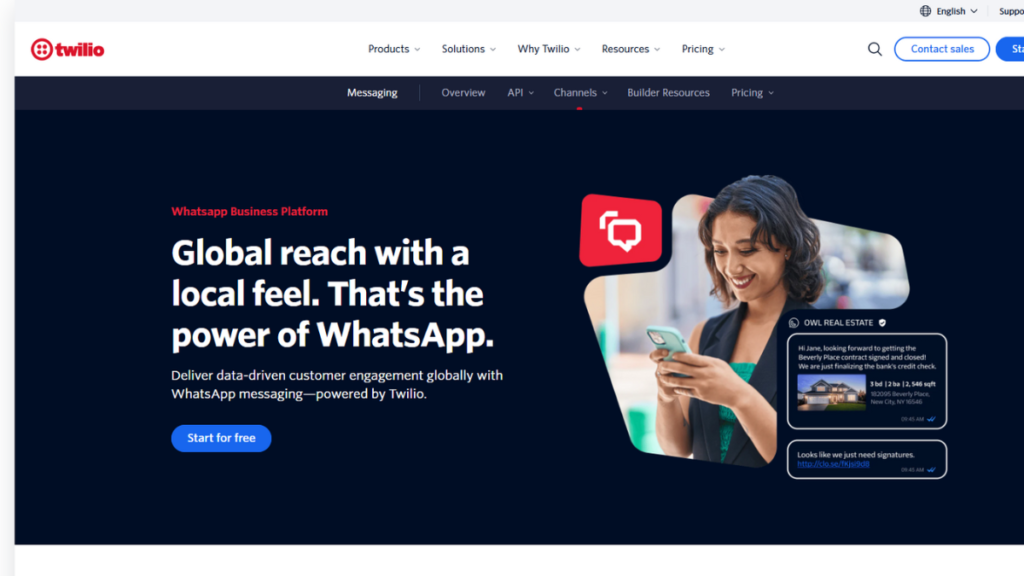
Twilio WhatsApp API provides highly customizable WhatsApp CRM capabilities by enabling businesses to build tailored messaging workflows within their existing systems. When compared with platforms like Gupshup WhatsApp API Twilio offers developers the flexibility to design bespoke communication solutions that fit unique business needs.
With Twilio, companies can integrate WhatsApp messaging into CRM systems like Salesforce, HubSpot, or custom software. It supports automated alerts, transactional updates, OTPs, chatbots, and complex event-based triggers. Developers can connect WhatsApp to databases, analytics tools, support platforms, and internal dashboards.
This flexibility makes Twilio ideal for businesses that require advanced automation, extensive custom logic, and enterprise-grade messaging capabilities while maintaining full control over the user experience.
Active Users: ~300,000+ developers and businesses
Best For: Enterprises, custom workflows, advanced integrations
Compatibility: Salesforce, HubSpot, custom APIs, data platforms
Pricing: WhatsApp messages start at ~$0.005 per message (usage-based)
Pros
✅ Extreme flexibility – fully customizable workflows
✅ Integrates with any CRM or internal database
✅ Powerful support for transactional and trigger-based messaging
✅ Enterprise-grade reliability and security
Cons
❌ Requires developer resources to build and maintain
❌ Not a plug-and-play interface, no native dashboard
❌ Pricing can increase with high message volume
Conclusion
As customer expectations rise, businesses need faster and more connected ways to communicate. WhatsApp has become a trusted platform for real-time engagement, but managing conversations at scale requires more than a basic messaging app. This is where WhatsApp CRM software becomes essential.
By combining WhatsApp with CRM capabilities, businesses can centralize conversations, automate workflows, and enable multi-agent collaboration. This allows teams to deliver consistent, personalized experiences across sales, support, and marketing while improving speed and efficiency.
In this blog, we explored why WhatsApp CRM matters, how to choose the right solution, and the best tools available for different business needs. Whether you’re a small team, a growing eCommerce brand, or an enterprise with advanced automation requirements, there’s a WhatsApp CRM designed to fit your goals.
Ultimately, choosing the right platform helps businesses improve response times, boost productivity, and build stronger customer relationships. In a digital landscape driven by speed and personalization, WhatsApp CRM is no longer optional, it’s a strategic advantage for long-term growth.
FAQ
WhatsApp CRM software is a system that integrates WhatsApp messaging with customer relationship management to track chats, leads, and customer data in one place.
To centralize conversations, automate engagement, improve response times, and manage customer interactions from a single dashboard.
Yes, most reputable CRM solutions use the WhatsApp Business API for secure and compliant messaging.
Yes, it supports automated replies, chatbots, drip sequences, and workflow triggers.