

Confused about shipping costs for your new Shopify store? You’re not alone 67% of cart abandonments happen due to unexpected Shopify shipping prices. Furthermore, shipping remains one of the biggest conversion killers in e-commerce. Therefore, understanding how to price shipping correctly becomes crucial for your store’s success. Moreover, the right shipping strategy can significantly boost your profit margins while keeping customers happy.
By the end of this guide, you’ll understand all Shopify shipping prices and configure them profitably. Specifically, we’ll cover types of shipping pricing models available. Next, we’ll explore how much carriers actually charge in 2025. Then, you’ll learn setup methods for different pricing strategies. Finally, we’ll share cost optimization techniques that protect your margins. Plus, you’ll see real-world examples with actual calculations to guide your decisions.
What Are Shopify Shipping Prices?
Understanding Shopify shipping prices starts with knowing what the term actually means. Essentially, it refers to the shipping cost structure within your Shopify store ecosystem. However, there’s an important distinction you must grasp immediately. Specifically, Shopify shipping prices involve two completely different costs that work together.
First, there’s what you charge customers at checkout. Then, there’s what you actually pay carriers for shipping labels. Consequently, the difference between these two numbers determines your shipping profitability. Moreover, Shopify handles shipping pricing through built-in tools and external carrier integrations. Therefore, you have flexibility in how you structure these costs.
The Two-Sided Shipping Cost Equation
Your customers pay the rates you set at checkout. Meanwhile, you pay carriers the actual shipping labels and fulfillment costs. Importantly, the profit margin lives in between these two numbers. Otherwise, miscalculating this equation leads to losses on every order. Thus, understanding both sides becomes essential for success.
Why Understanding Shopify Shipping Prices Matters?
Proper shipping pricing impacts conversion rates by up to 50%. Additionally, it directly affects your profit margins on every sale. Furthermore, customers remember their shipping experience for repeat purchases. Similarly, competitive shipping rates give you an edge over rivals. Consequently, mastering Shopify shipping costs becomes a strategic advantage. Therefore, investing time in this setup pays dividends long-term.
Breaking Down Shopify Shipping Prices: Types & Pricing Models
Different pricing models suit different business types. Therefore, understanding each option helps you choose wisely. Moreover, you can combine multiple models for maximum flexibility. Let’s explore each type in detail.
Flat Rate Shipping Prices
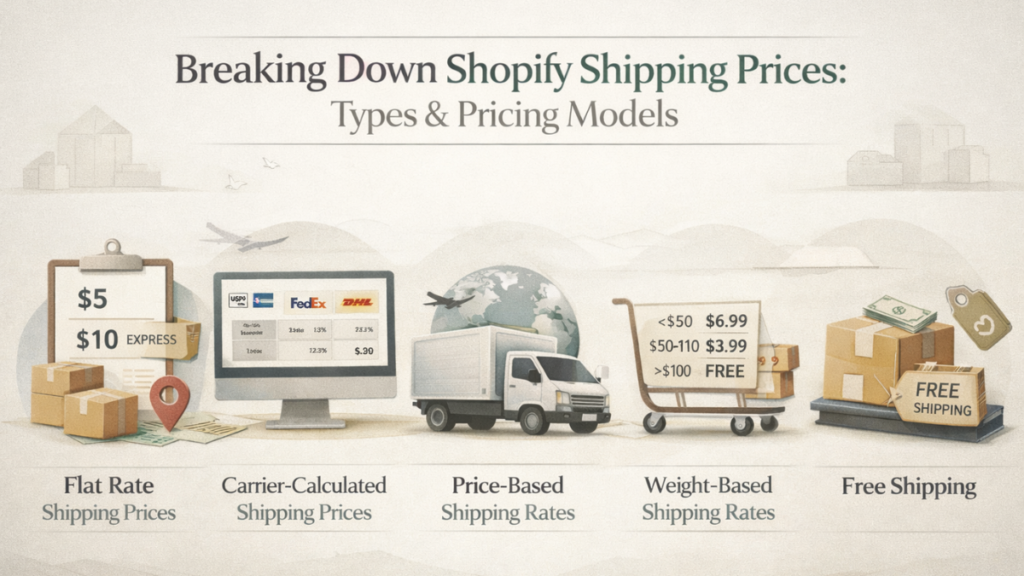
Flat rate shipping charges customers a fixed price regardless of weight, size, or destination. For example, you might charge $5 flat rate or $10 for express shipping. Essentially, this model offers simplicity for both you and customers. This approach works best for small, similar-sized products. Additionally, it creates a predictable customer experience at checkout. Furthermore, calculating profitability becomes much easier with flat rates. Consequently, many new store owners start with this model when they build a website on Shopify. Typically, standard flat rates range from $4.99 to $9.99. Meanwhile, express flat rates usually cost between $12.99 and $24.99. Moreover, free shipping thresholds commonly start at orders over $50-$100.
Pros: Simple setup, predictable costs, easy customer understanding, faster checkout process.
Cons: May lose money on heavy items, leaves money on table for light items, less flexibility.
Carrier-Calculated Shipping Prices
Carrier-calculated rates show real-time prices from USPS, UPS, FedEx, and DHL. Specifically, these rates are calculated based on actual weight, dimensions, destination, and delivery speed. Therefore, customers see exact carrier costs at checkout. This system integrates directly with carrier APIs. Then, it performs dynamic calculations during the checkout process. Moreover, several factors affect the final price shown to customers. These include package weight, destination distance, delivery timeframe, and current fuel surcharges. For instance, small packages weighing 1 lb typically cost $4-$8 domestically. Meanwhile, medium packages at 5 lb range from $8-$15. Similarly, large packages weighing 10 lb cost between $15-$25. Notably, international Shopify shipping prices run 2-3x higher than domestic rates.
Price-Based Shipping Rates
Price-based rates tier shipping costs according to cart value. For example, orders under $50 might cost $6.99 for shipping. Then, orders between $50-$100 cost $3.99. Finally, orders over $100 qualify for free shipping. Consequently, this model psychologically encourages larger order values.
Weight-Based Shipping Rates
Weight-based pricing establishes tiers based on package weight. Typically, 0-2 lb packages cost $5 to ship. Next, 2-5 lb packages cost $8. Finally, packages over 5 lb cost $12. Therefore, this model works best for varied product catalogs.
Free Shipping (And Who Really Pays)
Free shipping isn’t actually free; someone always pays. Specifically, you have three ways to offer free shipping Shopify options. First, you can build shipping costs into product prices. Alternatively, you absorb it as a marketing expense. Finally, you can set minimum order thresholds. For example, imagine charging $3 shipping on a $20 product. Instead, you could price the product at $23 with free shipping. Consequently, customers perceive greater value while you maintain margins. Additionally, learning to improve Shopify conversion rate often starts with mastering shipping costs.
Actual Shopify Shipping Prices from Major Carriers
Understanding actual carrier rates helps you price shipping strategically. Therefore, let’s explore what carriers charge through Shopify.
- Shopify Shipping Discounts Overview
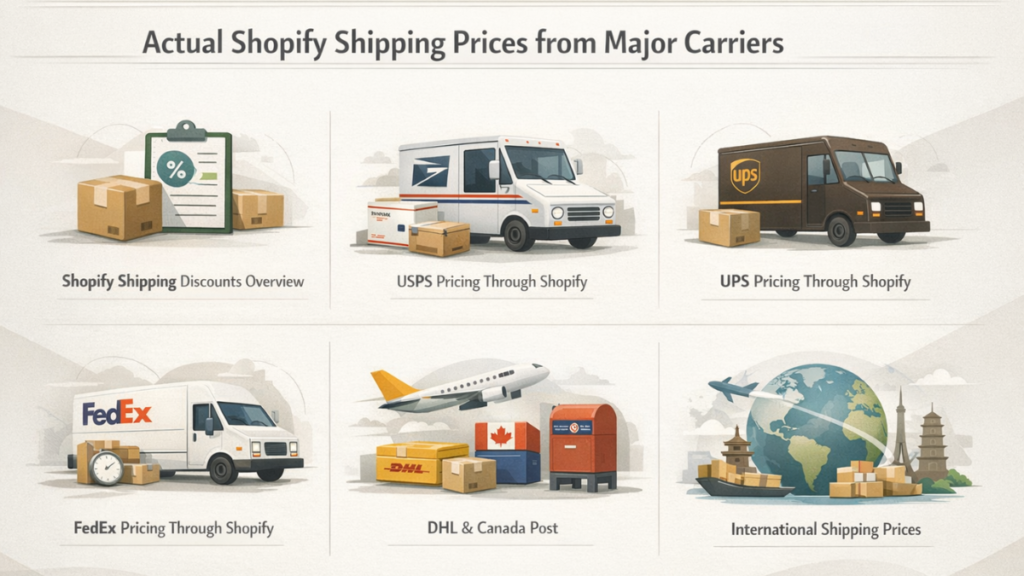
Shopify Shipping provides built-in discounts from major carriers. Specifically, you receive reduced rates compared to retail pricing. Moreover, discount percentages vary by carrier and your Shopify plan. However, even Basic Shopify plans access significant discounts. Therefore, using Shopify’s native shipping saves money immediately. - USPS Pricing Through Shopify
USPS Shopify integration offers exceptional value for small packages. Priority Mail typically costs $8-$15 with up to 88% discount. Meanwhile, Priority Mail Express ranges from $25-$35. Additionally, First Class Package shipping costs only $4-$7. Finally, Media Mail provides $3-$5 rates for qualifying items.
Comparison: Retail USPS rates cost 50-88% more than Shopify discounted rates. - UPS Pricing Through Shopify
UPS Ground typically costs $10-$20 with up to 72% discount off retail. Similarly, UPS 3-Day Select ranges from $15-$30. Moreover, UPS 2nd Day Air costs between $25-$45. Finally, UPS Next Day Air ranges from $40-$80 depending on distance. - FedEx Pricing Through Shopify
FedEx Ground typically costs $10-$22 for most packages. Meanwhile, FedEx 2Day ranges from $20-$40. Additionally, FedEx Standard Overnight costs between $35-$75. Consequently, FedEx works well for time-sensitive shipments. - DHL & Canada Post (For Eligible Stores)
DHL Express provides international shipping solutions with competitive rates. Similarly, Canada Post serves Canadian merchants with domestic and international options. However, availability depends on your store location and eligibility. - International Shipping Prices
International Shopify carrier rates multiply by 2-3x compared to domestic shipping. For instance, shipping to Canada typically costs $15-$30. Meanwhile, European destinations range from $25-$60. Similarly, Asia and Australia shipments cost $30-$80. Additionally, customers handle customs and duties separately.
Factors That Affect Your Shopify Shipping Prices
Multiple factors influence your final shipping costs. Therefore, understanding these variables helps you optimize spending. Moreover, knowing these factors prevents unexpected expenses later.
- Package Dimensions & Weight
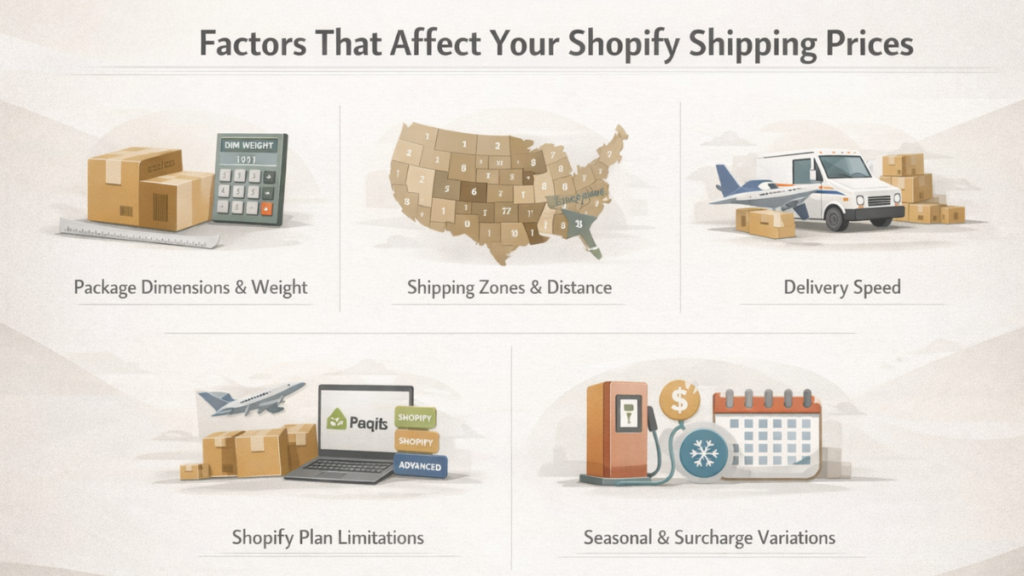
Carriers calculate dimensional weight using a specific formula. Specifically, they multiply length × width × height, then divide by a carrier-specific divisor. Consequently, shipping “air” significantly increases costs. Therefore, right-sizing packaging reduces unnecessary expenses. - Shipping Zones & Distance
Carriers divide the country into zones 1-8 based on distance. Specifically, local shipments cost less than cross-country deliveries. Meanwhile, international shipments cost substantially more. Therefore, your shipping origin location affects overall costs significantly. - Delivery Speed
Faster delivery commands premium Shopify shipping rates. For instance, ground shipping offers the most economical option. Meanwhile, 2-day service costs 2-3x more. Finally, overnight shipping costs 4-6x ground rates. Consequently, offering multiple speed options lets customers choose their preference. - Shopify Plan Limitations
Your Shopify plan determines available shipping features. Specifically, Basic Shopify only offers manual flat rates. However, carrier-calculated rates require a Shopify Plan or $20 monthly add-on. Meanwhile, the Shopify Plan includes USPS and UPS calculated rates. Finally, Advanced Shopify and Plus include all carriers plus third-party calculated rates. Therefore, choosing the right best payment provider for Shopify pairs well with plan selection. - Seasonal & Surcharge Variation
Carriers add peak season surcharges during holidays. Additionally, fuel surcharges fluctuate with gas prices. Moreover, residential delivery costs more than commercial addresses. Finally, remote area surcharges apply to rural destinations. Consequently, actual Shopify shipping costs vary throughout the year.
How to Set Up Shopify Shipping Prices
Setting up shipping correctly from the start prevents headaches later. Therefore, follow this systematic approach for best results. Moreover, proper setup ensures accurate Shopify shipping prices at checkout.
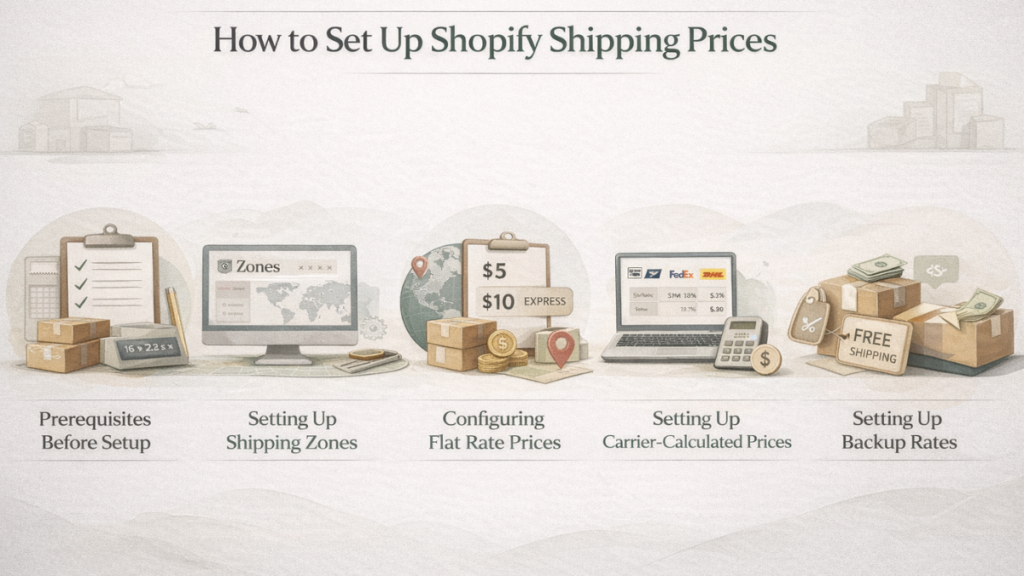
- Prerequisites Before Setup
First, gather product weights and dimensions for your entire catalog. Next, confirm your shipping origin address accuracy. Then, decide on packaging materials you’ll use regularly. Finally, determine your overall business shipping strategy. Consequently, this preparation streamlines the setup process. - Setting Up Shipping Zones
Navigate to Settings, then click Shipping and Delivery. Next, create your domestic shipping zones first. Then, add international zones if you ship globally. Moreover, group countries strategically to simplify rate management. Therefore, thoughtful zone setup saves time managing Shopify shipping costs long-term. - Configuring Flat Rate Prices
Start by adding general flat rates for standard shipping. Then, create price-based conditions if using tiered pricing. Next, set weight-based conditions for variable products. Additionally, offer multiple rate options like standard versus express. Consequently, customers appreciate having choices at checkout. Furthermore, proper setup reduces Shopify abandoned checkout rates significantly. - Setting Up Carrier-Calculated Prices
For included carriers, enable USPS and UPS rates directly. Then, consider adding markup percentages to maintain margins. Additionally, set handling fees to cover packaging costs. Meanwhile, third-party carriers require connecting carrier accounts separately. Moreover, API requirements vary by carrier. Finally, always test integration thoroughly before going live. - Configuring Free Shipping
Set $0 rates for qualifying orders carefully. Then, establish minimum order thresholds that protect margins. Additionally, create conditional free shipping rules for promotions. Consequently, strategic free shipping Shopify implementation boosts average order values. - Setting Up Backup Rates
Backup rates prevent checkout failures when carrier APIs fail. Therefore, configure fallback options for every shipping zone. Moreover, set reasonable flat rates as backups. Consequently, customers can always complete purchases regardless of technical issues. - Testing Your Shipping Prices
Use Shopify’s preview feature to test rates thoroughly. Then, place test orders from different locations. Additionally, test mobile checkout specifically. Finally, verify rates match your expectations exactly. Therefore, thorough testing prevents customer surprises at checkout.
Strategies to Optimize and Reduce Shopify Shipping Prices
Smart optimization strategies reduce costs without sacrificing customer experience. Therefore, implementing these tactics improves profitability significantly.
- Negotiating Better Carrier Rates
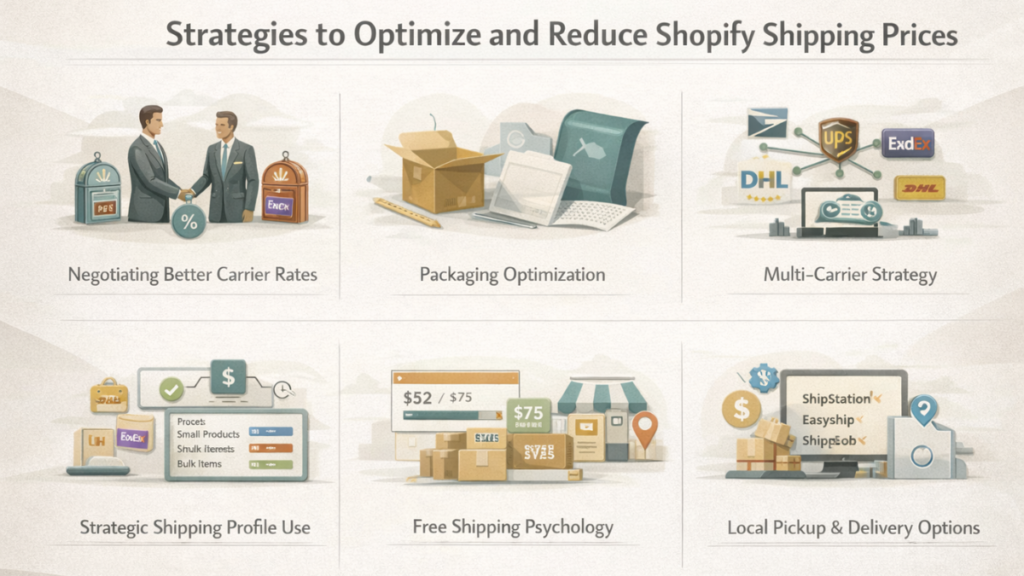
Once shipping 1,000+ packages yearly, contact carriers directly. Then, request volume discounts beyond Shopify’s standard rates. Additionally, negotiate waived fees like residential surcharges. Consequently, even 5-10% additional discounts add up quickly. - Packaging Optimization
Right-sizing boxes dramatically reduces dimensional weight charges. Therefore, measure products and choose appropriate packaging. Moreover, poly mailers cost $0.20-$0.40 versus boxes at $0.80-$2.00. Additionally, lighter materials reduce carrier rates directly. Furthermore, optimizing packaging helps when you speed up Shopify website by reducing fulfillment time. - Multi-Carrier Strategy
Rate shopping apps automatically select the cheapest carrier. Therefore, you save money without manual comparison. Moreover, automatic selection balances cost versus delivery speed. Consequently, customers receive optimal service at best prices. - Strategic Shipping Profile Use
Create separate profiles for different product categories. Then, assign appropriate Shopify shipping rates to each profile. Moreover, handle bulk items differently from small products. Consequently, rate accuracy improves across your entire catalog. - Free Shipping Psychology
Research shows $75 hits the sweet spot for free shipping thresholds. Therefore, set your minimum slightly below average cart value. Additionally, use progress bars encouraging customers to add more items. Moreover, limited-time free shipping promotions create urgency. Consequently, average order values increase while conversion rates improve. - Local Pickup & Delivery Options
Offering store pickup eliminates shipping costs completely. Meanwhile, local delivery within 10-15 miles costs less than carriers. Therefore, implement hybrid strategies for nearby customers. Consequently, you reduce costs while providing convenient options. - Third-Party Shipping Apps
Advanced rules require specialized apps beyond Shopify’s native features. Therefore, consider ShipStation for multi-channel shipping. Alternatively, Easyship provides global shipping optimization. Similarly, ShipBob offers fulfillment services. Consequently, evaluate costs versus benefits for your volume.
Advanced Shopify Shipping Prices Tactics
Advanced strategies take your shipping game to the next level. Therefore, consider implementing these tactics as you scale.
- Dynamic Pricing Based on Competition
Research competitor shipping rates in your niche regularly. Then, adjust your rates to remain competitive. Moreover, different product categories may warrant different strategies. Consequently, stay informed about market expectations. - Subscription Shipping Benefits
Creating Prime-like shipping memberships builds customer loyalty. Therefore, consider annual shipping subscriptions. Moreover, specialized apps enable subscription shipping programs. Consequently, customers get value while you guarantee repeat business. - Multi-Location Fulfillment
Fulfilling from multiple locations reduces shipping distances. Therefore, split fulfillment optimizes costs automatically. Moreover, Shopify combines rates from different locations intelligently. Consequently, customers see accurate total costs. - Shipping Insurance & Signature
High-value items over $200 warrant insurance and signature confirmation. Therefore, add these costs to premium products. Moreover, decide whether to pass through costs or absorb them. Consequently, valuable shipments arrive safely. - Returns & Exchange Shipping Costs
Prepaid return labels improve customer experience significantly. Therefore, include return shipping in your pricing strategy. Moreover, allocate 2-3% of revenue for return shipping costs. Consequently, customers feel confident purchasing.
Monitoring & Adjusting Your Shopify Shipping Prices
Continuous monitoring ensures optimal shipping performance. Therefore, track key metrics regularly.
- Key Metrics to Track
Monitor shipping costs as a percentage of revenue targeting 8-12%. Additionally, track average shipping prices customers actually pay. Moreover, watch cart abandonment rates at checkout carefully. Finally, compare actual shipping expenses versus revenue collected. Consequently, you spot issues quickly before they impact profits significantly. - Tools for Analysis
Shopify Analytics provides built-in shipping reports automatically. Meanwhile, third-party apps offer deeper insights into patterns. Additionally, spreadsheet templates help track trends over time. Therefore, choose tools matching your analytical needs. - When to Adjust Prices
Review rates quarterly at minimum regardless of changes. Moreover, adjust immediately when carriers announce rate increases. Additionally, monitor margins and adjust if they squeeze below targets. Finally, A/B test different shipping offers periodically. Consequently, your pricing stays optimized continuously. - Customer Communication
Transparency in shipping policies builds trust immediately. Therefore, create detailed shipping policy pages. Moreover, set clear expectations about delivery timeframes. Additionally, communicate any changes to existing customers proactively. Consequently, customers appreciate honesty and clarity.
Conclusion
Shopify shipping prices don’t have to be complicated. Specifically, Shopify offers flexible options including flat rates, carrier-calculated rates, and free shipping. Moreover, actual Shopify carrier rates vary widely from $4 to $80+ depending on service level. Additionally, your chosen Shopify plan affects available shipping features. Finally, strategic pricing balances profitability with customer satisfaction effectively.
Start by calculating your average product shipping costs accurately. Then, choose the right pricing model for your specific products. Next, set up shipping zones and rates in Shopify carefully. Additionally, test thoroughly before launching your store publicly. Finally, monitor performance and optimize monthly for best results. Remember, shipping strategy impacts conversion rates as much as product selection.
Ready to set up your Shopify store with optimized shipping prices? Start your 14-day free trial and configure shipping rates in minutes. Moreover, you’ll get access to discounted carrier rates immediately. Therefore, launch your store with confidence knowing shipping is handled correctly from day one.

Leave a Reply