Email marketing continues to be one of the most effective ways to connect with audiences, build relationships, and generate consistent revenue. It’s affordable, measurable, and incredibly powerful for all types of businesses. What’s even better? You can start for free. There are several free email marketing tools available that let you design professional emails, automate campaigns, and analyze performance, all without spending a dime.
Whether you’re a startup, blogger, or small business owner, choosing the right tool can make a huge difference. Managing campaigns becomes far more efficient when the right platform keeps messaging organized and consistent. This guide breaks down the best email marketing platforms available for free, covering their standout features, potential limitations, and the types of businesses they suit best. By the end, you’ll have a clear understanding of which option aligns with your goals and how it can help you achieve stronger, more measurable marketing outcomes.
Comparison Table
| Tool Name | Free Plan Limit | Best For | Key Highlight |
| Brevo (Sendinblue) | Unlimited contacts & 300 daily emails | Small businesses | Multi-channel communication (Email + SMS) |
| MailerLite | 1,000 subscribers & 12,000 | Bloggers & startups | Minimal interface with automation |
| Moosend | 1,000 subscribers & unlimited emails | Growing businesses | Advanced automation & A/B testing |
| HubSpot Email Marketing | 2,000 monthly emails | Marketers using CRM | Built-in CRM and analytics |
| Benchmark Email | 500 subscribers & 3,500 monthly emails | Small businesses | Great design flexibility |
| ConvertKit | 1,000 subscribers | Creators & educators | Visual automation for audience nurturing |
| Omnisend | 250 contacts & 500 monthly emails | eCommerce stores | Multi-channel automation (Email + SMS + Push) |
Top 7 Free Email Marketing Tools
Discover these powerful free email marketing tools that help you grow your audience, automate campaigns, and boost engagement effortlessly.
1. Brevo

Brevo, formerly known as Sendinblue, offers powerful marketing automation combined with CRM features. It’s built for businesses that want to communicate across multiple channels, including email and SMS, without switching between tools. The free plan allows unlimited contacts and up to 300 daily emails, making it ideal for consistent outreach. Brevo’s automation builder lets you send triggered emails based on user activity, helping improve engagement. You can manage campaigns, analyze reports, and personalize content using an intuitive drag-and-drop editor. The CRM integration helps store and organize leads for follow-ups. Brevo’s transactional email capability is perfect for eCommerce websites managing customer notifications.
It also offers advanced segmentation for tailored campaigns. With clean design options and solid deliverability, Brevo gives marketers a scalable platform for professional communication. For small businesses aiming for automation and personalization, Brevo remains one of the most flexible free email marketing tools available today.
Pros:
Price: Very cheap email marketing software with CRM.
Simple: You need very little technical know-how to launch a campaign.
The system offers text messages (SMS) as well, so you have two channels to reach your customers.
Site-triggered automation, and email autoresponder available
Cons:
The editor works fast, but highlighting can take some getting used to.
Not for you if you want to do very complex automation campaigns.
2. MailerLite
MailerLite focuses on simplicity, offering businesses a clean, intuitive way to manage email campaigns. It’s a great choice for creators, startups, and bloggers who value minimalism and ease of use. The free plan supports 1,000 subscribers and 12,000 monthly emails, offering plenty of flexibility for consistent engagement. MailerLite includes a drag-and-drop editor, pre-designed templates, and landing page builders to help you design emails quickly. You can automate welcome series, product updates, or announcements with ease. Its reporting tools provide real-time insights into open and click rates, ensuring your campaigns are data-driven. Signup forms and popups help capture leads effectively, while segmentation features enhance personalization.
The platform’s lightweight design makes it easy to navigate, even for first-time users. With all these capabilities, MailerLite delivers a perfect mix of efficiency and creativity. It continues to be one of the most reliable free email marketing tools for growing businesses.
Pros
- Create landing pages and pop-ups, they also integrate with a LOT of opt-in plugins as well.
- Automated Resend option, to send another mail if the first one wasn’t opened.
- See your email being sent internationally timezone by timezone (if you like). It is in 7 languages.
- The price: Free and if you have more than 500 subscribers the price is still very low.
- A/B testing – although you can only test 2 versions (A and B) at a time.
- Track changes while editing your email template, you can undo if you make a mistake.
Cons
Limited advanced automation
MailerLite is excellent for basic workflows, but users needing highly complex or multi-step automation may find it a bit restrictive.
Basic reporting for advanced users
The analytics are clear and easy to understand, though power users may want more detailed reporting and customization options.
3. Moosend
Moosend combines ease of use with enterprise-level automation, making it ideal for businesses wanting scalable marketing solutions. Its free plan supports up to 1,000 subscribers with unlimited monthly emails, providing great flexibility for startups. The drag-and-drop editor helps create stunning, responsive emails without design skills. Moosend’s automation workflows let users build customer journeys triggered by actions such as purchases, sign-ups, or link clicks. It also supports A/B testing to optimize email content. Advanced analytics track engagement, conversions, and sales performance. Integration with WordPress, Shopify, and WooCommerce ensures a smooth workflow across platforms. Moosend’s segmentation and personalization tools help you send the right message to the right audience every time.
Its intuitive interface and reliable deliverability make campaign management effortless. Overall, Moosend’s blend of automation, analytics, and integration makes it one of the most powerful free email marketing tools for modern businesses looking to scale.
Pros
- Modern responsive email editor with free templates
- Support and help directly via Chat
- Sexy smart subject line recommendations and countdown timers included.
- Simple automation and free email autoresponder are all there
- Free landing page builder
Cons
Limited features on the free plan
While generous for starters, some advanced automation and reporting features are reserved for paid plans.
Interface can feel overwhelming at first
The wide range of options and tools may require a short learning period for complete beginners.
4. HubSpot Email Marketing
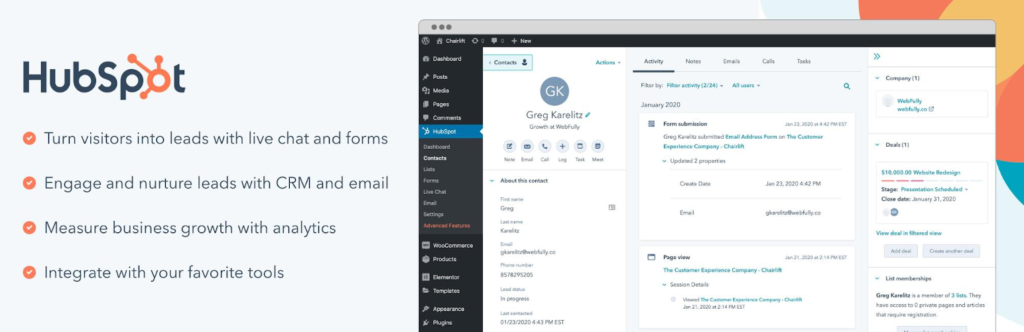
HubSpot Email Marketing provides professional-grade capabilities integrated directly with its CRM system, making it a standout option for marketers. The free plan includes 2,000 emails per month, perfect for small to medium-sized businesses. HubSpot’s drag-and-drop editor allows users to create responsive, personalized emails easily. You can automate follow-ups, track engagement, and organize leads within the same platform. With built-in analytics, HubSpot helps measure campaign performance and identify trends that drive better results. The CRM integration ensures every contact’s data stays updated for targeted communication. It also supports personalization tokens to tailor content dynamically. HubSpot’s scalability and workflow automation make it suitable for both startups and growing companies.
Whether you want to nurture leads or retain customers, HubSpot ensures smooth campaign management. For marketers seeking a well-rounded, data-driven system, HubSpot stands among the most effective free email marketing tools offering both power and precision.
Pros
- All-in-One Platform: Seamlessly integrates email with CRM, sales, and service tools for a unified view and data flow.
- Powerful Automation: Advanced workflow automation available in higher tiers for complex campaigns.
- Personalization & Segmentation: Uses deep CRM data for highly tailored emails and targeted campaigns.
- User-Friendly: Intuitive interface, easy setup, and a great learning curve despite its complexity.
- Generous Free Tools: A genuinely useful free CRM and basic email marketing features to start.
- Excellent Resources: HubSpot Academy offers extensive free learning materials.
- Scalable: Grows with your business from free to enterprise levels.
Cons
Free plan has branding and sending limits
While useful for getting started, the free email plan includes HubSpot branding and a monthly email cap, which may feel restrictive as your list grows.
Advanced features can get expensive
HubSpot’s real power lies in its premium automation and workflows, but costs increase quickly when upgrading to higher tiers.
5. Benchmark Email

Benchmark Email offers a polished, design-focused platform for users who want visually appealing campaigns. It’s ideal for beginners and small businesses that value creative freedom and simplicity. The free plan includes up to 500 subscribers and 3,500 monthly emails, providing enough capacity for consistent engagement. Benchmark’s drag-and-drop editor and mobile-responsive templates simplify design creation, ensuring every email looks professional on any device.
The platform includes automation for welcome emails and follow-ups, keeping your subscribers engaged. Real-time analytics help you evaluate performance and optimize future campaigns effectively. Benchmark also supports A/B testing, allowing marketers to test subject lines, content, and visuals. Its intuitive dashboard makes navigation seamless, while templates cover everything from promotions to newsletters. If you’re looking for an easy way to create professional-grade designs with minimal effort, Benchmark remains one of the most creative free email marketing tools on the market.
Pros
- Email scheduling and Litmus inbox checker
- Landing page builder
- Unlimited image gallery storage for your images
- Basic automations and email engagement automations
Cons
Limited automation depth
Benchmark handles basic automations well, but it may feel restrictive for users who need advanced, multi-step workflows.
Smaller free plan limits
The free plan is suitable for beginners, but growing businesses may need to upgrade sooner as subscriber and email limits are lower compared to some competitors.
6. ConvertKit

ConvertKit is designed with creators in mind, offering tools that simplify audience building and content delivery. The free plan supports up to 1,000 subscribers and includes unlimited landing pages and forms. It’s a perfect option for bloggers, educators, and online creators focusing on relationship-based marketing. ConvertKit’s visual automation builder allows users to design personalized sequences that nurture subscribers effectively. Tag-based segmentation ensures the right messages reach the right audience every time.
The platform integrates seamlessly with tools like WordPress, Shopify, and Teachable, making it highly versatile. Its straightforward interface keeps things simple while offering powerful customization options. You can create newsletters, announcements, and autoresponders with minimal effort. Though less feature-heavy than some competitors, ConvertKit shines in community-focused marketing. For creators seeking authenticity and connection with their audience, ConvertKit remains one of the most intuitive free email marketing tools available.
Pros
- Creator-Focused: Built specifically for bloggers, podcasters, and online creators.
- Powerful Tagging & Segmentation: More flexible than traditional lists, letting you target subscribers based on behavior.
- Intuitive Visual Automations: Drag-and-drop builder for complex funnels (welcome series, sales funnels) without code.
- High Deliverability: Plain-text focus helps emails land in the inbox, not spam.
- Easy Landing Pages & Forms: Simple to create effective opt-in forms and landing pages.
- Monetization: Built-in commerce to sell digital products (like courses) directly.
Cons
Limited design flexibility
ConvertKit focuses more on content and deliverability, so its email templates and visual customization options are fairly minimal.
Advanced features require paid plans
While the free plan is generous for creators, features like advanced automation and monetization tools unlock fully only after upgrading.
7. Omnisend

Omnisend focuses on helping eCommerce businesses boost sales through multi-channel automation. Its free plan supports 250 contacts and 500 monthly emails, suitable for startups and online stores. The platform combines email, SMS, and push notifications into one cohesive system, ensuring effective communication. With automation features like abandoned cart recovery, order confirmation, and product recommendations, Omnisend increases engagement and conversion rates. Its drag-and-drop builder allows fast email creation, while analytics track performance in real time. Integration with major platforms like Shopify and WooCommerce ensures seamless data syncing.
The personalization options make every campaign feel relevant to customers’ needs. For retailers looking to manage multi-channel campaigns without juggling tools, Omnisend provides exceptional functionality. It’s a complete solution for eCommerce growth, combining automation and insight. As a result, Omnisend stands among the top-rated free email marketing tools for boosting online sales and retention.
Pros
- E-commerce Focused: Built specifically for online stores, with powerful e-commerce features and integrations.
- Seamless Multi-channel: Combines email, SMS, and web push notifications in one platform for unified campaigns.
- Easy Automation: Simple setup for workflows like abandoned cart recovery, even for beginners.
- Generous Free Plan: Includes core features, forms, and landing pages for testing.
- User-Friendly: Intuitive drag-and-drop builder and a beginner-friendly interface.
- Strong Data Capture: Excellent tools for data capture, including gamified pop-ups
Cons
Free plan has low contact and email limits
The free tier is great for testing, but growing eCommerce stores may need to upgrade quickly as subscriber and sending limits are fairly restricted.
Best suited for eCommerce only
Omnisend is highly optimized for online stores, so it may feel less useful for bloggers or non-eCommerce businesses.
Pro Tips for Using Free Email Marketing Tools
- Segment your audience: Personalize emails based on interests, behavior, or demographics to increase engagement.
- Leverage automation: Set up welcome sequences, abandoned cart reminders, and follow-ups to save time and maintain consistency.
- Use A/B testing: Experiment with subject lines, email content, and visuals to see what resonates best with subscribers.
- Clean your email list regularly: Remove inactive subscribers to improve deliverability and avoid spam issues.
- Track performance: Monitor open rates, click-throughs, and conversions to refine campaigns and make data-driven decisions.
- Maintain consistent scheduling: Send emails at predictable intervals to build trust and authority with your audience.
- Experiment with free tools’ features: Explore templates, landing pages, and personalization options to get professional results without paying.
Conclusion
Free email marketing tools are a powerful way to start building connections, driving engagement, and boosting conversions without any financial risk. Each platform caters to different needs: Brevo is great for beginners, MailerLite and Moosend excel in automation, HubSpot integrates seamlessly with CRM, and Omnisend is perfect for eCommerce. Even within free plans, these tools provide essential features like drag-and-drop builders, analytics, segmentation, and automation workflows.
Selecting the right tool and pairing it with proven strategies such as personalization, A/B testing, and regular messaging sets the stage for professional-level email marketing outcomes. When you choose from affordable email marketing platforms that support these capabilities, you can achieve strong results without overextending your budget. Starting with free plans also gives you the flexibility to explore each platform’s capabilities, ensuring your campaigns grow alongside your audience. With strategy, insight, and consistent execution, these free tools empower businesses of any size to engage subscribers effectively and maximize ROI.