Online learning has become an essential way to acquire new skills, advance careers, and explore personal interests. As per the data revealed by Atlantic International University in the US, around 49% of students had already adapted to online learning. With so many platforms available, choosing the best platform for online courses can feel overwhelming. The right choice depends on your goals, whether you want to gain practical skills, earn recognized certifications, or share your expertise as a creator. Data even reveals that over 70% of students prefer online learning over traditional learning. Key factors to consider include the quality of course content, learning style, flexibility, pricing, and the level of community or instructor support. Some platforms offer self-paced learning, perfect for busy schedules, while others provide structured programs with interactive assignments and professional certificates. The online learning market has witnessed an annual growth of 9-14%.
Additionally, mobile accessibility, ease of use, and opportunities for hands-on practice can greatly impact your learning experience. In this guide, we’ll break down the best online course platforms, highlighting their unique features and benefits, so you can make an informed decision that aligns with your learning or teaching objectives.
Best Online Platforms for Beginners
| Platform | Description |
| Coursera | With 90M+ learners and partnerships with 300+ universities and companies, Coursera is the best Platform for Online Courses, which offers professional certificates, specializations, and online degrees. |
| Thinkific | Used by 35,000+ active creators, Thinkific allows businesses and educators to build fully branded online schools, memberships, and communities. |
| Udemy | One of the largest online learning marketplaces with 75M+ learners and 210,000+ courses across technology, business, and lifestyle topics. |
| FutureLearn | A UK-based MOOC platform partnering with global universities and organizations to deliver courses in healthcare, business, and technology. |
| Skillshare | Skillshare focuses on creative and project-based learning, serving 1.4M+ paid subscribers worldwide. It’s popular for design, illustration, writing, and entrepreneurship, with emphasis on hands-on practice. |
| Khan Academy | A nonprofit education platform with 180M+ registered users, offering free, standards-aligned lessons in math, science, economics, and test prep. It is widely used by K-12 students, teachers, and self-learners worldwide. |
| Alison | Alison is a free online learning platform serving millions of learners with certificate and diploma courses in business, IT, health, and language skills. |
| Teachable | Teachable empowers creators to build, host, and sell their own courses, with creators earning $1.3B+ collectively. It offers full branding control and is ideal for educators with an existing audience. |
| LinkedIn Learning | Featuring 20,000+ courses, LinkedIn Learning focuses on business, tech, and creative skills tied directly to career growth. |
| edX | Founded by Harvard and MIT, edX serves 80M+ learners globally with academic and professional programs. It’s known for university-level rigor, MicroMasters, and flexible learning pathways. |
Choosing the best platform for online courses depends on how well it aligns with your goals, budget, and learning preferences. The ideal platform should offer high-quality, expert-led content, flexible learning formats, and strong community support. Here are our top recommendations for beginners.
Our Top Recommendations
Udemy – Marketplace for diverse courses
Coursera – University-backed online learning
Teachable – Course creation for creators
Skillshare – Creative skills learning
Thinkific – All-in-one course platform
Best 5 Platforms for Online Courses
Let’s explore the best options to find the one that suits your learning or teaching needs:
1. Udemy
Udemy is one of the largest and most popular online learning platforms, offering over 250,000 courses across multiple categories, including programming, AI, marketing, arts, personal development, and more. The best way to learn AI is through structured online courses that guide you step-by-step from foundational concepts to real-world applications. The platform allows learners to purchase courses individually, with lifetime access to the material. Courses are created by individual instructors, which results in a variety of teaching styles, approaches, and perspectives. Students can learn at their own pace, with the flexibility to pause and revisit content as needed.
Udemy’s platform is mobile-friendly, making it easy to learn on the go. Courses include detailed descriptions, ratings, and reviews to help learners choose the right one. While quality can vary, the affordability, diverse course options, and accessibility make Udemy a strong candidate for the best platform for online courses for those seeking flexible, self-paced, and budget-friendly learning opportunities.
Pros
- Vast library of courses in almost every niche.
- One-time purchase with lifetime access.
- Frequent sales make courses low-cost.
Cons
- Quality varies widely between courses.
- No formal academic accreditation.
- Highly competitive marketplace for instructors.
Suitable for:
Udemy is ideal for learners who want affordable, practical skill-based courses across many categories like tech, business, hobbies, and personal growth. It’s learner-friendly with individual course purchases and lifetime access, making it flexible for self-paced upskilling or exploring new topics on demand.
Pricing:
• Courses range widely in price, often $10–$20 during sales but can go up to ~$199. Pricing is set by instructors per course.
2. Coursera
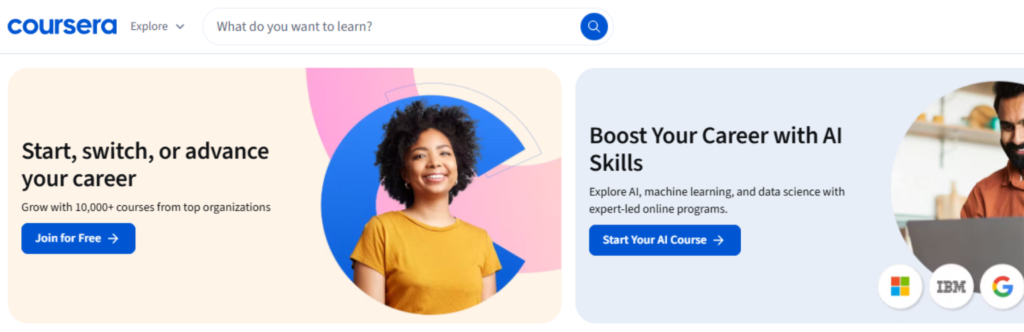
Coursera collaborates with leading universities and organizations worldwide to provide professional online courses, certifications, and even degree programs. Its offerings cover a broad range of subjects including business, technology, data science, arts, and personal development. Coursera combines video lectures, interactive assignments, quizzes, and peer-reviewed projects to provide a structured and comprehensive learning experience. Certificates earned through Coursera are recognized by employers and institutions, adding professional value. Learners can choose between free courses, individual paid courses, and subscription-based programs, while some financial aid options are available for those in need.
The platform supports both self-paced and instructor-led learning. With high-quality, academically-backed content and recognized certifications, Coursera is often considered the best platform for online courses for learners seeking credibility, career advancement, and structured learning paths that can boost professional and academic opportunities.
Pros
- High-quality content from top universities/companies.
- Recognized certificates and professional credentials.
- Flexible learning with guided projects and specializations.
Cons
- Can be expensive without a Plus subscription.
- Certificate courses often require ongoing monthly payments.
- Less helpful for hobby/creative learning compared to others.
Suitable for:
Coursera is great for learners seeking career-oriented education and credible certificates from universities and companies. It offers university-level courses, Professional Certificates, and pathways toward degrees, with flexible pacing and expert instruction.
Pricing:
- Coursera Plus: ~offer starts from $59/month and $399/year for accessing 90% of its content.
- Individual courses / certificates often start at $49/month (Specializations/Professional).
- Some short projects start at ~$9.99.
3. Teachable
Teachable is designed for creators, educators, and entrepreneurs who want to build and sell their own online courses. It offers an intuitive interface for creating courses with multiple formats, including video, audio, text, quizzes, and downloadable resources. Instructors can fully customize course pages, set pricing, and manage content delivery. Teachable is considered the best Platform for Online Courses, which includes integrated payment processing, affiliate marketing tools, and email marketing features to help promote courses effectively. Analytics tools allow instructors to track student engagement, completion rates, and progress, enabling data-driven improvements.
While marketing and student acquisition require effort, the platform provides professional-level tools and flexibility to monetize expertise. It is suitable for entrepreneurs and professionals seeking independence and control over their teaching business. For creators who want both a customizable platform and the ability to generate revenue, Teachable is widely regarded as one of the best platforms for online courses, combining ease of use with powerful monetization options.
Pros
- Full branding and customizable course site.
- Scalable pricing tiers and features.
- No marketplace competition, you own your audience.
Cons
- Monthly fees exist even if you have no sales.
- Lower tiers have transaction fees.
- Marketing and traffic responsibility lies with you.
Suitable for:
Teachable is best for course creators & entrepreneurs building and selling courses directly. It’s not a marketplace; you create branded experiences and keep most of your sales revenue, making it ideal for independent educators and small businesses.
Pricing:
The Starter plan costs $39 per month, includes a 7-day free trial, and charges a 7.5% transaction fee on sales. The Builder plan is priced at $89 per month and comes with no transaction fees. The Growth plan is available for $189 per month, offering advanced features for scaling businesses. The Advanced plan costs $399 per month and is designed for high-volume or enterprise-level needs.
4. Skillshare
Skillshare is a subscription-based platform that specializes in creative and entrepreneurial courses, including photography, design, writing, and business topics. It uses a project-based learning approach, allowing learners to immediately apply what they learn through exercises and assignments. The platform encourages community engagement through discussions, group projects, and peer feedback. With a subscription, learners get unlimited access to thousands of courses, making it cost-effective for those interested in multiple areas. Skillshare also offers offline and mobile learning for convenience.
Skillshare complements online certification programs by offering project-based courses in creative and entrepreneurial fields, enabling learners to gain practical skills, engage with a community, and access unlimited content through a flexible subscription model.
The platform is ideal for creatives, hobbyists, and lifelong learners who prefer hands-on learning and collaborative projects. With its interactive, practical approach, Skillshare remains a strong candidate for the best platform for online courses for those seeking engaging and skill-focused education.
Pros
- Unlimited access with subscription.
- Large library of creative & practical courses.
- Strong community & project-based learning.
Cons
- Emphasis on creative topics
- Variable depth of content.
- No formal accreditation.
Suitable for:
Skillshare is ideal for creative and practical learners, including design, photography, writing, illustration, and entrepreneurship. Students pay a subscription to access thousands of classes, making continuous learning affordable and community-driven.
Pricing:
- $13.99/month or $167.88/year
5. Thinkific
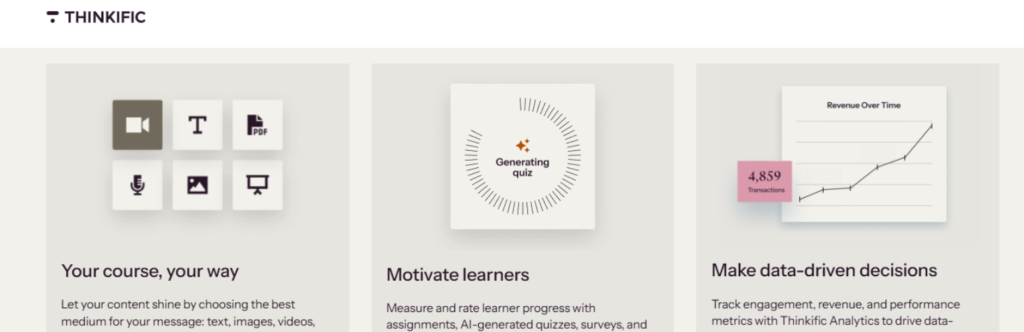
Thinkific is a versatile and the best Platform for Online Courses designed for instructors, educators, and businesses that want to create, market, and sell online courses independently. It offers a drag-and-drop course builder with support for multiple content formats such as video, quizzes, downloads, and discussion forums. Instructors can fully customize course pages, integrate branding, and monetize content through subscriptions, one-time payments, or memberships.
Thinkific also provides marketing tools, analytics, and student engagement tracking to optimize the learning experience and improve retention. With its combination of professional features, flexibility, and monetization capabilities, Thinkific is widely regarded as one of the best platforms for online courses for instructors who want control over content and revenue while delivering high-quality learning experiences.
Pros
- Free tier to start building & selling courses.
- Custom branding and flexibility.
- Integrates products, memberships, and communities.
Cons
- Less built-in marketplace exposure than Udemy/Skillshare.
- Advanced features require higher plans.
- Minimal native email marketing, third-party needed.
Suitable for:
Thinkific is excellent for course creators and businesses who want a branded learning platform with tools for selling courses, memberships, coaching, and more, all integrated and customizable without owning a marketplace audience.
Pricing:
A free plan is available, though it comes with certain limitations. The Basic plan starts at approximately $49 per month, making it suitable for small teams or early-stage use. The Start plan is priced at around $99 per month and offers more advanced features. For growing businesses that need greater flexibility and scalability, the Grow plan is available at roughly $199 per month. Users can also choose annual billing, which is offered at a discounted rate compared to monthly payments.
Trends in Online Learning
The online learning landscape is constantly evolving, with several key trends shaping how people acquire skills today:
1. Growth of Microlearning: Short, focused lessons allow learners to absorb information quickly and retain knowledge effectively. This approach suits busy professionals and self-paced learners.
2. Rise of Mobile-First Learning: With more learners using smartphones and tablets, platforms are optimizing content for mobile access. Offline mode and app-based learning make courses accessible anytime, anywhere.
3. Gamification and Interactive Content: Platforms are increasingly incorporating quizzes, challenges, badges, and interactive exercises. These elements boost engagement, motivation, and practical skill application, making learning more enjoyable and effective.
By staying aware of these trends, learners and educators can choose online education platforms that offer modern, flexible, and engaging learning experiences.
Conclusion
In conclusion, online learning has transformed how people gain skills, advance careers, and explore new interests, with over 70% of students now preferring online education over traditional classrooms. The online learning market’s 900% growth since 2000 clearly shows its global adoption and long-term potential. Platforms like Udemy, Coursera, Skillshare, Teachable, and Thinkific cater to different needs, whether you are a beginner learning at your own pace, a professional seeking recognized certifications, or a creator building a course business.
Factors such as flexibility, content quality, pricing, mobile access, and community support play a crucial role in shaping the learning experience. With nearly 49% of students already adapted to online learning, choosing wisely can significantly impact outcomes. Ultimately, the Best Platform for Online Courses is the one that aligns with your goals, learning style, and budget, enabling consistent growth, practical application, and long-term success in today’s digital-first world.
Frequently Asked Questions (FAQs)
Yes. Coursera and Thinkific offer free courses, while platforms like Udemy often have discounted or free courses. Skillshare provides limited free trials, and Teachable depends on the course creator’s pricing.
Skillshare is the best Platform for Online Courses for creative learners. Its project-based approach allows users to practice skills in design, photography, writing, and business while collaborating with a community.
Teachable and Thinkific are excellent for creators. They provide tools to build, market, and monetize courses with full control over branding, pricing, and student engagement.
Yes. Udemy, Coursera, Skillshare, and Thinkific all have mobile-friendly apps, allowing learners to access courses on the go.