


Choosing the right tool for managing your email campaigns can significantly influence how effectively you connect with your audience and nurture long-term engagement. With so many options offering varied features, automation tools, and personalization capabilities, it becomes important to select a platform that aligns with your goals and marketing style. The best email newsletter platforms provide reliable deliverability, simple design tools, and detailed analytics to help you measure performance accurately.
Whether you run a small business, manage a personal brand, or handle marketing for a growing company, selecting an efficient platform ensures your messages reach subscribers at the right time and in the right format. A well-chosen tool also supports segmentation, targeted content, and scalable features that grow with your needs. By comparing these solutions carefully, you can create polished campaigns that strengthen communication and improve overall audience interaction.
Quick Comparison Table : Best Email Newsletter Platforms
| Platform | Automation Level | CRM Integration | E-commerce Support | Free Plan |
| Mailchimp | Moderate | Limited | Yes | Yes |
| ConvertKit | Moderate to Advanced | No | Limited | Yes |
| Brevo (Sendinblue) | Advanced | Built-in CRM | Yes | Yes |
| HubSpot Email Marketing | Advanced | Full CRM integration | Yes | Yes (limited) |
| AWeber | Basic to Moderate | No | Yes | Yes |
| GetResponse | Advanced | No | Yes | Yes (limited) |
Top 7 Best Email Newsletter Platforms
Below are the top choices that businesses rely on today. Each platform comes with unique advantages, depending on whether you run a blog, ecommerce store, consultancy, startup, or a large organization.
1. Mailchimp

Mailchimp remains one of the most popular choices among the best email newsletter platforms because of its simple interface, powerful features, and generous free plan. The platform makes email creation effortless with its drag-and-drop builder, customizable templates, and smart design tools. Mailchimp also provides automation workflows that allow you to send welcome emails, abandoned cart reminders, and product recommendations with ease. Its segmentation options help you target subscribers based on behavior, location, or past engagements, improving the effectiveness of your campaigns.
Mailchimp integrates seamlessly with Shopify, WordPress, WooCommerce, and hundreds of third-party apps, making it suitable for both beginners and advanced users. The analytics dashboard displays open rates, click-through data, and audience insights to help you refine your strategy. Businesses looking for a balanced mix of usability and functionality often choose Mailchimp because it delivers a solid foundation for long-term email marketing success.
Key Features
- Drag-and-drop email builder with customizable templates
- Automation workflows (welcome emails, abandoned cart, recommendations)
- Advanced segmentation based on behavior, engagement, and location
- Integrations with Shopify, WordPress, WooCommerce, and 250+ apps.
Best For
- Beginners and small businesses needing an easy, all-round email marketing tool
- Ecommerce brands wanting automated product recommendations
2. ConvertKit

ConvertKit is a leading choice for creators, bloggers, and educators searching for the best email newsletter platforms built specifically for audience engagement. The platform emphasizes clean layouts, simple tools, and powerful automation that help creators nurture their community with minimal effort. ConvertKit’s tagging system stands out, allowing you to segment subscribers based on interests and actions to send highly personalized emails. You can build automated funnels, set up event-based triggers, and create landing pages without needing technical skills. The platform also supports selling digital products and subscriptions directly through integrated features, making it ideal for creators who want to monetize their content.
ConvertKit’s interface encourages text-focused emails, which often perform better in personal branding and knowledge-sharing niches. For anyone prioritizing simplicity, automation, and strong audience connection, ConvertKit remains one of the most dependable choices among modern email marketing tools.
Key Features
- Powerful tagging and segmentation for personalized emails
- Automation funnels and event-based triggers
- Built-in landing pages and form builder
- Ability to sell digital products and subscriptions
Best For
- Content creators, bloggers, coaches, and educators
- Personal branding professionals preferring text-based emails
3. Brevo (formerly Sendinblue)

Brevo stands out as one of the best email newsletter platforms for small and medium-sized businesses that want email marketing, SMS marketing, and CRM features in one affordable solution. Its free plan is one of the most generous in the industry, offering advanced automation without requiring users to upgrade. Brevo’s visual automation builder allows you to design workflows based on user behavior, actions, and engagement levels. You can nurture leads, trigger follow-ups, and segment contacts with precision. The platform also includes transactional email capabilities, making it ideal for ecommerce brands that need reliable order notifications.
Brevo’s drag-and-drop editor features professional templates that are fully customizable and mobile-friendly. Integrations with platforms like Shopify, WordPress, and WooCommerce expand its functionality even further. With high deliverability rates and real-time performance reporting, Brevo ensures your emails reach the right audience and drive meaningful engagement.
Key Features
- Combined email, SMS marketing, and CRM in one platform
- Generous free plan with advanced automation
- Visual workflow builder for behavior-based journeys
- Transactional emails for ecommerce
Best For
- Small and medium businesses wanting multi-channel marketing
- Ecommerce brands needing transactional emails
4. HubSpot Email Marketing
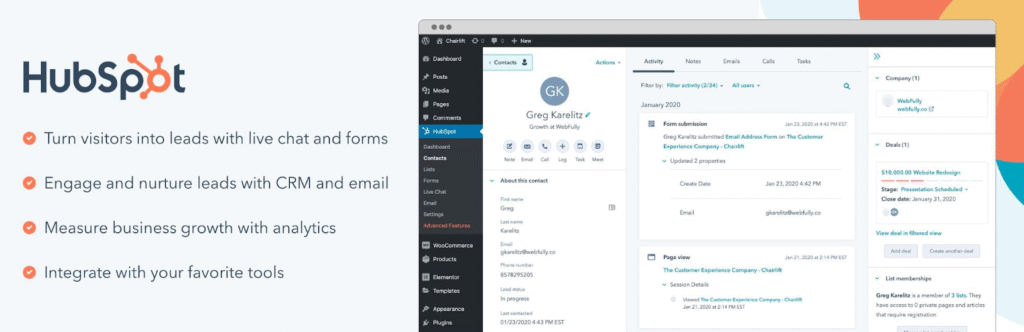
HubSpot Email Marketing is a top choice for brands seeking one of the best email newsletter platforms with complete CRM integration. The platform allows businesses to manage email campaigns, contacts, and customer interactions from a single dashboard. Its drag-and-drop editor offers professional templates optimized for conversions, while powerful personalization features ensure each message resonates with the recipient. HubSpot’s automation tools help you nurture leads, score contacts, and trigger timely follow-ups based on behavior. Detailed analytics, including heatmaps and engagement metrics, help marketers refine their campaigns for better results.
HubSpot also integrates with hundreds of apps and supports ecommerce, lead forms, workflows, and landing pages in one unified system. Whether you’re running a startup or managing enterprise-level marketing operations, HubSpot streamlines communication and scales effortlessly. Its all-in-one structure makes it ideal for teams that want every tool in one place.
Key Features
- Fully integrated CRM for unified contact and email management
- Drag-and-drop editor with conversion-optimized templates
- Advanced personalization and smart content
- Lead scoring, workflows, and behavioral automation.
Best For
- Businesses wanting an all-in-one CRM + email solution
- Teams running multi-channel campaigns
5. AWeber
AWeber continues to be a reliable choice among the best email newsletter platforms, especially for small businesses and entrepreneurs searching for simplicity and consistency. Its drag-and-drop editor helps you design attractive newsletters without technical skills, while its large template library gives you plenty of customization options. AWeber’s Smart Designer tool automatically generates branded templates based on your website, saving valuable time during setup. The platform also includes basic automation, tagging, and segmentation features that help you deliver relevant content to the right audience. AWeber integrates seamlessly with WordPress, Etsy, Shopify, and other popular platforms, making it useful for ecommerce sellers and digital creators. Its reporting tools offer insights into open rates, clicks, and subscriber behavior.
AWeber also provides excellent customer support through live chat, email, and phone assistance. For users who want a straightforward, dependable email marketing tool, AWeber remains a solid and trusted option.
Key Features
- Drag-and-drop email builder with a large template library
- Smart Designer for auto-branded templates
- Basic automation, tagging, and segmentation
- Strong integrations with WordPress, Etsy, and Shopify.
Best For
- Small businesses and solopreneurs needing simplicity
- Users wanting excellent customer support
6. GetRespponse
GetResponse earns its place among the best email newsletter platforms by offering email marketing, automation, landing pages, and webinar hosting in a single system. Its email editor provides customizable templates that look great on all devices, while the automation builder allows you to design workflows using conditions, triggers, and actions. This helps you deliver targeted messages at the perfect time.
GetResponse also includes ecommerce tools, AI-powered content generation, lead scoring, and advanced segmentation, making it suitable for businesses that want versatility. The platform’s webinar feature is a unique advantage, allowing brands to host live events and nurture leads directly through email automation. Integrations with Shopify, WooCommerce, WordPress, and other tools expand its capabilities further. GetResponse’s analytics provide detailed insights into campaign performance, helping you improve future communication. For teams that want an all-in-one marketing suite at a reasonable cost, GetResponse is a strong choice.
Key Features
- Email marketing, automation, landing pages, and webinars in one suite
- Responsive email templates and drag-and-drop builder
- Automation workflows with conditions, triggers, and actions
- AI content tools, lead scoring, and advanced segmentation.
Best For
- Businesses wanting an all-in-one marketing platform
- Teams that host webinars as part of their strategy
How to Choose the Right Email Newsletter Platform
With so many options available, selecting the best platform depends on your goals and business model. Here’s how you can narrow down your choices:
- Identify Your Purpose
Whether you want to send newsletters, run ecommerce marketing, or build funnels will determine the features you need. - Understand Your Audience Size
Some platforms charge based on subscriber count, while others charge based on the number of emails sent. - Evaluate Automation Needs
Advanced tools like ActiveCampaign offer top-level automation, while simpler tools like ConvertKit focus on ease of use. - Compare Template Libraries
Design matters. Review layout options, customization tools, and mobile responsiveness. - Check Integration Requirements
Make sure the platform works with your CMS, ecommerce platform, and CRM. - Consider Future Scalability
Choose a platform that grows with your business needs.
By evaluating each tool based on these factors, you can confidently choose from the best email newsletter platforms and maximize your email marketing potential.
Common Mistakes to Avoid When Choosing a Newsletter Tool
- Choosing based only on price
Cheap tools may lack essential features you’ll need later. - Ignoring deliverability rates
Poor deliverability can push your emails into spam and reduce engagement. - Not checking integrations
If the tool doesn’t work with your CMS, CRM, or ecommerce platform, it will limit your workflow. - Overlooking scalability
Some platforms don’t grow with your business, leading to expensive migrations later. - Picking a tool that’s hard to use
A complicated interface slows down campaign creation and reduces productivity.
Conclusion
Making the final decision on which tool to use becomes easier when you clearly understand your goals, resources, and audience expectations. The best email newsletter platforms simplify campaign creation while offering advanced features that help you deliver meaningful, personalized communication at scale. Instead of overwhelming you with complex workflows, these tools streamline tasks like segmentation, scheduling, automation, and design, ensuring that your time is spent on strategy rather than repetitive processes.
A dependable platform also improves deliverability, helping your messages consistently reach the inbox instead of getting lost in spam filters. As your subscriber list grows, having a solution that adapts to your evolving needs becomes essential for long-term success. By choosing a platform that supports creativity, efficiency, and insightful reporting, you set the foundation for stronger engagement and more impactful marketing efforts that reflect your brand’s goals and communication style.

Leave a Reply