
Choosing the right tools can make or break your email marketing strategy, which is why identifying the best email marketing platforms is crucial for businesses aiming to boost engagement and drive conversions. A strong platform not only streamlines campaign creation but also enables automation, personalization, and audience segmentation, helping you reach the right people at the right time. With features like drag-and-drop editors, advanced workflows, CRM integrations, and analytics, these platforms empower marketers to craft campaigns that resonate with subscribers while saving time.
Whether you are a small business, eCommerce store, or content creator, understanding what to look for in a platform ensures your efforts are effective and scalable. This guide explores top platforms, their features, and best practices to help you select the ideal solution for your needs.
What to Look for in the Best Email Marketing Platforms
Before exploring individual tools, it’s important to understand what makes a platform truly effective. The best email marketing platforms share certain features that support growth, automation, and engagement.
- Ease of Use
A platform should have a user-friendly interface, drag-and-drop editor, built-in templates, and minimal learning curve. - Automation Capabilities
Automated workflows enable efficient communication at scale, making automation one of the most critical features. - Segmentation & Personalization
The best platforms allow you to segment subscribers based on behavior, interests, purchase history, and demographic data. - Deliverability Rates
High deliverability ensures your emails land in inboxes, not spam folders. - Integrations
Seamless integration with CRMs, eCommerce platforms, landing page builders, and social tools enhances your overall marketing ecosystem. - Pricing
Budget plays a major role. The best email marketing platforms offer flexible pricing models, including free plans and scalable upgrades.
Quick Comparison Table
| Platform | Free Plan | Starting Price | Automation Features | Integrations | Best For | Suscribers |
| EmailOctopus | Yes | $13/month | Advanced workflows, abandoned cart, behavioral triggers | CRMs, eCommerce, social, payments | Small to large businesses | 2,500 subscribers10,000 emails per month |
| Constant Contact | Yes (limited) | $12/month | Autoresponders, email scheduling | eCommerce, social, CRM | Small & medium businesses | 30-day free trial 100 Emails per Month |
| Brevo | Yes | $25/month | SMS + email automation, transactional emails | CRM, CMS, eCommerce | SMBs, eCommerce | 300 Daily Emails |
| ConvertKit | Yes | $15/month | Tag-based automation, funnels, workflows | CMS, eCommerce, membership tools | Creators, bloggers, coaches | 10,000 subscribers |
| GetResponse | Yes | $19/month | Funnels, webinars, automation workflows | CRM, eCommerce, social | All-in-one marketing | 500 contacts, 2,500 Emails/month |
| HubSpot Email Marketing | Yes | $23/month | Workflows, triggers, CRM-based automation | HubSpot CRM, apps | Inbound marketing businesses | 2,000 emails per month |
| AWeber | Yes | $19.99/month | Autoresponders, dynamic content, tagging | eCommerce, CRM, landing pages | Small businesses & startups | 500 subscribers3,000 emails monthly |
7 Best Email Marketing Platforms
1. EmailOctopus

EmailOctopus continues to dominate as one of the best email marketing platforms due to its intuitive interface, advanced automation, and flexibility for businesses of all sizes. With a drag-and-drop editor, users can design visually appealing campaigns without any coding knowledge. Its automation features allow businesses to create welcome sequences, abandoned cart reminders, and personalized email journeys that nurture leads effectively. EmailOctopus also provides powerful analytics, helping marketers track open rates, click-through rates, and conversions, ensuring campaigns remain optimized. Integration with eCommerce platforms, CRMs, social media, and payment gateways enhances functionality, making EmailOctopus an all-in-one solution. Its free plan offers generous features, including basic automation and reporting, ideal for startups or small businesses.
The platform supports advanced segmentation, A/B testing, and behavioral targeting, which allows marketers to deliver highly personalized messages. Because of its scalability, reliability, and feature set, EmailOctopus consistently ranks among the best email marketing platforms for growing businesses that need performance without complexity.
Key Features:
- A/B testing
- Detailed analytics and reporting
- eCommerce, CRM, and social media integrations
- High deliverability
2. Constant Contact
Constant Contact ranks high among the best email marketing platforms for small to medium-sized businesses that need simplicity with strong functionality. Its user-friendly platform allows businesses to design professional campaigns with customizable templates, drag-and-drop editors, and mobile-optimized emails. Constant Contact provides essential features like email scheduling, list segmentation, real-time analytics, and automated autoresponders. One of its distinguishing features is event management integration, enabling companies to create, manage, and promote events seamlessly via email. With high deliverability rates, the platform ensures campaigns consistently reach subscribers’ inboxes. Integration with eCommerce platforms, social media, and CRM systems allows for multi-channel engagement, increasing reach and conversions.
Constant Contact also provides excellent customer support, including live chat, phone, and detailed tutorials. Its pricing model scales according to the number of contacts, making it accessible for growing businesses. Because of its ease of use, reliability, and robust features, Constant Contact earns its place among the best email marketing platforms available today.
Key Features:
- Event management integration
- Real-time analytics and reporting
- CRM, social media, and eCommerce integrations
- High deliverability
3. Brevo

Brevo, also known as Sendinblue, stands out as one of the best email marketing platforms for businesses seeking a multifunctional solution. It combines email marketing, SMS campaigns, live chat, and CRM tools into a single platform, giving marketers a unified approach to communication. Brevo offers advanced automation workflows that respond to user behavior, such as page visits, clicks, and purchases, allowing businesses to engage subscribers at the right moment. It also supports transactional emails, making it ideal for eCommerce businesses needing order confirmations, shipping notifications, and payment alerts.
The platform features segmentation, personalization, and A/B testing to optimize campaign performance. Its intuitive interface, combined with affordable pricing, makes it accessible for small and medium businesses alike. With a focus on deliverability, BRevo ensures that emails reach inboxes consistently. For marketers looking to combine multiple communication channels with strong automation, Brevo ranks as one of the best email marketing platforms available today.
Key Features:
- Email and SMS marketing in one platform
- Advanced automation workflows
- Segmentation, personalization, and A/B testing
- CRM integration
4. ConvertKit

ConvertKit is recognized as one of the best email marketing platforms for creators, bloggers, coaches, and digital entrepreneurs. Its primary focus is on simplicity and efficiency, allowing users to build automated funnels and tag subscribers based on interactions. ConvertKit’s visual automation builder makes it easy to design complex workflows without coding knowledge, enabling personalized subscriber journeys that boost engagement and conversions.
The platform includes forms, landing pages, and customizable email templates designed for storytelling and brand development. Its segmentation features allow creators to target subscribers based on interests, purchase history, and engagement patterns. ConvertKit also offers integrations with popular tools, including eCommerce platforms, membership sites, and content management systems. Businesses and creators value the platform’s ability to scale with growth while keeping email marketing straightforward. With its intuitive interface, automation, and personalization options, ConvertKit consistently ranks among the best email marketing platforms for creators who want maximum impact with minimal complexity.
Key Features:
- Tag-based subscriber segmentation
- Landing pages and customizable forms
- Integration with CMS, eCommerce, and membership tools
- A/B testing and personalized campaigns
5. GetResponse

GetResponse ranks among the best email marketing platforms because it provides an all-in-one marketing solution beyond traditional email campaigns. Businesses can create emails, landing pages, webinars, sales funnels, and automation workflows all from a single platform. Its marketing automation tools allow users to design behavior-driven sequences, including cart abandonment emails, product recommendations, and lead nurturing campaigns. GetResponse also provides detailed analytics to track open rates, click-through rates, conversions, and ROI. Its drag-and-drop editor and pre-built templates make designing campaigns straightforward, while advanced segmentation ensures targeted messaging.
The platform integrates seamlessly with eCommerce platforms, CRMs, and social media, supporting multi-channel campaigns. Businesses of all sizes appreciate the platform’s flexibility, affordability, and extensive feature set. For marketers looking to manage campaigns, landing pages, and automated funnels in one place, GetResponse is consistently listed among the best email marketing platforms for effective and scalable email marketing.
Key Features:
- All-in-one marketing suite (emails, landing pages, webinars, sales funnels)
- Behavior-based automation workflows
- Advanced segmentation and personalization
- Analytics and reporting dashboards
6. HubSpot Email Marketing
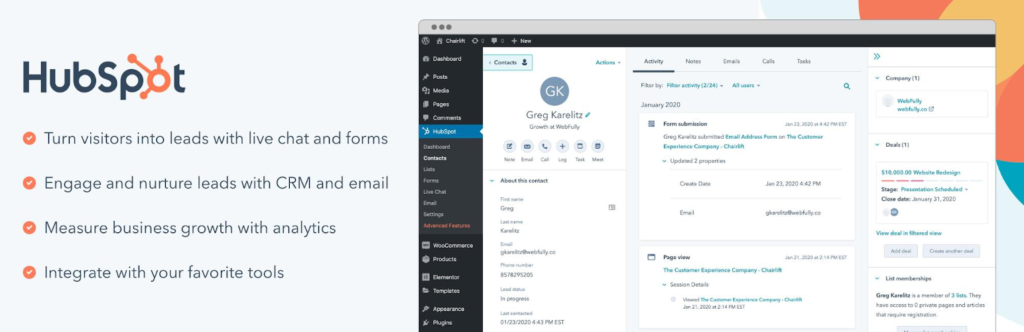
HubSpot Email Marketing is widely regarded as one of the best email marketing platforms for businesses that focus on inbound strategies. It integrates seamlessly with HubSpot’s CRM, enabling users to create personalized campaigns based on detailed contact data. The platform includes email templates, drag-and-drop editing, segmentation, and A/B testing, allowing marketers to craft high-impact campaigns efficiently. Its automation features include workflows, triggers, and personalized follow-ups, helping businesses engage leads and nurture customers effectively.
HubSpot provides extensive analytics and reporting to track performance, optimize content, and measure ROI. Its free plan offers significant value, including email marketing tools, forms, and CRM access, making it ideal for startups or small businesses. With scalable features for growing companies, robust integration capabilities, and reliable deliverability, HubSpot Email Marketing consistently ranks among the best email marketing platforms for organizations seeking unified sales and marketing solutions.
Key Features:
- Segmentation, workflows, and triggered automation
- A/B testing and analytics
- Free plan includes CRM and forms
- High deliverability
7. AWeber

AWeber is one of the longest-standing and most reliable options among the best email marketing platforms. It offers powerful automation tools, dynamic content features, and a wide selection of professionally designed templates for campaigns. AWeber simplifies list management, segmentation, and subscriber tagging, allowing businesses to send personalized messages that engage and convert effectively. Its autoresponder system automates sequences such as welcome emails, promotions, and follow-ups, saving time for marketers.
The platform also provides in-depth reporting, tracking key metrics like open rates, click-through rates, and subscriber activity. Integration with eCommerce platforms, CRMs, and landing page builders enhances its flexibility for multi-channel marketing. With high deliverability rates, easy-to-use design tools, and responsive customer support, AWeber ensures campaigns reach subscribers consistently. For small businesses, startups, and growing companies, it remains one of the most trustworthy and feature-rich options among the best email marketing platforms available today.
Key Features:
- Autoresponders and dynamic content features
- Professionally designed email templates
- List management and tagging
- Segmentation for personalized messaging
Trends in Email Marketing
- AI-Powered Personalization: Predictive analytics help send hyper-targeted content based on user behavior.
- Interactive Emails: Polls, quizzes, countdown timers, and carousels boost engagement within emails.
- Omnichannel Integration: Combining email with SMS, push notifications, and social media campaigns for unified marketing.
- Advanced Automation: Triggered workflows based on real-time user actions like purchases or website visits.
- User-Generated Content (UGC): Including reviews, testimonials, and social posts in emails to increase trust and click-throughs.
- Sustainability Messaging: Eco-conscious businesses highlight sustainability in campaigns to connect with values-driven consumers.
Conclusion
Leveraging the best email marketing platforms can transform the way businesses engage with audiences and drive growth. From automation and segmentation to analytics and integrations, the right platform simplifies complex marketing processes while enabling highly personalized campaigns. Implementing best practices like A/B testing, mobile optimization, and clear CTAs ensures your messages not only reach inboxes but also inspire action. As trends like AI personalization, interactive content, and omnichannel integration continue to shape email marketing, choosing a versatile and scalable platform becomes even more critical.
By understanding each platform’s strengths and aligning them with your goals, you can maximize ROI, strengthen customer relationships, and create campaigns that consistently deliver results