Small businesses face growing competition in today’s fast-paced online marketplace, making the choice of platform a critical decision. Choosing the best ecommerce website builder for small business can simplify setup, support growth, and provide powerful marketing features without overwhelming the user. In 2026, many platforms now integrate smart tools, including AI website builder, which help entrepreneurs design professional online stores quickly and efficiently, even without coding knowledge.
The right ecommerce platform allows you to manage inventory, optimize SEO, integrate payments, and deliver a seamless shopping experience for customers. As trends and customer expectations evolve, investing in a builder that combines automation, flexibility, and scalability can give your business a competitive edge. In this blog, we explore the most reliable platforms available in 2026, highlighting their features, strengths, and suitability for small businesses, so you can choose the one that fits your goals.
What Makes the Best Ecommerce Website Builder for Small Business?
- Easy to use
The platform should allow business owners to create and manage their store without technical skills.
Simple tools help launch faster and reduce dependency on developers. - Strong ecommerce performance
It should handle product listings, cart functions, and checkout smoothly. Reliable performance improves customer trust and conversion rates. - Scalable and flexible
The builder must support business growth as product range and traffic increase. Scalability prevents the need to migrate to a new platform later. - Reliable hosting and security
Built-in hosting ensures the website stays online without interruptions. Security features protect customer data and payment information. - SEO-friendly and mobile-optimized
SEO tools help improve visibility on search engines and drive organic traffic. Mobile optimization ensures a smooth experience across all devices. - Built-in marketing tools
Marketing features help attract, engage, and retain customers. Promotions and discounts can be managed directly from the platform. - Simple dashboard
A clean dashboard allows quick updates to products and content. This saves time and reduces the need for technical assistance. - Multiple payment options
The platform should support various payment gateways and currencies. Flexible payments improve customer convenience and global reach. - Responsive customer support
Good support helps resolve technical issues quickly. This minimizes downtime and keeps the store running smoothly.
Comparison Table: Best Ecommerce Website Builders for Small Business
| Platform | Best For | Strength Level | Ideal Business Stage |
|---|---|---|---|
| Shopify | Product-focused online stores selling physical goods | Strong ecommerce tools, payments, shipping, and scalability | Growing businesses planning long-term expansion |
| WooCommerce | Custom, niche, or WordPress-based stores | High flexibility, full control, plugin-driven customization | Small to mid-size businesses needing customization |
| Hostinger Website Builder | Budget-friendly and first-time online stores | Easy setup, built-in hosting, simple store management | Beginners and startups launching their first store |
| WebWave | Design-led and creative businesses | Free-form design control with essential ecommerce features | Small businesses focused on unique layouts |
| Squarespace | Visual brands and curated product boutiques | Premium design, strong branding, clean storefronts | Small boutiques and creative sellers |
Deep Dive Into Each Ecommerce Builder
Here’s a brief overview of what makes each platform a strong choice for small businesses
Shopify
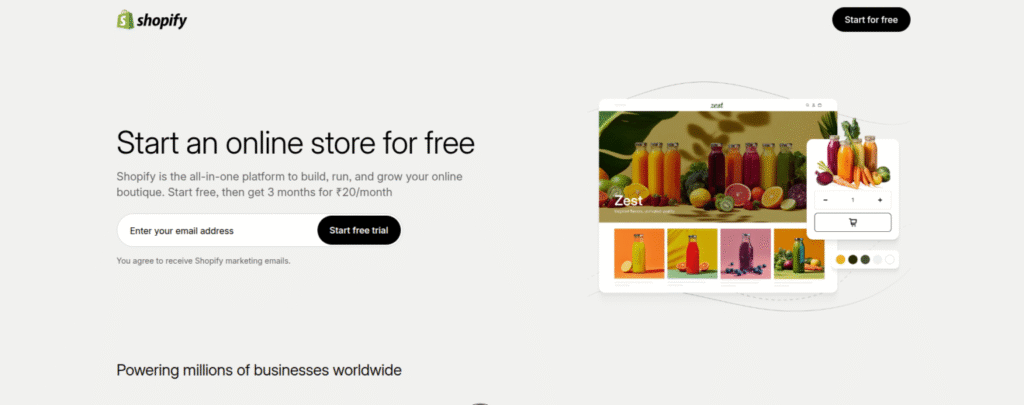
Shopify stands out for its simplicity and ability to grow with your business. Many entrepreneurs consider it the best ecommerce website builder for small business because it combines user-friendly tools with enterprise-level reliability. Shopify makes an ideal choice for small businesses that want a fast setup without technical challenges. It suits product-based businesses such as clothing brands, beauty shops, home décor stores, local retailers, and lifestyle product sellers who want to sell across multiple channels.
The platform includes automatic tax settings, shipping integrations, and abandoned-cart recovery that benefit stores with frequent orders. Shopify also works perfectly for small businesses planning to scale into larger operations because it handles high traffic and bigger inventories easily. For founders who want professional design, strong branding, and long-term growth without managing server maintenance, Shopify remains one of the most reliable options.
Key Strengths and Advantages
- Offers extensive third-party app integrations for advanced features like loyalty programs and subscriptions
- Supports multi-location inventory management, useful for businesses expanding offline and online
- Provides detailed analytics and reporting to track sales performance and customer behavior
WooCommerce
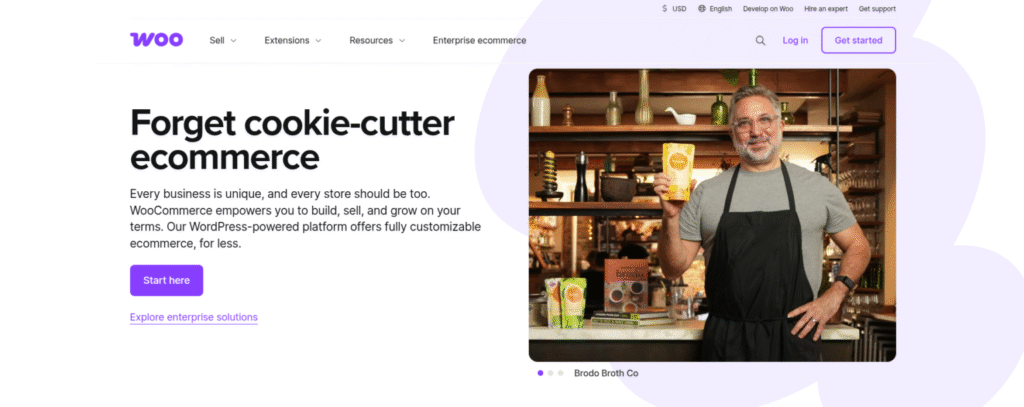
WooCommerce is a powerful WordPress website builder that gives small businesses full control over their online store. It’s perfect for niche shops, custom product stores, and digital products where flexibility is key. Built on WordPress, WooCommerce allows you to customize your site completely, from checkout workflows to product layouts, and leverage a vast library of plugins and themes for advanced features.
While it requires slightly more setup and maintenance than hosted platforms, WooCommerce offers unmatched control over SEO, design, and functionality. This makes it ideal for small to mid-size businesses that want a tailored online store without being locked into a rigid platform. With the right hosting and extensions, WooCommerce can scale as your business grows, making it a long-term solution for entrepreneurs seeking flexibility and customization.
Key Strengths and Advantages
- Allows complete ownership of store data without platform lock-in
- Integrates seamlessly with content-heavy websites, blogs, and landing pages
- Gives full control over site speed optimization through hosting and caching choices
Hostinger

Hostinger Website Builder is an affordable, all-in-one platform that many entrepreneurs consider a strong contender for the best ecommerce website builder for small business, especially for beginners and budget-conscious sellers. It combines a visual drag-and-drop editor with built-in hosting, domain support, and ecommerce tools, making setup fast and straightforward even without technical experience.
Hostinger suits startups, home-based sellers, freelancers, and small businesses with limited inventories. The platform includes essential ecommerce features such as product listings, secure payment integrations, order management, and mobile-friendly designs. Its intuitive dashboard helps owners manage products, track sales, and launch promotions without getting overwhelmed by complex settings.
What sets Hostinger apart is its cost-effectiveness: plans include hosting and website building in one package, which simplifies billing and lowers upfront costs. While it may lack some advanced ecommerce features found in enterprise platforms, Hostinger provides more than enough tools for small stores to sell online confidently and grow over time.
Whether you’re launching your first online shop or upgrading from a basic website, Hostinger Website Builder delivers an easy path to ecommerce success with solid performance, essential features, and a friendly learning curve.
Key Strengths and Advantages
- Includes AI-assisted website setup to speed up initial store creation
- Combines hosting, builder, and ecommerce tools into a single subscription
- Ideal for testing business ideas quickly with low upfront investment
Squarespace

Squarespace is well-known for its beautiful templates and visually polished design system. It earns a place among contenders for the best ecommerce website builder for small business due to its strong balance between aesthetics and functionality. Squarespace suits creative businesses such as artists, photographers, boutique clothing stores, jewelry makers, wellness brands, and home décor sellers who rely on high-quality visuals.
It also benefits service-led businesses that want integrated booking systems alongside online selling. Squarespace works particularly well for shops where storytelling, visual branding, and clean product presentation are essential. Since its inventory system favors smaller catalogs, it’s ideal for brands selling curated product lines rather than thousands of items. For small entrepreneurs wanting a premium look and feel without hiring a designer, Squarespace remains one of the best platforms available.
Key Strengths and Advantages
- Built-in content and product layout consistency enhances brand storytelling
- Easy integration with email campaigns and social media promotions
- Suitable for combining services, bookings, and products in one storefront
WebWave

WebWave is a flexible website builder designed for small businesses that want creative freedom without relying on templates or complex coding. It is increasingly considered a strong option for the best ecommerce website builder for small business, especially for entrepreneurs who value visual control and affordability. WebWave uses a true drag-and-drop editor, allowing users to place elements anywhere on the page, which makes it ideal for custom storefront designs.
WebWave suits small boutiques, creative entrepreneurs, designers, local businesses, and service-based sellers who want a unique-looking online store. It supports essential ecommerce features such as product management, digital and physical product selling, payment integrations, and mobile optimization. The platform also includes SEO-friendly tools that help small businesses improve visibility in search results.
While WebWave may not be as widely known as Shopify or BigCommerce, it offers a clean interface, reliable performance, and enough ecommerce functionality for small to medium-sized stores. For business owners who want design flexibility, straightforward store management, and a cost-effective solution, WebWave is a practical and growing choice.
Key Strengths and Advantages
- Allows pixel-level design control without restricting users to grids or templates
- Useful for agencies or freelancers building custom ecommerce sites for clients
- Offers multilingual support for small businesses targeting international audiences
Conclusion
Finding the best ecommerce website builder for small business comes down to understanding your goals, technical comfort, and long-term growth plans. Each platform serves a different purpose, and choosing the right one can directly impact how smoothly your business operates online. Shopify remains a strong choice for businesses planning to scale with reliable ecommerce tools and multi-channel selling. WooCommerce is ideal for entrepreneurs who want a WordPress website builder with full customization and control. Hostinger Website Builder works well for beginners and budget-conscious sellers, while WebWave offers creative freedom for design-focused businesses. Squarespace continues to stand out for visually driven brands and curated product collections.
Small businesses succeed when their ecommerce platform aligns with their product type, workflow, and marketing strategy. The right builder reduces operational complexity, improves store management, and creates a smooth shopping experience for customers. As your business evolves, your platform should support growth, automation, and changing customer expectations. Choosing the best ecommerce website builder for small business in 2026 means investing in a foundation that supports both immediate launch and long-term success.
FAQ
Shopify and Wix are the easiest options for beginners. They offer simple setup, drag-and-drop builders, and built-in tools that let small business owners launch stores without technical knowledge.
Yes, many small businesses start with a simple platform and move to a more advanced one as they scale. Choosing a builder that supports data export and integrations makes future migration easier.
Yes, modern ecommerce website builders are mobile-optimized by default. Most platforms ensure that stores work smoothly across smartphones, tablets, and desktops.
AI website builders help small businesses launch faster by automating design, layout creation, and content setup. In 2026, AI tools are increasingly used to simplify store creation and reduce manual effort.