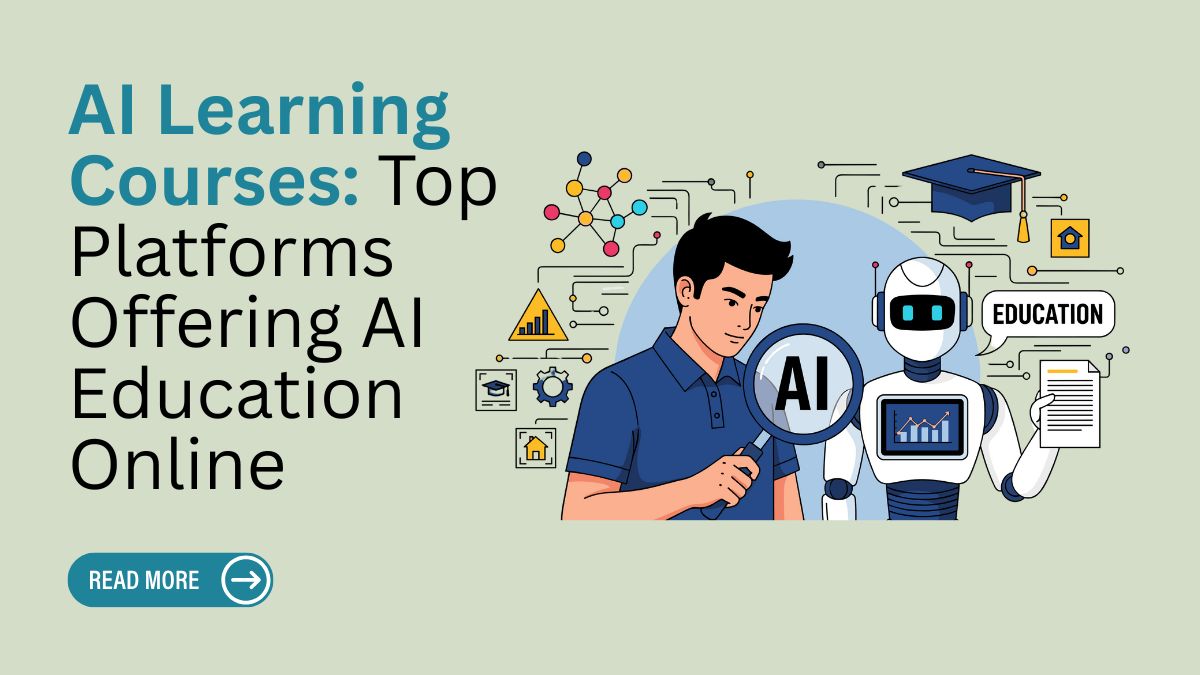
Artificial intelligence continues to redefine how industries operate, making AI education more important than ever. Instead of relying on traditional classroom learning, learners increasingly turn to online platforms that provide structured, flexible, and accessible programs. AI learning courses offered across these platforms cater to beginners, professionals, and career switchers alike. Some platforms focus on academic depth, while others emphasize hands-on industry skills. This wide range of options allows learners to match their education with personal goals, schedules, and career aspirations. Online platforms also remove geographic barriers, enabling global access to expert instructors and up-to-date curricula. As AI applications expand across business, healthcare, education, and technology, understanding where and how to learn AI becomes critical. This guide explores major platforms offering AI education and explains how each supports different learning needs.
Leading Platforms Offering AI Learning Courses
Several trusted online platforms now provide structured and flexible AI education, each designed to serve different learning needs, career goals, and experience levels. The following platforms stand out for their curriculum quality, teaching approach, and real-world relevance.
Coursera: University and Industry Collaboration
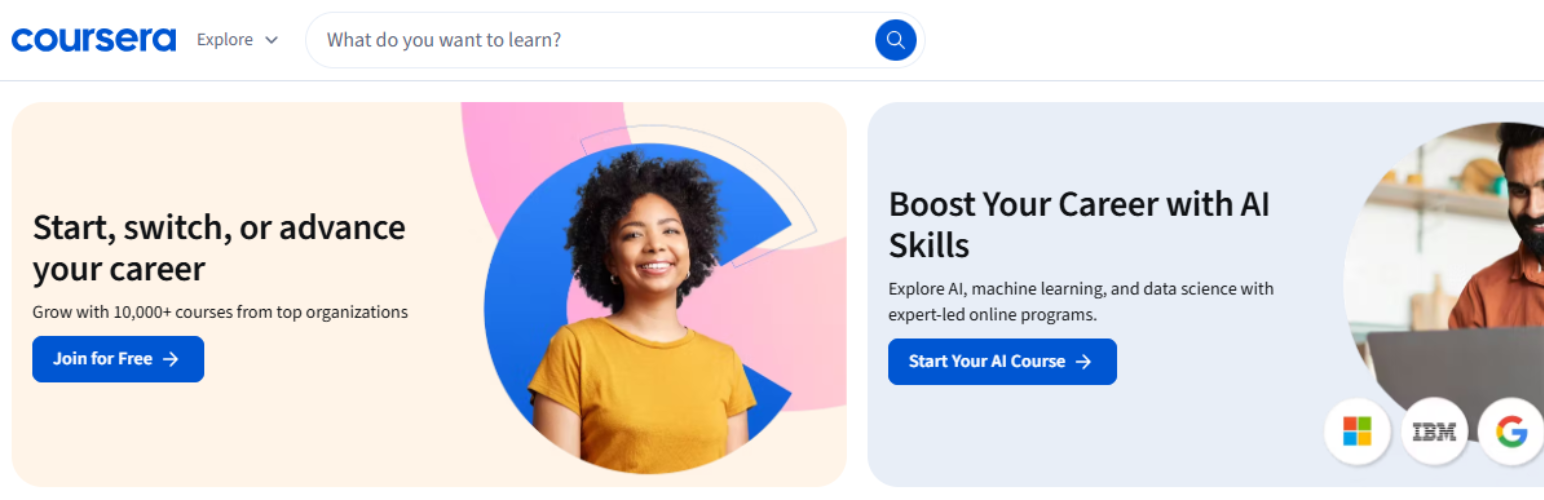
Coursera delivers AI education through partnerships with leading universities and global technology companies. Its ai learning courses range from introductory machine learning to advanced professional certificates and degree programs. Universities like Stanford and institutions such as Google and IBM design the content, ensuring academic credibility and industry relevance. Learners follow structured modules that include video lectures, quizzes, peer-reviewed assignments, and hands-on labs.
Coursera supports flexible scheduling, making it suitable for working professionals and students. Certificates earned on the platform hold strong recognition in global job markets. Many learners value Coursera for its balance between theory and practical application. The platform also demonstrates the benefits of distance learning by offering high-quality education without location constraints, helping learners build AI skills at their own pace.
One of the key Benefits of Distance Learning is that platforms like Coursera enable learners to access globally recognized, high-quality education with a flexible schedule, allowing them to balance work, studies, and skill development without geographical limitations.
Coursera emphasizes a strong balance between theory and application. AI learning courses on this platform typically teach:
- Machine learning theory and algorithms
- Probability, statistics, and data modeling
- Neural networks and deep learning basics
- Ethical AI and responsible deployment
- Applied projects using real-world datasets
edX: Research-Driven AI Learning
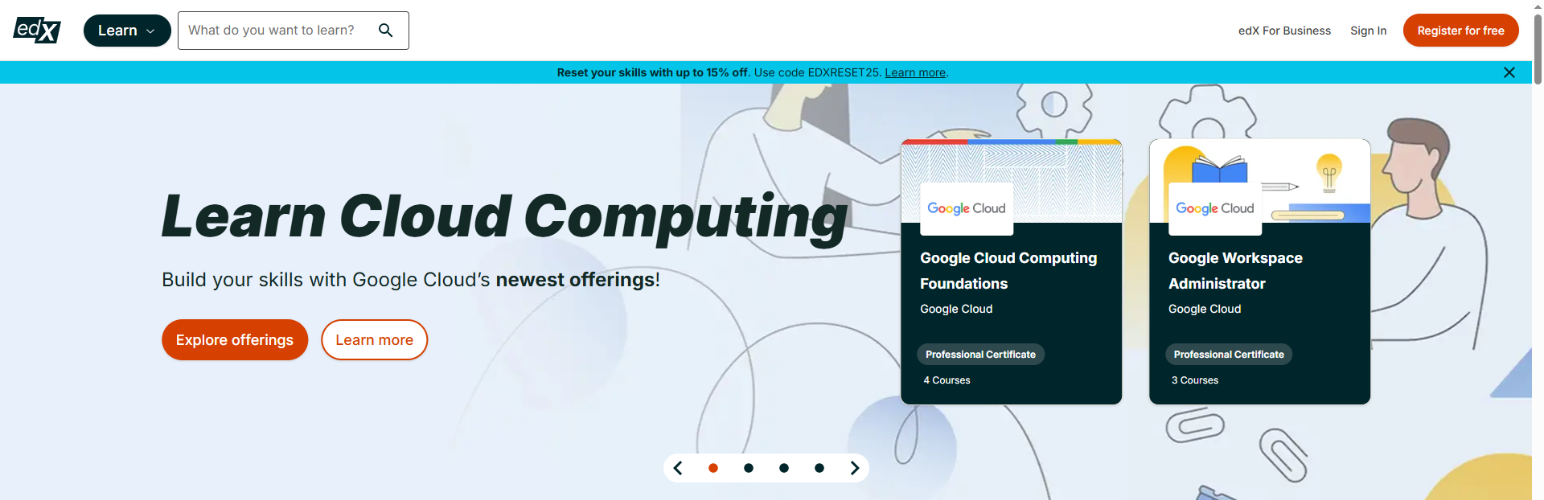
edX focuses on delivering academically rigorous AI education through collaborations with prestigious universities. Its ai learning courses emphasize strong theoretical foundations in artificial intelligence, machine learning, and data science. Institutions like MIT and Harvard contribute to course design, ensuring content reflects the latest research and academic standards. Learners engage with structured syllabi, graded assessments, and practical exercises that reinforce complex concepts. edX also offers professional certificates and MicroMasters programs that support career progression or further academic study.
The platform suits learners who prefer in-depth explanations and systematic learning paths. Self-paced formats allow flexibility, while instructor-led options add structure. edX appeals to learners who value academic depth, long-term skill development, and credentials backed by globally recognized institutions.
edX focuses on academically rigorous and research-driven skills. Learners commonly gain:
- Advanced machine learning concepts
- Artificial intelligence theory and mathematics
- Robotics and autonomous systems basics
- AI ethics, governance, and policy understanding
- Structured problem-solving through assessments
Udacity: Career-Focused AI Programs

Udacity designs its AI programs with a strong focus on employability and real-world application. Its ai learning courses primarily appear as Nanodegree programs developed in collaboration with industry partners. Learners work on practical projects that simulate real workplace challenges, such as building predictive models or deploying AI solutions. Udacity emphasizes mentorship, code reviews, and portfolio development to prepare learners for job transitions.
The platform supports learners with career services, including resume guidance and interview preparation. Udacity attracts professionals who want to upskill quickly or move into AI-focused roles. Its hands-on approach prioritizes applied knowledge over theory-heavy instruction, making it ideal for learners who value practical outcomes and industry alignment.
Udacity prioritizes industry-readiness and applied learning. Skills taught often include:
- Building and deploying machine learning models
- Working with real-world datasets and pipelines
- Model optimization and performance tuning
- AI project portfolio development
- Collaboration using industry-standard tools
Udemy: Flexible and Self-Paced AI Learning

Udemy operates as an open marketplace offering thousands of AI-related courses created by independent instructors. AI learning courses on Udemy cover a broad spectrum, from beginner introductions to specialized topics like automation and AI-driven analytics. Learners purchase individual courses and gain lifetime access, allowing complete control over pace and schedule. Ratings, reviews, and previews help learners evaluate course quality before enrolling.
Udemy suits learners who want affordable, flexible learning without long-term commitments. Many professionals use Udemy to supplement existing skills, including paths like web development courses online. While the platform lacks standardized curriculum oversight, its diversity makes it ideal for exploration and skill-specific learning.
Overall, Udemy stands out as the Best Platform for Online Courses for learners seeking affordable, flexible, and skill-specific AI education with the freedom to learn at their own pace.
Udemy offers diverse and skill-specific learning depending on the instructor. Common skills include:
- Introductory machine learning concepts
- Python programming for AI use cases
- AI automation and workflow optimization
- Practical AI applications for business and marketing
- Tool-based learning with flexible pacing
DataCamp: Data Science–Driven AI Learning
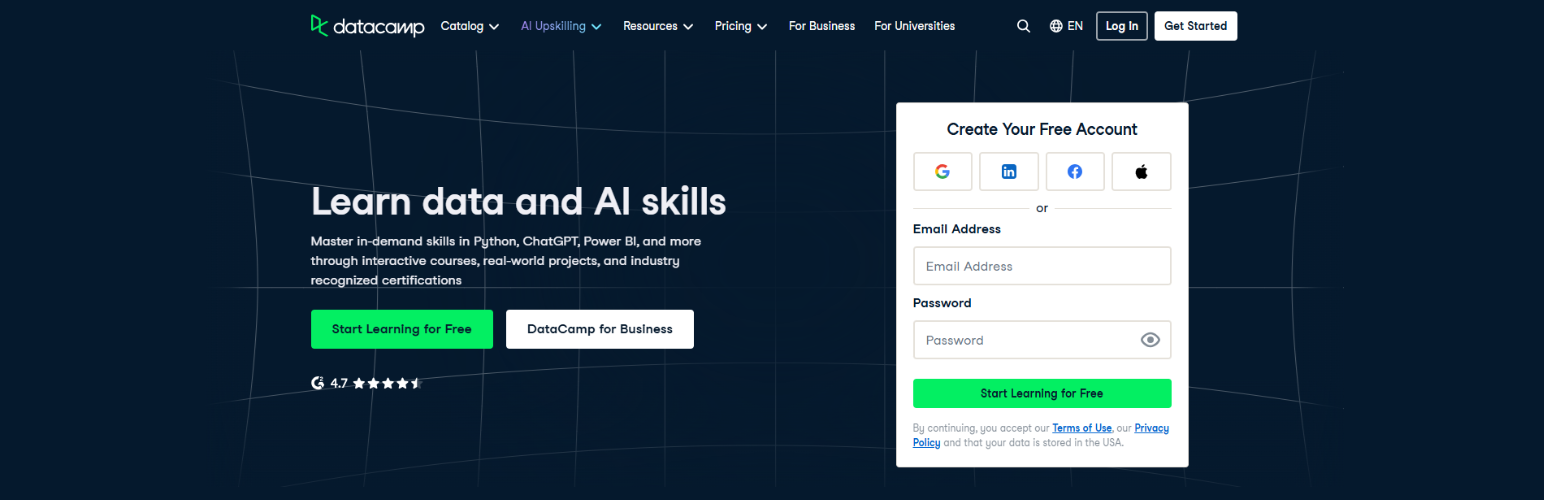
DataCamp specializes in data-centric education with a strong focus on analytics, statistics, and machine learning. Its ai learning courses emphasize practical skills such as data manipulation, model building, and interpretation using real datasets. Learners practice coding directly in interactive, browser-based environments, which helps reinforce concepts through continuous application. DataCamp primarily targets aspiring data scientists, analysts, and professionals working with large datasets.
The platform offers structured learning tracks that guide learners from foundational concepts to advanced machine learning techniques. Built-in progress tracking and skill assessments allow learners to measure improvement and identify knowledge gaps. DataCamp appeals to learners who prefer learning through hands-on exercises rather than traditional lectures. By focusing on applied data skills, the platform prepares learners for analytical roles where AI and data-driven decision-making play a critical role.
DataCamp focuses on data-driven AI skills. Learners typically develop:
- Data cleaning and manipulation
- Machine learning for analytics
- Python and statistical programming
- Model evaluation and interpretation
- Data visualization for AI insights
Codecademy: Programming Foundations for AI Learners

Codecademy focuses on building strong programming foundations that support AI learning and development. Its ai learning courses introduce learners to essential programming languages such as Python while gradually integrating machine learning concepts. Interactive lessons allow learners to write and test code directly in the browser, encouraging experimentation and active engagement.
Codecademy suits beginners and career switchers who want to understand how AI works from a coding perspective. The platform provides guided learning paths, quizzes, and practical challenges that help reinforce core concepts. Clear explanations and immediate feedback make learning approachable and structured. Codecademy appeals to learners who want to develop technical confidence before advancing into specialized AI or data science roles. This foundation-based approach helps learners build long-term programming skills that support future AI specialization. By building strong programming fundamentals through Web Development Courses Online, learners can gain the technical confidence needed to understand how AI systems work and smoothly transition into advanced machine learning and data science concepts.
Codecademy builds strong technical foundations for AI learners. Skills include:
- Python programming fundamentals
- Algorithmic thinking for AI
- Introductory machine learning workflows
- Debugging and code optimization
- Transition skills from programming to AI
LinkedIn Learning: AI for Business Professionals

LinkedIn Learning offers AI education designed for professionals across industries. Its ai learning courses focus on practical understanding rather than deep technical implementation. Courses explore how AI impacts business strategy, productivity, and decision-making. Short, modular lessons allow learners to fit learning into busy schedules. Many courses target managers, consultants, and analysts who need AI literacy rather than coding expertise. Integration with LinkedIn profiles enables learners to showcase completed courses to employers.
LinkedIn Learning suits professionals who want to understand AI’s role in modern workplaces and leadership contexts. The platform supports career growth by aligning AI knowledge with real business applications and professional development goals.
LinkedIn Learning emphasizes AI literacy for professionals. Learners gain:
- AI concepts for business decision-making
- Automation and productivity tools
- AI adoption strategies
- Ethical considerations in workplace AI
- Communication of AI insights to stakeholders
Google, IBM, and Microsoft Learning Platforms

Major technology companies provide AI education through proprietary learning platforms designed to reflect real-world enterprise environments. Google, IBM, and Microsoft offer ai learning courses that align closely with their cloud ecosystems, machine learning services, and AI development tools. These programs allow learners to gain hands-on experience with enterprise-grade technologies, APIs, frameworks, and deployment workflows commonly used in professional settings. Courses often include guided labs, practical demonstrations, and real-world case studies that simulate business challenges. Company-backed platforms strongly emphasize job-ready skills and industry-recognized certifications that validate applied expertise rather than theoretical knowledge alone. Employers frequently value these credentials because they demonstrate familiarity with widely adopted AI tools and platforms.
These learning environments work particularly well for learners aiming to specialize in enterprise AI solutions, cloud-based machine learning, and scalable AI services. By learning directly from technology providers, learners stay aligned with current industry standards and evolving technological trends.
Enterprise-focused platforms teach applied, job-ready skills such as:
- Cloud-based machine learning services
- AI APIs and enterprise frameworks
- Model deployment on cloud infrastructure
- Security, scalability, and governance
- Tool-specific certification readiness
Conclusion
The wide range of online platforms reflects the rapidly growing demand for AI education across industries and professions. Each platform offers distinct advantages, ranging from university-led academic rigor to hands-on, industry-driven training designed for immediate workplace application. AI learning courses give learners the flexibility to acquire future-ready skills through accessible, self-paced, and structured pathways that suit different schedules and commitments. Choosing the right platform depends on several factors, including career goals, prior experience, preferred learning format, and the level of practical exposure required. When learners understand the unique strengths of each platform, they can design effective and personalized learning journeys that align with long-term professional objectives. As artificial intelligence continues to reshape how organizations operate, make decisions, and innovate, selecting the right learning platform becomes more than an educational choice, it becomes a strategic investment in sustained career growth, adaptability, and long-term professional success in an AI-driven world.