Email automation tools have revolutionized the way businesses manage their marketing campaigns, offering a smart solution to streamline repetitive tasks and improve overall efficiency. By automating emails, businesses can focus on strategic planning, content creation, and customer engagement instead of spending hours manually sending messages. These tools allow for highly personalized communication, enabling marketers to deliver content tailored to subscriber behavior, preferences, and demographics. Additionally, automated workflows help nurture leads systematically, guiding them through the sales funnel with timely messages that increase the likelihood of conversion.
Email automation also provide detailed analytics, allowing businesses to monitor performance, optimize campaigns, and make data-driven decisions. Whether it’s welcoming new subscribers, following up on purchases, or maintaining ongoing communication with clients, these tools ensure consistency, scalability, and effectiveness in email marketing, benefiting businesses of all sizes and industries.
Quick Comparison Table
| Tool | Key Features | Pros | Cons |
| Brevo | Drag-and-drop editor, pre-designed templates, advanced automation, e-commerce integration | User-friendly, strong analytics, multi-channel integration | Limited automation on free plan |
| HubSpot | Full-feature CRM, workflow triggers, lead scoring, detailed analytics | All-in-one platform, robust reporting, seamless integrations | High cost for advanced plans |
| ActiveCampaign | Multi-step automation, dynamic content personalization, advanced segmentation | Powerful automation, flexible segmentation, robust integrations | Learning curve for beginners |
| EmailOctopus | Visual workflow builder, SMS campaigns, transactional emails, advanced segmentation | Affordable, scalable, multi-channel | Daily sending limit on free plan |
| MailBluster | Visual automation editor, dynamic content, robust segmentation, integrations | Ideal for creators, simple automation, personalization | Fewer e-commerce integrations |
Benefits of Using Email Automation Tools
Integrating email automation tools into your marketing strategy provides several advantages:
- Time Efficiency: Automating repetitive email tasks frees up marketers to focus on strategy, content creation, and other critical business areas.
- Personalized Communication: Automation allows you to send highly personalized messages to your subscribers based on their interests, behavior, and demographics, resulting in higher engagement.
- Improved Lead Nurturing: With automated workflows, you can nurture leads effectively by sending the right content at the right time, guiding them smoothly through the sales funnel.
- Enhanced Analytics: Most tools offer detailed performance reports, helping businesses track open rates, click-through rates, and conversions, allowing for data-driven decision-making.
- Scalability: Whether your subscriber list is growing slowly or rapidly, automation ensures consistent communication without overwhelming your marketing team.
5 Popular Email Automation Tools
There are numerous email automation tools available, each offering unique features to suit different business needs. Here are some of the most popular and effective options:
1. Brevo

Brevo is a versatile email automation and multichannel marketing platform that helps businesses of all sizes create professional campaigns with ease. It features an intuitive drag-and-drop email builder, customizable templates, and advanced workflows that let you automate welcome sequences, follow-ups, and triggered messages without any coding skills. Brevo also offers audience segmentation tools so you can target contacts based on behavior and engagement for more effective results. Comprehensive analytics help you track open rates, click-through rates, and overall performance to optimize future campaigns.
One of Brevo’s strengths is its seamless integration with e-commerce platforms, CRM systems, and digital tools like Shopify, WordPress, and Zapier, allowing you to unify your marketing ecosystem and automate cross-channel communication. You can also send SMS and WhatsApp campaigns alongside email to reach customers where they engage most.
Pricing:
Free plan: Up to 300 emails per day, unlimited contacts, drag-and-drop editor, templates, basic automation, reporting, and transactional messaging.
Starter: From ~$9/month – increased email sends with no daily limit, AI content generator, forms, segmentation.
Standard: From ~$18/month – automation, A/B testing, advanced analytics, landing pages.
Professional: From hundreds per month – multichannel messaging, multi-user access, advanced features. Small businesses, beginners, and e-commerce stores
2. HubSpot
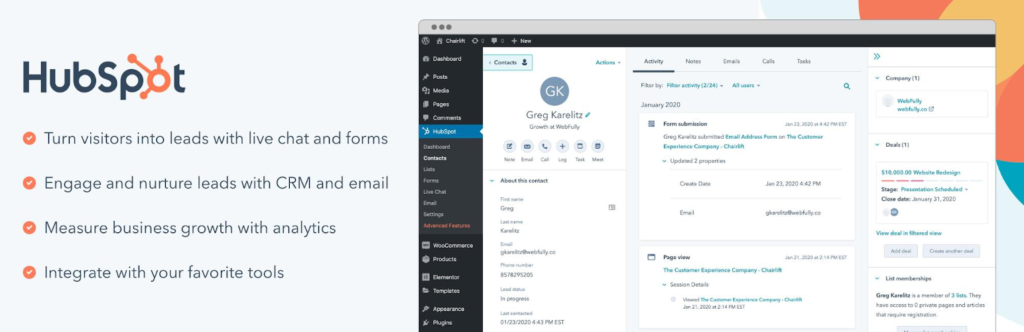
HubSpot is a powerful platform that combines email automation tools with a full-featured CRM, ideal for marketers seeking an all-in-one solution. Its automation workflows allow emails to be triggered by user actions such as form submissions, website visits, or purchase behavior. HubSpot’s drag-and-drop editor simplifies email creation, while segmentation ensures messages reach the right audience.
The platform also provides lead scoring, pipeline management, and detailed analytics, giving marketers insight into campaign performance and ROI. HubSpot integrates with hundreds of third-party apps, social media, and e-commerce platforms, ensuring seamless data flow. Its CRM and automation combination allows businesses to nurture leads, boost engagement, and retain customers efficiently.
Pricing:
- Free plan: Basic email marketing & CRM
- Starter: $25/month
- Professional: $800/month
- Enterprise: $3,200/month
Best For:
B2B businesses, growing companies, and enterprises
3. ActiveCampaign

Active Campaign combines email automation tools with CRM and customer experience features, offering advanced capabilities for marketers. Its multi-step automation workflows can be triggered by subscriber behavior, purchases, or engagement actions, providing timely and relevant messaging. Dynamic content personalization allows emails to adapt based on user preferences or past interactions. With robust audience segmentation, marketers can target messages precisely, increasing engagement and conversions.
The platform supports A/B testing, analytics, and reporting, enabling continuous optimization of campaigns. ActiveCampaign integrates with e-commerce platforms, CRMs, and third-party apps, creating a cohesive marketing system. It is ideal for businesses seeking automated lead nurturing, abandoned cart recovery, and follow-up sequences.
Pricing:
- Lite: $15/month (email marketing, automation)
- Plus: $70/month (CRM and advanced automation)
- Professional: $187/month
- Enterprise: Custom pricing
Best For:
Businesses needing advanced automation and CRM integration
4. EmailOctopus

EmailOctopus is a lightweight and efficient email marketing platform designed for users who want simplicity without sacrificing essential features. It offers an easy-to-use drag-and-drop editor and clean templates that help you create professional, branded emails without any technical complexity. This makes it well suited for newsletters, announcements, and ongoing audience communication. With built-in automation workflows and subscriber segmentation, EmailOctopus enables targeted messaging that improves engagement and relevance across campaigns. The platform also supports landing pages and signup forms, making it easier to grow and manage your email list from multiple channels. Its reporting and analytics tools provide clear insights into open rates, click activity, and subscriber behavior, helping you refine your email strategy over time. EmailOctopus integrates smoothly with popular tools and services, allowing businesses to connect email marketing with their broader workflows.
Overall, EmailOctopus focuses on usability, reliability, and essential marketing functionality. It’s a practical choice for creators, startups, and small businesses looking to run effective email campaigns, maintain consistent branding, and build long-term subscriber relationships without unnecessary complexity.
Pricing:
- Free Plan: Up to 2,500 subscribers and 10,000 emails/month, core features included (Free)
- Pro Plans: Starting around $9/month, scalable based on subscribers with advanced features (Pro)
Best For:
Small to medium businesses and e-commerce stores
5. MailBluster
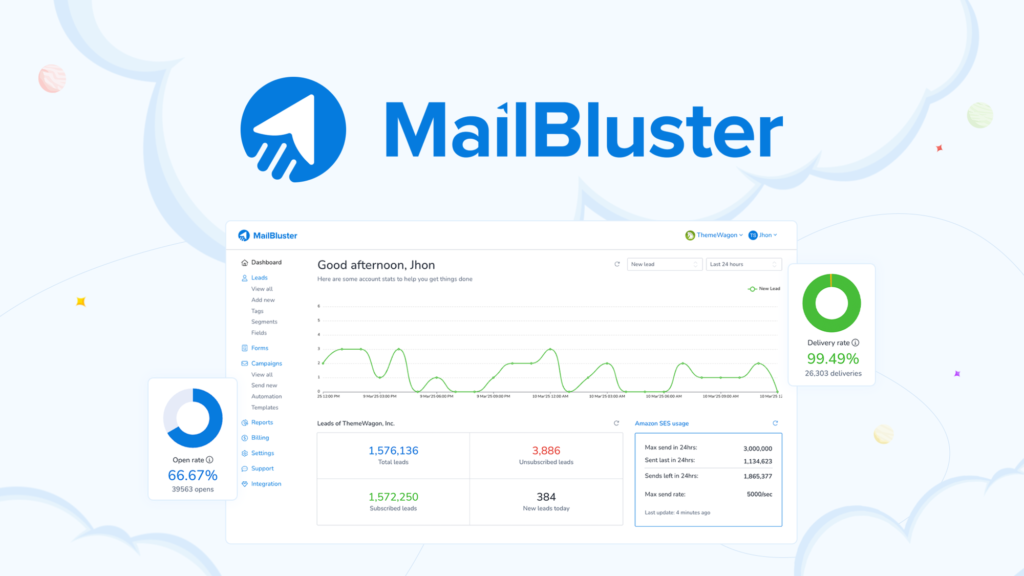
MailBluster is a cost-effective email marketing platform that helps businesses design, send, and manage campaigns without high recurring costs. It features a user-friendly drag-and-drop email builder and customizable templates, allowing you to create branded emails that look professional and match your visual identity. With tools for subscriber segmentation, automation workflows, A/B testing, and detailed analytics, MailBluster enables you to send targeted messages and monitor performance through open rates, click-throughs, and engagement metrics. It also supports forms and list management to help grow and organize your audience efficiently. MailBluster integrates with popular SMTP services like Amazon SES, Mailgun, and SMTP2GO for reliable delivery and greater control over sending infrastructure
ConvertKit integrates with landing pages, e-commerce platforms, and marketing tools, making it a versatile solution for content creators. Automation simplifies repetitive email tasks like welcome sequences and follow-ups, allowing users to focus on creating value.
Pricing:
- Starter: Free – Up to 3,000 emails with MailBluster branding.
- Pro: $60/year + $0.60 per 1,000 emails – Unlimited emails and advanced features.
Best For:
Bloggers, creators, and small businesses
Common Use Cases for Email Automation
Email automation tools can serve various purposes across industries:
- E-commerce: Recover abandoned carts, upsell products, send post-purchase follow-ups, and inform customers about new arrivals or promotions.
- SaaS Businesses: Automate onboarding sequences, feature updates, and engagement campaigns to reduce churn and increase product adoption.
- Bloggers and Content Creators: Deliver new blog posts, newsletters, and updates to subscribers automatically, keeping audiences engaged without manual effort.
- B2B Companies: Nurture leads through personalized workflows, schedule follow-up emails after meetings, and share relevant industry insights.
Future Trends in Email Automation
The world of email automation tools is continuously evolving. Here are some trends to watch:
- AI-Powered Automation: Artificial intelligence will enhance personalization, predict subscriber behavior, and optimize send times for better engagement.
- Interactive Emails: Future campaigns may include interactive elements like polls, quizzes, and embedded product carousels.
- Omnichannel Automation: Email automation will integrate seamlessly with social media, SMS, and push notifications for a holistic customer experience.
- Privacy-Focused Marketing: With increasing data privacy regulations, email automation will need to prioritize secure data handling and consent-based communication.
Conclusion
Implementing email automation tools can significantly enhance a business’s marketing efforts by saving time, improving engagement, and delivering consistent results. With features like personalized messaging, advanced segmentation, and workflow automation, these tools allow marketers to connect with their audience in a meaningful and efficient way. They also provide valuable insights through analytics, helping businesses identify what works, optimize campaigns, and maximize return on investment.
By integrating email automation into a broader marketing strategy, companies can nurture leads, retain customers, and scale operations without overburdening their teams. From small businesses and creators to large enterprises, leveraging these tools ensures that every subscriber receives timely, relevant, and personalized communication. Ultimately, email automation tools empower marketers to focus on strategy and creativity while maintaining effective, data-driven campaigns that drive growth and strengthen customer relationships.
FAQs
1. What is an email automation tool?
An email automation tool helps businesses send emails automatically based on user actions or schedules. It reduces manual work while ensuring timely and consistent communication.
2. Are email automation tools suitable for small businesses?
Yes, many email automation tools are designed for small businesses and beginners. They offer affordable plans and easy-to-use features without technical complexity.
3. How does email automation improve conversions?
It delivers personalized emails at the right time based on customer behavior. This keeps users engaged and guides them smoothly through the sales funnel.
4. What features should I look for in an email automation tool?
Look for automation workflows, audience segmentation, and performance analytics. Integrations with CRM or e-commerce platforms are also important.
5. Can email automation tools integrate with other marketing channels?
Yes, many tools support integration with SMS, CRM, and social media platforms. This helps create a consistent and unified customer experience.