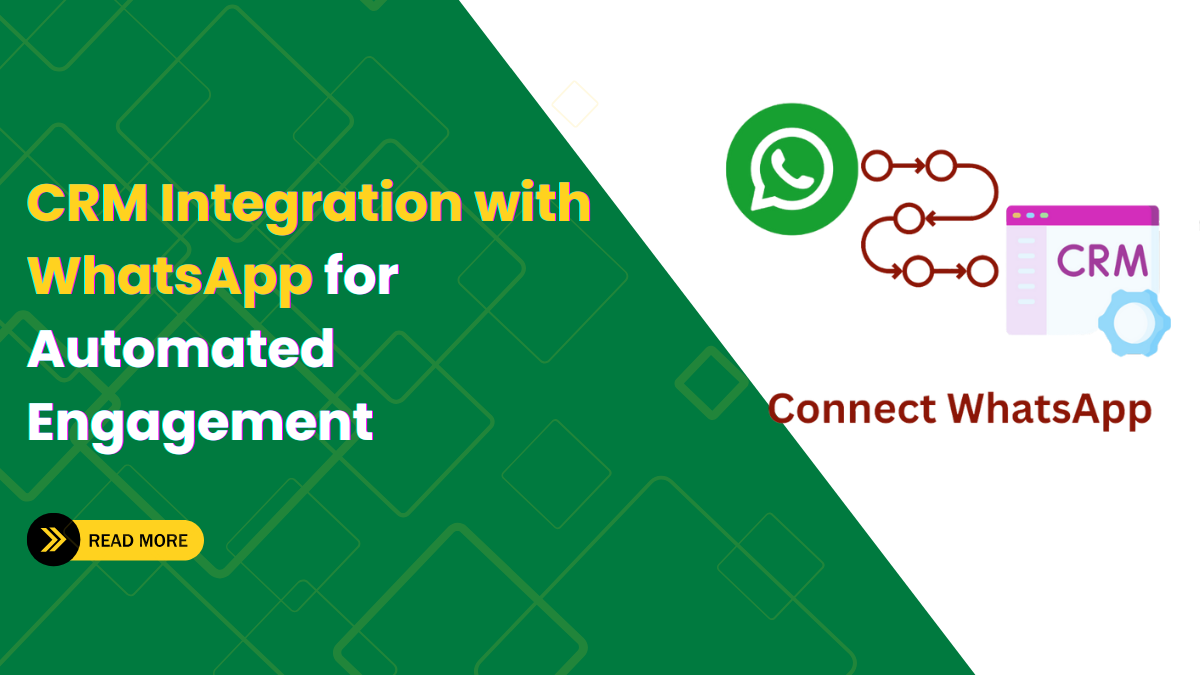
Customer communication has shifted toward faster, more conversational channels, and WhatsApp has emerged as one of the most powerful platforms for direct engagement. With billions of active users worldwide, businesses are increasingly using WhatsApp to connect with leads, support customers, and close deals in real time. However, managing these conversations separately from customer data can quickly become inefficient and disorganized. This is where CRM integration with WhatsApp plays a crucial role.
By connecting WhatsApp with a CRM system, businesses can centralize conversations, track customer interactions, and create a seamless communication workflow. Instead of scattered chats and manual updates, teams gain a unified view of every customer, enabling more personalized, timely, and data-driven interactions. This blog explores how WhatsApp CRM integration works, its key benefits, and the platforms that support it.
What Is CRM Integration with WhatsApp?
CRM integration with WhatsApp refers to the process of connecting a CRM platform with WhatsApp Business or WhatsApp Business API. This integration allows businesses to manage WhatsApp conversations directly from their CRM dashboard while automatically syncing customer data, chat history, and interaction details. Instead of switching between multiple platforms, teams can view customer profiles, previous interactions, purchase history, and support tickets in one place, even when using a free crm with WhatsApp integration Every WhatsApp message becomes part of the customer’s journey, making communication more organized and data-driven. This integration is especially valuable for sales, marketing, and support teams that rely on fast responses and personalized communication.
Why Businesses Are Adopting WhatsApp for CRM Communication
WhatsApp has become a preferred channel for customer communication for several reasons:
- It offers real-time, two-way conversations
- Messages have higher open and response rates than emails
- Customers are already comfortable using the platform
- It supports rich media such as images, videos, documents, and voice notes
- When WhatsApp is integrated into a CRM, these advantages are amplified. Teams can respond faster, personalize messages based on CRM data, and maintain a complete record of every interaction.
How CRM Integration with WhatsApp Works
The integration process typically involves using the WhatsApp Business API along with a CRM system such as Salesforce, HubSpot, Zoho CRM, or Freshsales. Here’s how it generally works:
- A customer sends a message via WhatsApp
- The message is automatically captured inside the CRM
- The CRM matches the message with an existing contact or creates a new one
- Agents respond from the CRM interface
- Chat history, notes, and customer data are stored in real time
Automation rules can also be applied. For example, incoming messages can trigger workflows, assign leads to sales reps, or send automated replies outside business hours.
Key Benefits of CRM Integration with WhatsApp
- Centralized Customer Communication: One of the biggest advantages of CRM integration is centralization. All customer conversations are stored within the CRM, eliminating the need to check multiple tools. This ensures that no message is missed and that every team member has full context.
- Faster Response Times: With WhatsApp messages appearing directly in the CRM, teams can respond instantly. Automated replies, chat routing, and quick templates further reduce response time, improving customer satisfaction.
- Improved Personalization: Since WhatsApp is connected to customer profiles, agents can personalize conversations using names, past purchases, preferences, and interaction history. Personalized communication builds trust and increases engagement.
- Better Lead Management: Sales teams can capture leads from WhatsApp conversations and automatically push them into the CRM pipeline. Leads can be scored, assigned, and nurtured without manual data entry.
- Enhanced Team Collaboration: Multiple agents can access the same WhatsApp conversation within the CRM. Internal notes, tags, and assignments make collaboration easier, especially for support and sales teams.
- Data-Driven Insights: CRM integration with WhatsApp allows businesses to analyze message volume, response times, conversion rates, and customer behavior. These insights help optimize communication strategies and improve overall performance.
Top CRM Platforms That Support WhatsApp Integration
Below are some of the most popular CRM platforms that support WhatsApp integration to help businesses communicate more efficiently.
1. Salesforce WhatsApp Integration
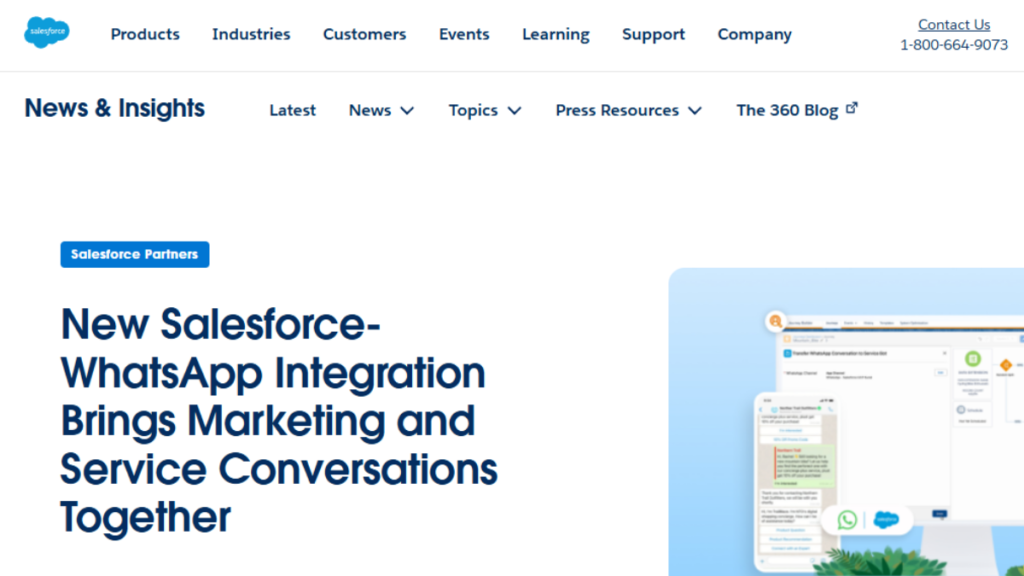
Salesforce offers a powerful solution for businesses looking to implement CRM integration with WhatsApp at an enterprise level. By connecting WhatsApp Business API with Salesforce, companies can manage customer conversations directly within their CRM environment. Every WhatsApp message is automatically linked to customer records, giving sales and support teams full visibility into interaction history, preferences, and ongoing cases. Salesforce enables advanced automation, such as routing chats to the right agents, triggering workflows based on customer actions, and using AI-driven insights to improve responses.
This integration is ideal for large organizations handling high message volumes, as it supports multi-agent access and scalable communication. With detailed analytics and reporting, businesses can track response times, customer engagement, and conversion rates. Overall, Salesforce provides a robust, secure, and highly customizable WhatsApp CRM integration for complex business needs.
2. HubSpot WhatsApp Integration

HubSpot supports CRM integration with WhatsApp through trusted third-party tools, making it a popular choice for growing businesses and marketing-focused teams. Once integrated, WhatsApp conversations sync seamlessly with HubSpot’s contact records, allowing teams to view chat history alongside emails, calls, and deals. This helps sales teams follow up faster, and marketers deliver more personalized messaging.
HubSpot’s automation features allow businesses to send automated replies, assign conversations to team members, and trigger workflows based on WhatsApp interactions. The integration also supports lead capture, enabling businesses to convert WhatsApp inquiries into CRM contacts instantly. With its user-friendly interface and strong reporting tools, HubSpot makes it easy to analyze performance and optimize a WhatsApp marketing strategy This solution works well for small to mid-sized businesses focused on sales, marketing, and customer engagement.
3. Zoho CRM WhatsApp Integration

Zoho CRM offers built-in options and partner integrations for CRM integration with WhatsApp, making it a cost-effective and flexible choice for many businesses. With this integration, WhatsApp messages are automatically logged under customer profiles, ensuring all conversations are stored in one centralized system. Sales and support teams can respond to messages directly from Zoho CRM, reducing the need to switch between platforms.
Zoho also enables automation features such as message templates, workflow triggers, and chat assignments based on predefined rules. Businesses can use WhatsApp to generate leads, send follow-ups, and provide real-time customer support. The integration supports analytics and reporting, helping teams track engagement and response efficiency. Zoho CRM is especially suitable for small to medium-sized businesses seeking an affordable yet powerful WhatsApp CRM solution, or those comparing it to an open source crm with WhatsApp integration
4. Freshsales WhatsApp Integration
Freshsales provides seamless CRM integration with WhatsApp, focusing heavily on sales productivity and customer engagement. By integrating WhatsApp into Freshsales, businesses can manage conversations directly within their sales pipelines. Incoming WhatsApp messages are linked to leads and contacts automatically, giving sales teams full context before responding.
Freshsales supports automation features such as chat assignment, follow-up reminders, and message templates, helping teams close deals faster. The integration also allows businesses to track conversation history, deal progress, and customer interactions in one place. With built-in analytics, teams can measure response times, engagement levels, and sales outcomes from WhatsApp conversations. Freshsales is an excellent choice for sales-driven teams that rely on quick communication and structured lead management through WhatsApp.
5. Pipedrive WhatsApp Integration
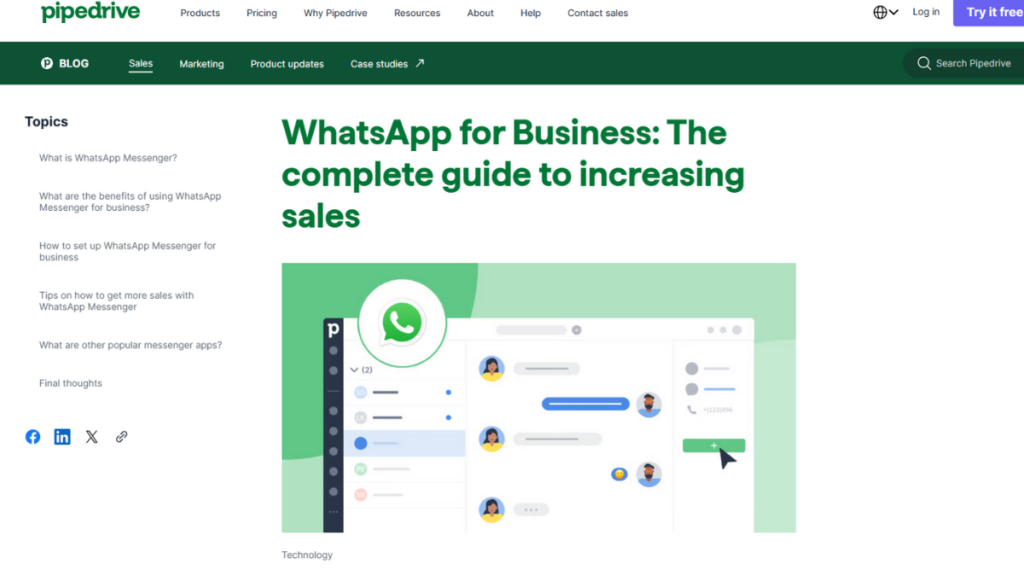
Pipedrive enables CRM integration through third-party messaging tools, making it a strong option for sales teams that prioritize simplicity and efficiency. Once connected, WhatsApp conversations are synced with deals and contact records, ensuring that all communication is tracked throughout the sales cycle. Sales representatives can view message history directly inside Pipedrive, helping them maintain context and personalize follow-ups. Automation features allow chats to trigger deal updates, task creation, and lead assignments. This integration helps sales teams stay organized while using WhatsApp as a primary communication channel.
Pipedrive’s visual pipeline, combined with WhatsApp messaging, makes it easier to move leads through different stages. It’s ideal for small to mid-sized sales teams looking to improve follow-ups and close deals faster using whatsapp crm software
Common Challenges and How to Overcome Them
- Setup Complexity: Integrating WhatsApp with a CRM can be technically complex. Working with experienced solution providers or CRM partners can simplify the process.
- Message Template Approval: WhatsApp requires approval for message templates. Planning templates in advance and following WhatsApp guidelines helps avoid delays.
- Managing High Message Volume: As message volume grows, manual handling becomes difficult. Automation, chat routing, and performance tracking help manage scale effectively.
- Training Teams: Teams need proper training to use WhatsApp CRM features effectively. Clear workflows and guidelines ensure consistent communication.
Is CRM Integration with WhatsApp Right for Your Business?
If your customers actively use WhatsApp and expect quick responses, integrating it with your CRM can significantly improve communication efficiency. Businesses that rely on sales follow-ups, customer support, and personalized engagement benefit the most from this integration.
From startups to enterprises, CRM integration with WhatsApp helps streamline operations, enhance customer experience, and drive measurable growth.
Conclusion
As customer expectations for instant and personalized communication continue to rise, businesses can no longer afford disconnected messaging systems. CRM integration with WhatsApp bridges the gap between real-time conversations and structured customer data, allowing teams to communicate more efficiently and make informed decisions. By centralizing chats, automating workflows, and providing complete customer context, this integration empowers sales, marketing, and support teams to respond faster and build stronger relationships.
Whether you are managing leads, resolving support queries, or nurturing long-term customers, WhatsApp CRM integration adds clarity and consistency to every interaction. With the right CRM platform and setup, businesses of all sizes can turn WhatsApp into a strategic communication channel that improves customer experience, boosts productivity, and supports sustainable growth.