

In recent years, VPN technology has advanced far beyond traditional, often cumbersome solutions that were slow, difficult to configure, and resource-intensive. Modern Wire VPN services leverage lightweight, high-performance protocols to deliver fast, secure, and reliable connectivity across multiple devices and platforms. Unlike older protocols such as PPTP or OpenVPN, wire-based VPNs prioritize minimal code, rapid handshakes, and strong encryption, ensuring both speed and robust security. These solutions are increasingly applied in a variety of contexts, including protecting personal privacy, enabling secure mobile connectivity, supporting remote work, and safeguarding enterprise networks. By examining real-world examples, it becomes clear how different services efficiently implement wire-based technology, reducing setup complexity while maintaining strong performance. This evolution allows both individuals and organizations to establish secure connections across diverse networks, from home setups to large-scale cloud and corporate environments, without the overhead or limitations of legacy VPN technologies.
Popular Wire VPN Services You Should Know
Wire-based VPNs provide lightweight, fast, and secure networking solutions. Below are nine real-world examples that showcase how Wire VPN technology is used for personal, commercial, and enterprise purposes.
1. WireGuard
WireGuard is the foundational wire-based VPN protocol, widely regarded for its simplicity and performance. With only a few thousand lines of code, it minimizes security vulnerabilities and allows for easy auditing. Using advanced cryptography, including ChaCha20, Poly1305, and Curve25519, it provides robust security and fast connections. WireGuard is ideal for mobile users who frequently switch networks or for servers requiring high throughput. Many VPN services have built applications built on top of WireGuard, making it a reference implementation for modern Wire VPNs.
WireGuard is widely used in corporate networks and cloud infrastructure due to its minimal overhead, allowing servers to handle more connections without compromising speed. Its simplicity makes it ideal for embedding in routers and IoT devices. Developers also value its clean codebase for easy integration into custom applications, and many Linux distributions now include WireGuard natively.
Pros:
- Lightweight and fast: Minimal code allows high-speed connections ideal for unstable networks.
- Strong security: Modern cryptography ensures robust protection.
- Cross-platform support: Works on Linux, Windows, macOS, iOS, and Android.
Cons:
- Limited features: Lacks dashboards and user management; third-party tools needed for advanced setups.
- Requires technical knowledge: Beginners may find configuration complex.
2. Tailscale
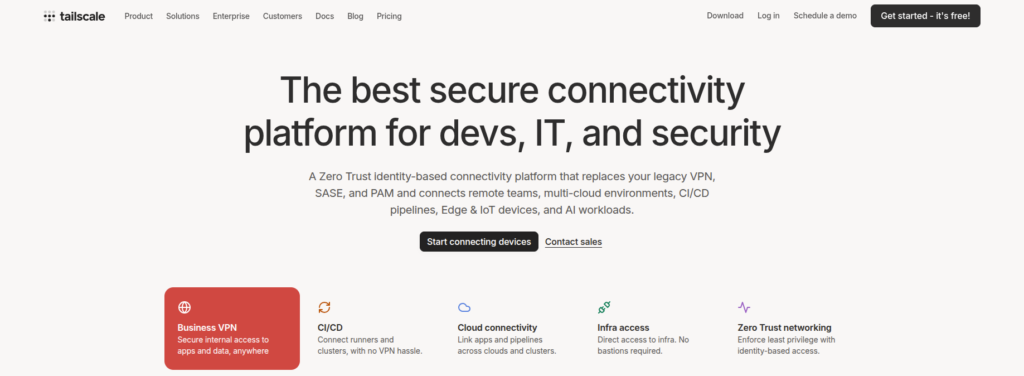
Tailscale is a wire-based VPN built on WireGuard, focused on simplifying network management for teams. It uses identity-based authentication to eliminate manual firewall rules or port forwarding. Peer-to-peer connections allow secure communication between devices without extensive IT support. Tailscale integrates with popular identity providers and provides centralized access control, making it suitable for hybrid teams and remote work environments.
Tailscale supports automatic NAT traversal, so devices behind firewalls can connect without complex configuration. It integrates with cloud services like AWS, Azure, and Google Cloud, providing secure VPN tunnels between on-premise and cloud servers. Audit logs help IT teams monitor access, and its design reduces onboarding time for remote employees.
Pros:
- Easy setup: Identity-based authentication simplifies connections.
- Reliable performance: Maintains stable peer-to-peer connections across networks.
- Team-focused: Ideal for remote work and hybrid teams.
Cons:
- Device limits on free plan: Restricted number of connected devices.
- Dependent on identity providers: Requires external authentication.
3. Cloudflare WARP

Cloudflare WARP secures traffic using WireGuard principles while routing through Cloudflare’s global network. It enhances speed and privacy, protecting users on public Wi-Fi and providing enterprises secure access to internal applications. Its zero-configuration setup and optimized routing reduce latency and improve reliability, offering a versatile solution for both individual and business users.
WARP leverages Cloudflare’s global CDN to improve performance and block malicious sites automatically. WARP for Teams enables policy-based access to internal apps without complex network setups. Its scalability suits businesses of all sizes, and users benefit from both enhanced privacy and faster connections.
Pros:
- Quick setup: Instant protection with minimal effort.
- Optimized routing: Global network ensures fast, reliable connections.
- Versatile: Suitable for both consumers and enterprise use.
Cons:
- Limited advanced controls: Less configurable than traditional enterprise VPNs.
- Not fully anonymous: Focuses on privacy, not full anonymity.
4. Proton VPN

Proton VPN is privacy-focused, leveraging WireGuard for fast, secure connections. Strict no-logs policies and multiple protocol support make it flexible for different network conditions. It ensures reliable access to geo-restricted content and maintains strong encryption, positioning it as one of the best US VPN provider options for privacy-conscious users.
Proton VPN includes Secure Core servers that route traffic through multiple countries to enhance protection against surveillance. Features like kill switches, DNS leak protection, and Tor over VPN integration make it highly secure for sensitive communications, ideal for journalists and activists.
Pros:
- Privacy-first: No-logs policy protects user data.
- Fast and stable: WireGuard improves performance.
- Flexible protocols: Supports multiple VPN protocols for different needs.
Cons:
- Premium pricing: Full features cost more than budget VPNs.
- Free tier limitations: Restricted servers and slower speeds.
5. Mullvad VPN
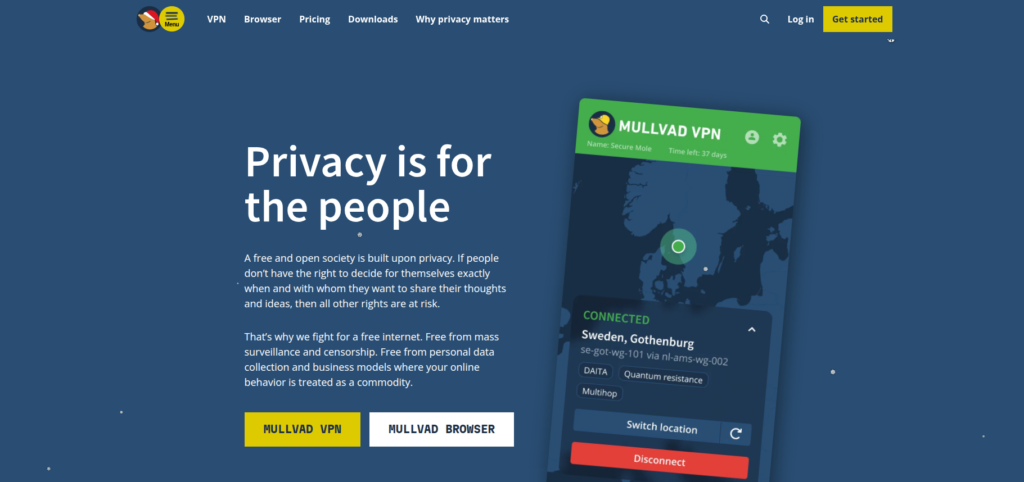
Mullvad emphasizes anonymity and privacy. Users can create accounts without personal info, and WireGuard ensures fast, low-latency connections. Its minimal infrastructure, transparency, and open-source approach make it appealing for users prioritizing privacy and security while maintaining usability.
Mullvad supports cryptocurrency and cash payments, further enhancing anonymity. It allows port forwarding for secure hosting and participates in independent security audits. Its open-source apps and documentation appeal to technically proficient users who value transparency.
Pros:
- Strong anonymity: No personal info required for accounts.
- Efficient connections: High-speed WireGuard performance.
- Privacy-focused: Clear policies and minimal infrastructure.
Cons:
- Limited consumer features: Few extras like ad-blocking or streaming optimization.
- Manual setup: Some platforms require extra configuration.
6. NordVPN
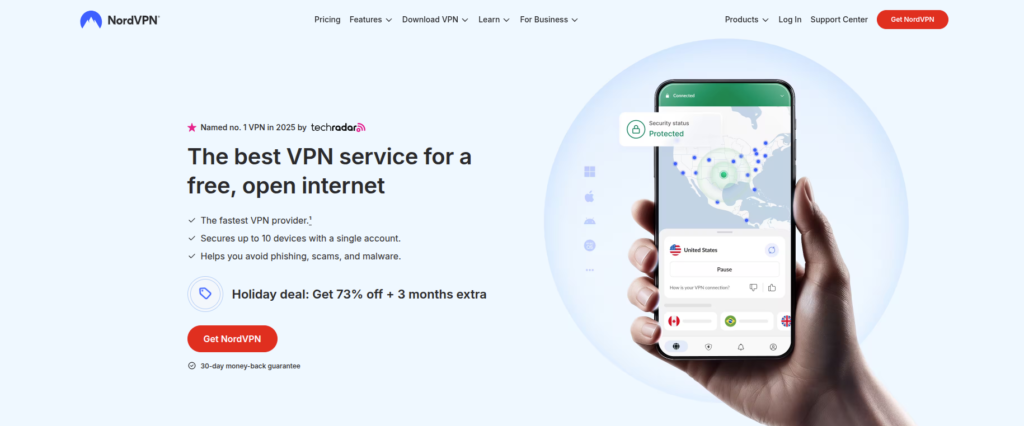
NordVPN’s WireGuard-based NordLynx protocol delivers fast, stable connections for millions of users. Multi-hop servers, leak protection, and a no-logs policy ensure privacy and security. NordVPN is ideal for streaming, gaming, and general browsing, demonstrating how wire-based VPN technology is used in mainstream commercial services.
NordVPN features specialty servers like P2P, Obfuscated, and Dedicated IP. CyberSec blocks ads and malware, enhancing security. Its infrastructure supports high-speed HD and 4K streaming, proving its capability as a high-demand commercial Wire VPN provider.
Pros:
- High performance: NordLynx provides fast and stable connections.
- Security-focused: Multi-hop and leak protection enhance safety.
- Versatile: Suitable for streaming, gaming, and privacy needs.
Cons:
- Higher cost: Premium pricing compared to budget options.
- Complex advanced features: Beginners may find them overwhelming.
7. Surfshark VPN
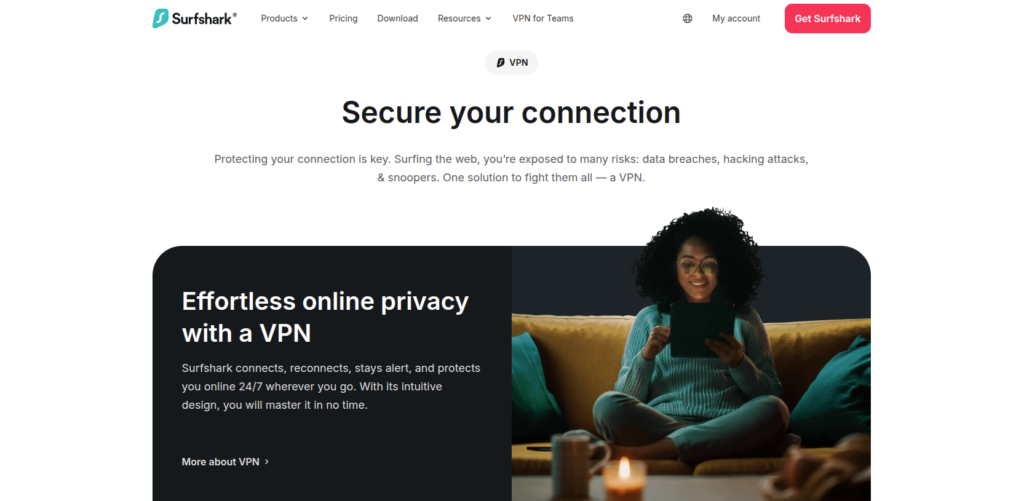
Surfshark combines affordability with high performance using WireGuard. It supports unlimited simultaneous devices and maintains strong encryption and no-logs policies. Surfshark is ideal for streaming, gaming, and remote work, showing how wire-based VPNs can meet budget-conscious users’ needs without sacrificing security or usability.
Features like MultiHop, CleanWeb ad-blocking, and split tunneling enhance security and usability. RAM-only servers ensure no permanent storage of data. Its low-latency WireGuard performance is excellent for gamers and travelers alike.
Pros:
- WireGuard speed: Low-latency connections for streaming and gaming.
- Unlimited devices: Connect as many devices as needed.
- Affordable and user-friendly: Strong performance at budget pricing.
Cons:
- Smaller server network: Less variety than larger providers.
- Support limitations: Customer service may be slower during peak demand.
8. IVPN
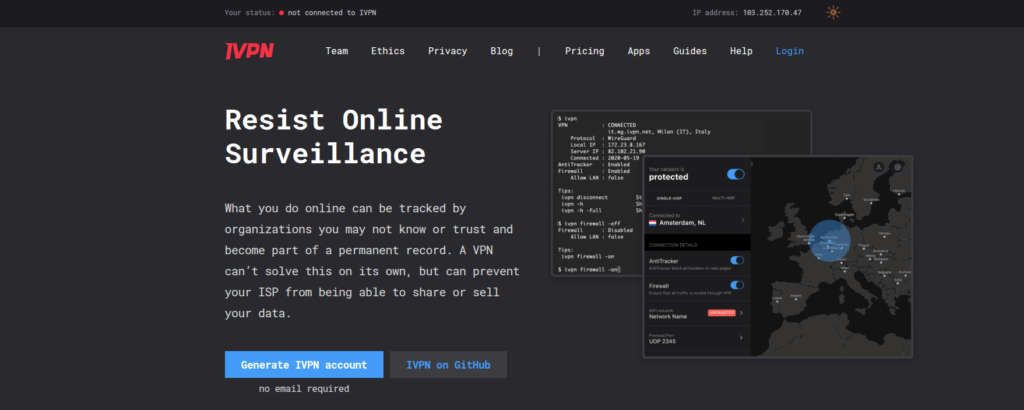
IVPN is a privacy-focused provider emphasizing transparency and security. WireGuard ensures fast, efficient connections, and its no-logs policies guarantee privacy. IVPN is a strong alternative to Windows built-in VPN, offering a modern approach for secure remote access with minimal configuration.
IVPN supports Multi-Hop connections and firewall rules for added security. Independent audits confirm its integrity. Users can quickly toggle between servers optimized for speed or privacy, making it ideal for professionals who need both flexibility and strong encryption.
Pros:
- Privacy-focused: Transparent policies and no-logs ensure security.
- Reliable connections: Low latency across multiple devices.
- Alternative to built-in VPNs: Modern, secure approach to remote access.
Cons:
- Smaller network: Fewer servers than larger providers.
- Paid-only: No free tier available.
9. Enterprise Wire-Based VPN Deployments
Enterprise Wire VPNs provide secure networking for organizations with centralized access control, encryption, and cloud integration. These solutions support remote work and hybrid networks while ensuring compliance and security.
Enterprise deployments integrate with identity management systems like LDAP and SAML. Monitoring dashboards and automated alerts enhance security. Modern enterprise Wire VPNs also support high-bandwidth operations like video conferencing and large file transfers. Some vendors offer VPN with lifetime subscription for cost-effective long-term use.
Pros:
- Scalable and secure: Centralized control with strong encryption.
- Cloud integration: Works seamlessly with hybrid networks.
- Cost-effective long-term: Some vendors offer lifetime subscriptions.
Cons:
- Requires IT expertise: Setup and maintenance can be complex.
- Upfront costs: Infrastructure and licensing may involve initial investment.
Conclusion
These nine Wire VPN examples showcase the speed, security, and versatility of modern wire-based protocols. WireGuard sets the foundation with its lightweight, high-performance design, while privacy-focused services like Proton VPN and Mullvad ensure strong anonymity and strict no-logs policies for users who prioritize online privacy. Commercial providers such as NordVPN and Surfshark demonstrate how Wire VPN technology can scale to millions of users while delivering fast, stable connections for streaming, gaming, and remote work. Tailscale and Cloudflare WARP highlight enterprise-focused features like centralized management, cloud integration, and identity-based authentication, making them ideal for hybrid teams and corporate networks. IVPN stands out as a transparent and reliable alternative to Windows built-in VPNs, offering secure connections with minimal configuration. Overall, wire-based VPNs provide high-speed, secure, and flexible networking solutions suitable for personal, business, and enterprise use, positioning them as the preferred choice over traditional VPN technologies.

Leave a Reply