Email marketing for agencies has become one of the most powerful and reliable tools for driving measurable results and fostering strong client relationships. In an era where businesses demand personalized communication and consistent engagement, agencies that master email campaigns can provide targeted strategies that boost conversions, nurture leads, and maintain long-term loyalty. Unlike social media or paid advertising, email offers direct, cost-effective communication that is trackable, stable, and highly trusted by audiences.
Agencies can leverage this channel to showcase clear ROI, manage multi-client campaigns efficiently, and build scalable workflows that save time and effort. From defining goals to creating personalized content, designing automation sequences, and analyzing performance metrics, a structured approach ensures every campaign aligns with client objectives. By understanding subscriber behavior, segmenting effectively, and delivering meaningful messages, agencies can maximize engagement, build credibility, and establish themselves as indispensable marketing partners.
Why Email Marketing Matters for Agencies
Email is one of the most direct and cost-efficient communication channels available. Unlike ads or social media, it doesn’t rely on algorithms or fluctuating platform trends. This makes it a stable, measurable, and high-trust medium, ideal for agencies that must justify ROI and report clear results.
Benefits for Agencies
- Predictable and Trackable Performance
Every campaign provides measurable metrics, open rate, click-through rate, conversions, and subscriber patterns. This helps agencies optimize content, justify client budgets, and create transparent performance reports. - High Return on Investment
Email delivers one of the highest ROIs in marketing. Strong segmentation, personalization, and automation allow agencies to build predictable revenue-driving sequences with minimal daily effort. - Stronger Long-Term Client Retention
Email services operate on recurring cycles (weekly, monthly), giving agencies a stable retainer structure. Clients value consistent performance, making email a reliable long-term offering. - Works for Any Industry
Ecommerce, real estate, hospitality, finance, education, fitness, and B2B sectors all benefit from email marketing. This makes the service scalable for agencies supporting multiple industries.
Must-Have Tools for Email Marketing
| Tool / Platform | Strengths | Ideal For |
| Mailtrap | Superior deliverability, bulk sending, templates, transactional + marketing emails | Agencies prioritizing sending reputation |
| HubSpot | CRM, marketing automation, email, reporting, all in one | Agencies managing leads + email under one system |
| BigMailer | Multi-brand management, segmentation, templates | Agencies handling multiple client brands |
| Brevo | Email + SMS, good personalization, strong segmentation | Agencies offering multi-channel marketing |
| NotifyVisitors | All-in-one automation across channels | Agencies delivering full customer journeys |
| GetResponse / ActiveCampaign | Strong automations & flexible pricing | Agencies needing deep workflows |
How to Get Started: Step-by-Step Email Marketing Setup for Agencies
Here is a simple framework for any business ready to hit the ground running. It doesn’t matter whether you’re a digital marketing agency, UX audit agency, a travel agency, or another service provider.
Step 1: Set Clear Goals and Strategy
The foundation of successful campaigns is a clearly defined strategy. Start by identifying each client’s objectives, such as lead generation, nurturing, sales, retention, or brand awareness. Quantify goals with measurable KPIs, for example, “increase newsletter sign-ups by 15% in 30 days” or “generate 200 leads within 45 days.” Map the customer journey to understand all touchpoints where emails can add value, such as welcome sequences, product announcements, educational content, and promotions. By linking each email type to specific objectives, agencies can ensure campaigns are purposeful, measurable, and aligned with the client’s business goals. This structured approach also forms the basis for segmentation, personalization, and automation, ensuring that email marketing for agencies produces predictable, high-performing results.
Step 2: Choose the Right Email Platform

Selecting the right email service provider (ESP) is critical to managing campaigns efficiently. Agencies should consider platforms that support multi-client management, advanced segmentation, automation workflows, template storage, and multi-brand dashboards. Integrations with CRMs, e-commerce platforms, and API support are essential for streamlining operations. Evaluate deliverability rates, scalability, pricing, and reporting capabilities. A well-chosen platform allows agencies to monitor campaigns in real time, track ROI, and ensure consistent performance across all clients. Using the right ESP lays the foundation for a professional and scalable approach, making email marketing for agencies more efficient and effective.
Step 3: Build and Clean the Subscriber List
A quality subscriber list is a cornerstone of successful campaigns. Agencies should focus on ethically collecting emails via opt-ins, gated content, and lead magnets. Avoid purchased lists, which often harm deliverability and engagement. Regularly clean lists by removing duplicates, invalid addresses, and inactive subscribers. Early segmentation into groups, new leads, active buyers, and dormant users enables better targeting and personalization. Organized lists make it easier to deliver highly relevant emails that drive engagement, conversions, and client satisfaction. Prioritizing list hygiene is one of the key practices in professional email marketing for agencies, ensuring long-term deliverability and consistent performance.
Step 4: Create a Content Framework & Branding System
Consistent, branded content sets agencies apart. Design reusable templates for headers, footers, colors, fonts, and modular content blocks. Develop a content framework that includes welcome emails, newsletters, promotions, product updates, and reminders. Clear branding builds trust, recognition, and client confidence. Agencies should also define a tone of voice and messaging style to maintain consistency across campaigns. Pre-built templates and modular content blocks allow faster campaign execution without compromising quality. Integrating a content framework is essential in email marketing for agencies, enabling teams to deliver personalized, visually appealing, and strategically aligned campaigns consistently. By preparing content ahead of time, agencies save time while maximizing impact across multiple clients.
Step 5: Set Up Automation & Workflows
Automation allows agencies to maintain engagement without constant manual effort. Implement workflows such as welcome series, abandoned cart reminders, post-purchase sequences, lead nurturing funnels, and re-engagement campaigns. Tailor each workflow to subscriber behavior, goals, and stage in the customer journey. Test sequences on small segments before rolling them out widely. Once proven, these workflows can be applied to multiple clients, saving time while maintaining consistency. Automation is one of the most valuable tools in email marketing for agencies, enabling scalable, repeatable campaigns that deliver results predictably. Leveraging automation not only improves efficiency but also ensures timely, relevant messaging that drives higher engagement and ROI.
Step 6: Segment and Personalize Campaigns
Segmentation and personalization are key drivers of engagement. Divide subscribers based on demographics, purchase history, engagement patterns, interests, or geographic location. Personalize content with dynamic blocks, product recommendations, customized subject lines, or location-specific offers. Relevant and timely emails improve open rates, clicks, and conversions. Agencies should also align messaging with the customer lifecycle—for example, educational content for new leads and promotions for loyal customers. Thoughtful segmentation ensures that email marketing for agencies delivers meaningful, highly targeted communication, enhancing subscriber satisfaction and client trust.
Step 7: Monitor Deliverability & Email Hygiene
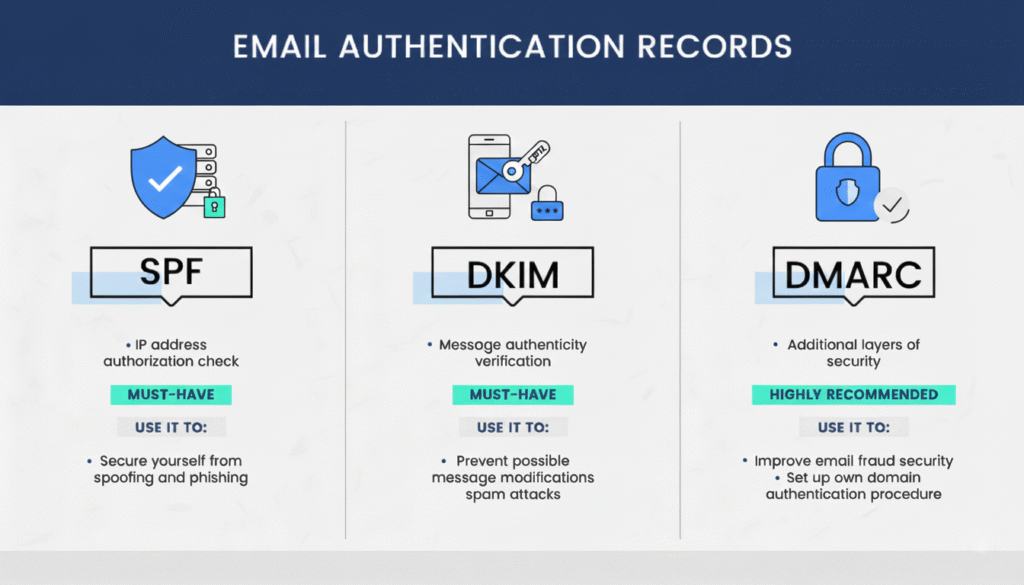
Deliverability directly impacts campaign effectiveness. Set up SPF, DKIM, and DMARC to authenticate emails and prevent them from landing in spam folders. Regularly remove inactive users, manage bounces, and avoid spam-like content. Monitoring these metrics protects the agency’s sending reputation and ensures subscribers consistently receive the intended messages. Maintaining clean, engaged lists supports strong results and maximizes the ROI of campaigns. Agencies that prioritize email hygiene excel at delivering high-performance email marketing for agencies services, keeping client campaigns effective and reliable.
Step 8: Track Metrics & Analyze Performance
Monitoring performance is essential for ongoing improvement. Measure metrics like open rates, click-through rates, conversions, unsubscribe rates, and revenue per email. Identify trends and test variables such as subject lines, images, calls-to-action, and content formats. Use data to refine targeting, personalization, and workflow strategies. Agencies can also compare results across clients to identify successful patterns and implement best practices. By analyzing results continuously, email marketing for agencies becomes data-driven, measurable, and optimized for stronger engagement and higher ROI.
Step 9: Optimize & Scale Across Clients
Once workflows and templates prove successful, replicate them across other clients. Build internal libraries of content blocks, automation workflows, and reporting dashboards. Standardization improves efficiency, reduces manual effort, and ensures consistent campaign quality. Continuously review metrics, test new strategies, and refine workflows to maximize performance. Scaling effective campaigns allows agencies to take on more clients without sacrificing quality. Optimization and scaling are critical for email marketing for agencies, enabling teams to expand their offerings, increase revenue, and establish themselves as trusted, results-oriented partners for every client.
Building a Successful Email Strategy for Clients
A successful email marketing plan requires a clear structure. Here’s how agencies can craft campaigns that deliver results.
1. Audience Understanding and Segmentation
A strong email strategy begins with understanding the audience. Agencies should analyze demographics, interests, behaviors, and customer intent to create meaningful segments. This prevents the common issue of sending the same message to everyone, which often leads to lower engagement and unsubscribes. Behavioral segmentation, based on actions such as clicks, past purchases, or browsing history, helps agencies send relevant messages at the right moment. With email marketing for agencies, personalization becomes easier and more impactful. Tailored subject lines, product recommendations, and dynamic content blocks make emails feel highly individualized.
Agencies can build separate content streams for new subscribers, loyal customers, and inactive users, ensuring each group receives content suited to their journey. Customer lifecycle mapping further strengthens segmentation by outlining each stage from awareness to loyalty. This allows agencies to design targeted sequences that nurture relationships, drive conversions, and encourage repeat engagement.
2. Crafting High-Performance Email Content
Content determines whether subscribers read, click, or convert. Agencies must craft messages that balance creativity, clarity, and strategy while aligning with the client’s brand voice. Subject lines significantly influence open rates, so they should be clear, engaging, and tailored to subscriber intent. Inside the email, readability is key, short paragraphs, clean spacing, and strong calls-to-action help maintain interest. Strategic visuals such as banners, product grids, and lifestyle images enhance the overall experience and guide the reader’s eye. For agencies offering email marketing for agencies services, consistent branding across colors, fonts, and layout is essential.
A value-first approach works best; offering tips, insights, or exclusive content builds trust before introducing promotions. A/B testing various elements, such as subject lines, CTAs, and imagery, helps identify what resonates most. Over time, this data-driven refinement produces stronger campaigns with better engagement and conversions.
3. Automation and Workflows for Scalable Success
Automation is a major advantage of email marketing for agencies because it ensures consistent communication without daily manual effort. Common workflows like welcome series, abandoned cart reminders, post-purchase messages, and re-engagement campaigns operate automatically and deliver ongoing value. Each flow serves a purpose: welcoming new subscribers, recovering lost sales, encouraging repeat purchases, or reactivating inactive users. Agencies should customize these workflows based on client goals and subscriber behavior to maximize impact. Automations also align communication with different intent levels, high-intent users can receive promotional offers, while early-stage leads can receive educational content. Another benefit is scalability.
Once strong frameworks are created, agencies can replicate and adjust them across multiple clients, improving efficiency and profitability. Monitoring performance is essential; metrics such as deliverability, open rates, and conversion timing reveal where improvements are needed. Refined automations strengthen client satisfaction and long-term email performance.
Conclusion
Email marketing for agencies offers a unique opportunity to deliver predictable, scalable, and high-impact results for clients across industries. By combining clear strategies, audience segmentation, and personalized content, agencies can create campaigns that resonate with subscribers, drive engagement, and convert prospects into loyal customers. Automation and workflows enable teams to manage multiple clients efficiently, ensuring timely and relevant communication while reducing manual effort. Monitoring key metrics, maintaining list hygiene, and refining campaigns based on performance data further enhance results and build client trust.
Agencies that replicate successful templates and processes across clients can scale their operations while maintaining quality and consistency. Ultimately, email marketing is not just a communication tool but a strategic growth engine. By mastering its nuances, agencies strengthen client relationships, improve retention, and deliver measurable ROI, establishing themselves as reliable, results-driven partners in today’s competitive marketing landscape.