

Surprisingly, many brands today still underestimate the power of digital conversations happening around them. Every second, thousands of discussions take place across social media, online communities, blogs, and review platforms shaping brand perception and influencing buying decisions. Choosing the best tools for social listening becomes essential for businesses that want to stay ahead of trends, understand customer needs, and respond to real-time feedback. These tools help companies detect conversations about products, services, industry topics, and competitors, enabling informed decision-making.
Similarly, the growing demand for best free social listening tools shows that marketers and startups are looking for cost-effective ways to monitor online mentions without compromising on insight. Whether managing brand reputation or uncovering customer sentiment, social listening software helps identify opportunities for engagement and strategic improvement. With the right platform, organizations can transform raw online chatter into actionable insights that guide product innovation, content strategy, and marketing performance.
What Is Social Listening Tool?
Social listening is the process of tracking online conversations across social media networks, blogs, news outlets, and review websites to understand how people feel about a brand, industry topic, or competitor. Unlike traditional monitoring, social listening goes deeper by analyzing sentiment positive, negative, or neutral and uncovering patterns in audience behavior. It helps businesses discover trends early, respond to customer concerns, and take strategic actions that improve overall digital presence.
The Top social media listening tools provide real-time analysis that gives teams the ability to react quickly and leverage insights for better engagement. Social listening goes beyond counting likes or comments; it focuses on understanding the meaning behind what customers say and predicting what they may need next. When used effectively, it supports product development, customer care, influence tracking, and crisis management, making it a critical part of modern digital marketing.
How to Choose the Right Social Listening Tool for Your Needs
- Identify your goals clearly : Determine whether you want to track brand sentiment, competitor performance, campaign results, or industry trends. Understanding your purpose helps select a tool with the right analytical capabilities instead of unnecessary features. The clearer your goals, the better you can measure ROI and efficiency.
- Check platform coverage and integrations : choose a tool that monitors multiple digital channels like social media, forums, review sites, and news sources. Integrations with CRM, analytics tools, and automation platforms improve data flow and decision-making value while making usage easier for marketing teams.
- Look for real-time analysis and sentiment tracking : Tools that offer instant notifications and detailed sentiment insights enable quick responses to customer feedback, potential crises, or trending opportunities. Fast access to insights ensures proactive communication instead of reactive fixes, strengthening brand reputation.
- Evaluate reporting and data visualization : Look for dashboards, custom reports, and automated insights that help your team understand performance clearly. Strong visualization makes data easier to interpret and share with stakeholders for strategic planning and timely decision-making.
- Consider pricing and scalability : Compare plans for individuals, small businesses, and enterprises. The best tools for social listening offer flexible options based on features and user needs. Review trial versions and free plans to ensure you choose a platform that grows with your business instead of becoming cost-heavy later.
- Review customer support and training resources : Choose tools that include onboarding guides, educational tutorials, customer success support, and active community assistance. Strong support ensures easier implementation and better long-term adoption.
8+ Best Tools for Social Listening
The best tools for social listening to monitor brand mentions, analyze audience sentiment, and track trends across social platforms. These tools help businesses improve engagement, protect reputation, and make data-driven marketing decisions.
1. Digimind
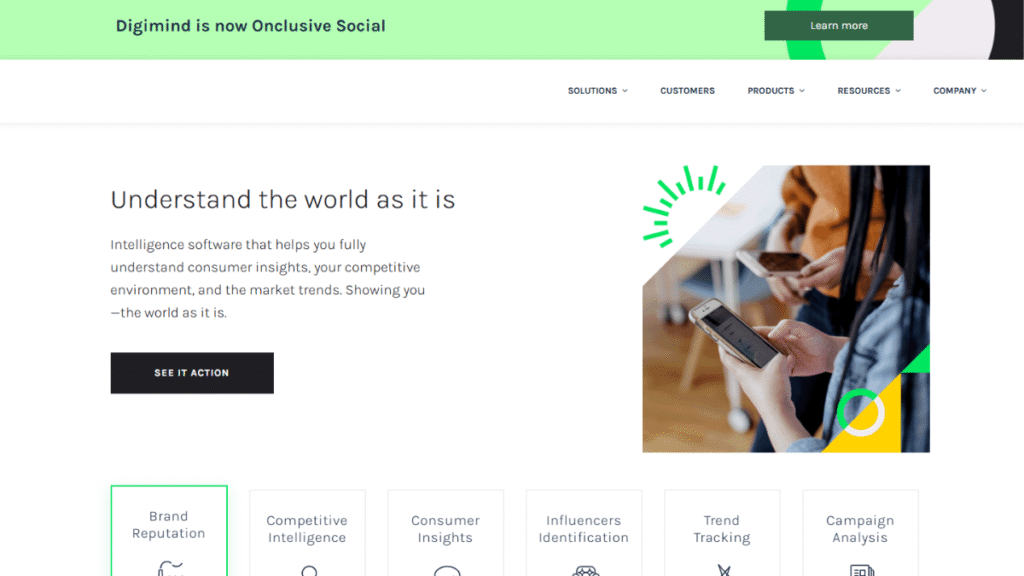
Digimind is a powerful social listening and competitive intelligence platform designed for brands that want deep insights across global digital conversations. It tracks millions of online sources including social networks, blogs, forums, review platforms, and news websites. With advanced sentiment analytics, businesses can understand how people feel about their products, services, and competitors. Digimind is popular among enterprises that rely on real-time monitoring and data-driven decision-making.
It also includes strong reporting features and AI-powered visual dashboards that simplify large-scale analytics. The platform helps marketers identify opportunities, potential crises, and emerging trends early before they affect brand reputation.
Key Features:
- Real-time global monitoring and insights
- AI-powered sentiment and trend analysis
- Competitor tracking and benchmarking
- Custom dashboards and automated reporting
- Multi-platform coverage including news, forums, and blogs
2. YouScan
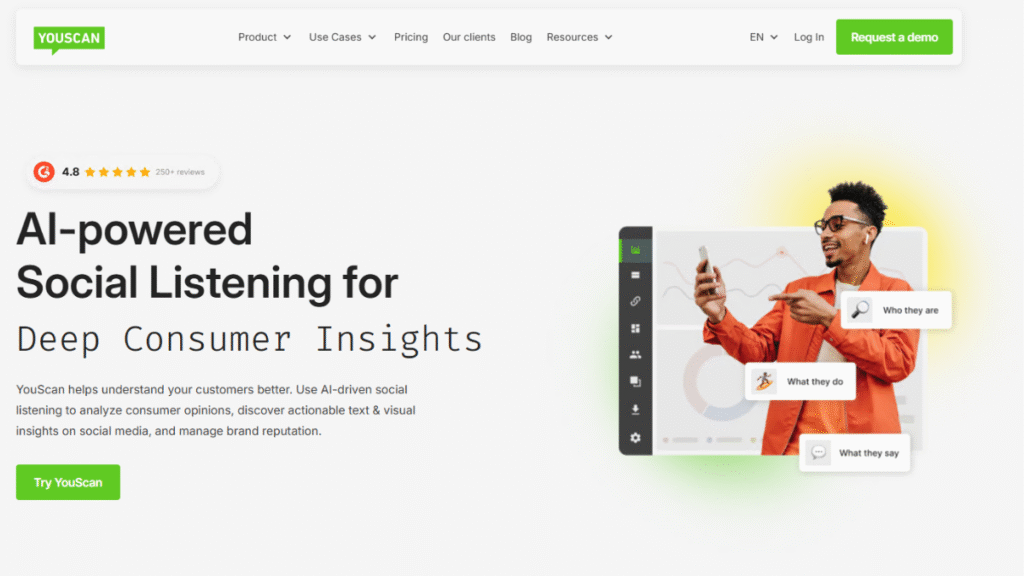
YouScan specializes in visual insights, using advanced image recognition to analyze logo appearances across online content and social conversations. It helps brands monitor visual mentions and contextual meaning even when text tags are missing. YouScan is especially valuable for companies relying heavily on branding visibility, product packaging, and influencer content.
The platform provides accurate sentiment analytics and helps businesses understand audience preferences and behavior. It supports market research, customer feedback monitoring, and real-time engagement across marketing departments.
Key Features:
- AI-based image and logo recognition
- Advanced sentiment and topic analysis
- Consumer insights and trend discovery
- Community and influencer identification
- Real-time alerts for brand activity
3. Buffer
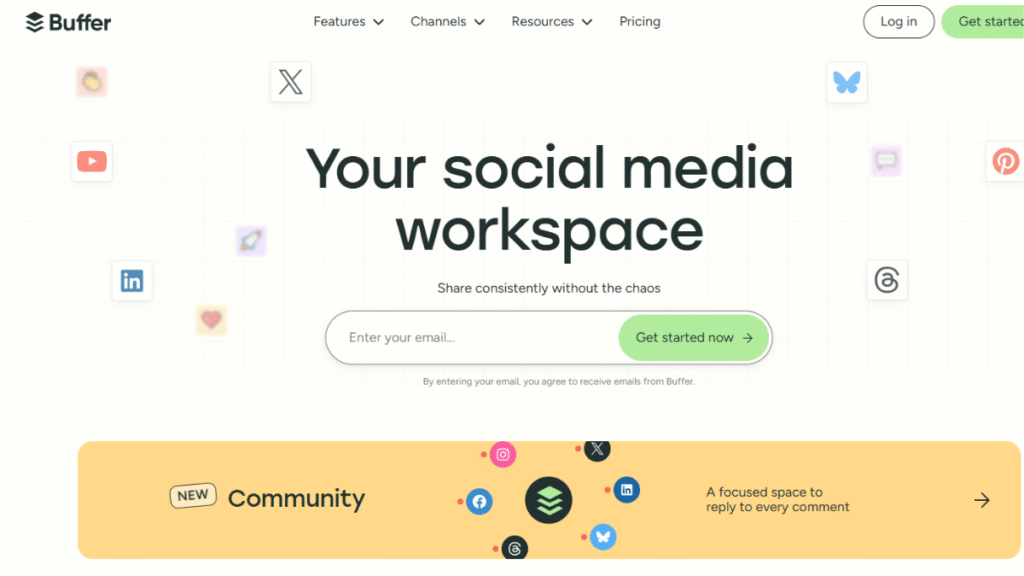
Buffer offers social media scheduling combined with monitoring and engagement features that allow brands to understand audience feedback and conversation patterns. It is user-friendly, making it ideal for small businesses and individual creators. While primarily known for publishing tools, Buffer includes analytics and comment tracking functions that support performance review and engagement strategy improvement.
Buffer provides insights into post interactions and audience sentiment, helping users refine messaging and timing. It is a great entry-level platform for managing multiple channels efficiently and gaining basic listening insights.
Key Features:
- Unified dashboard for scheduling and tracking
- Engagement monitoring and response tools
- Multi-platform support for social channels
- Analytics for performance optimization
- Affordable plans including free options
4. Awario
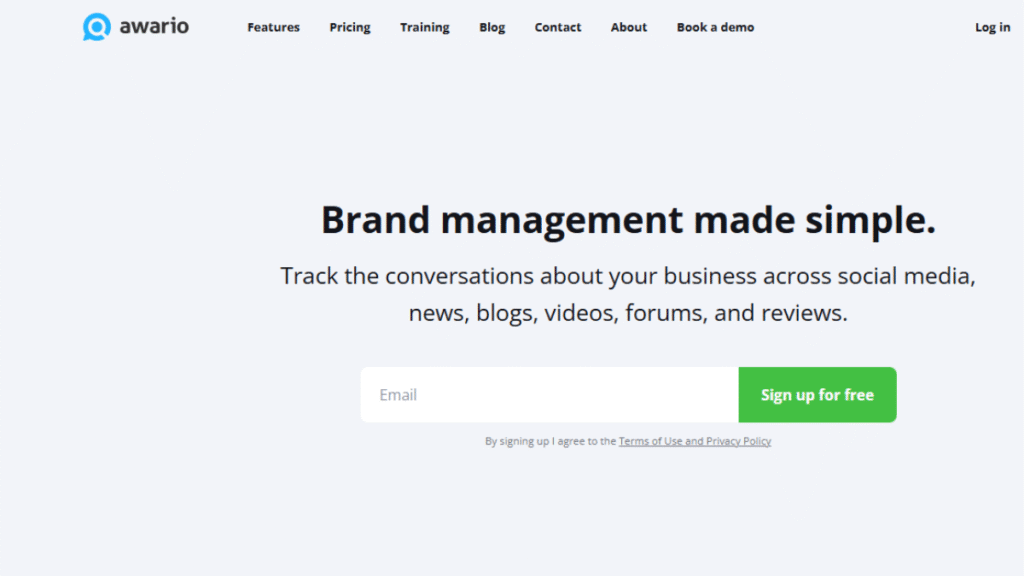
Awario is one of the best tools for social listening for brands seeking real-time monitoring with powerful sentiment insights and lead-generation capabilities. It helps businesses track brand mentions, competitor activity, and industry keywords across social media, blogs, news outlets, and forums. With its Boolean search feature, users can refine tracking accuracy and discover meaningful conversations relevant to marketing and growth.
The tool is particularly useful for startups and agencies looking for deep insights at budget-friendly pricing. It also identifies potential customers looking for product recommendations in real time.
Key Features:
- Real-time brand mention tracking
- Audience sentiment and trend measurement
- Competitor monitoring and comparisons
- Boolean search for accurate filtering
- Influencer and lead identification
5. Talkwalker
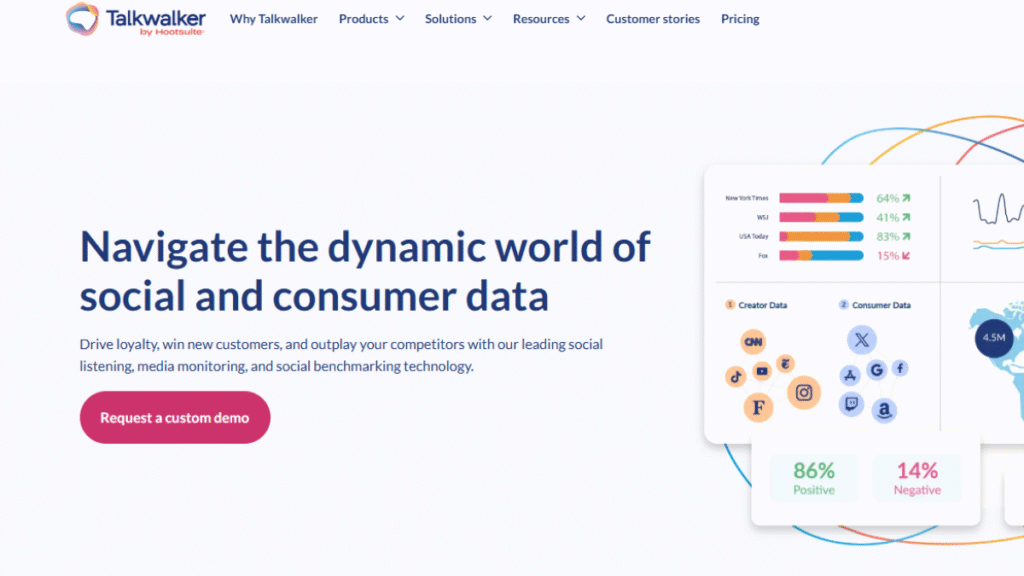
Talkwalker is a premium enterprise-level platform offering massive data coverage, including print and broadcast media. It delivers AI-powered sentiment and predictive analytics, enabling brands to identify emerging trends before they peak. The platform is widely used by global corporations and research teams because of its high accuracy and extensive reporting capabilities.
Talkwalker also supports visual analytics and global language recognition, making it suitable for cross-market campaigns and brand monitoring projects.
Key Features:
- AI and predictive analytics
- Large database including offline media
- Visual analytics and logo detection
- unified reporting dashboards
- Crisis alerts and trend forecasting
6. Semrush
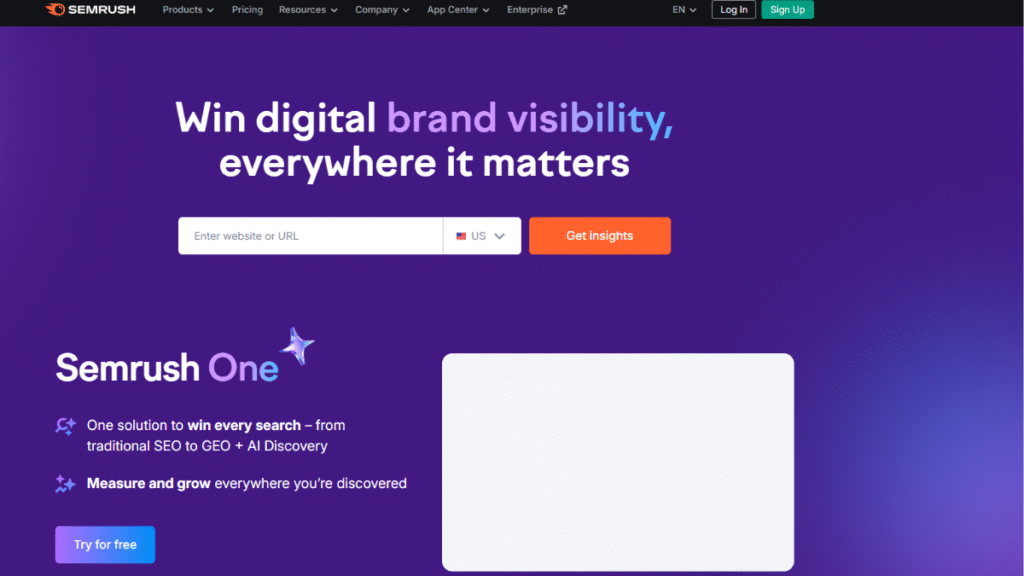
Semrush is well-known for SEO and content analytics, but its social media listening features also make it a strong competitor among digital insight tools. It helps businesses track online mentions, competitor activities, keyword performance, and industry sentiment related to brand campaigns. The platform’s combined analytics across content, SEO, and social engagement provide a comprehensive understanding of digital presence.
It is particularly useful for marketing teams that want unified insights without managing multiple tools.
Key Features:
- ➤ Multi-channel brand monitoring
- ➤ Competitor trend tracking
- ➤ Audience sentiment and engagement insights
- ➤ Integrated SEO and content analytics
- ➤ Automated reports and data visualization
7. Zoho Social
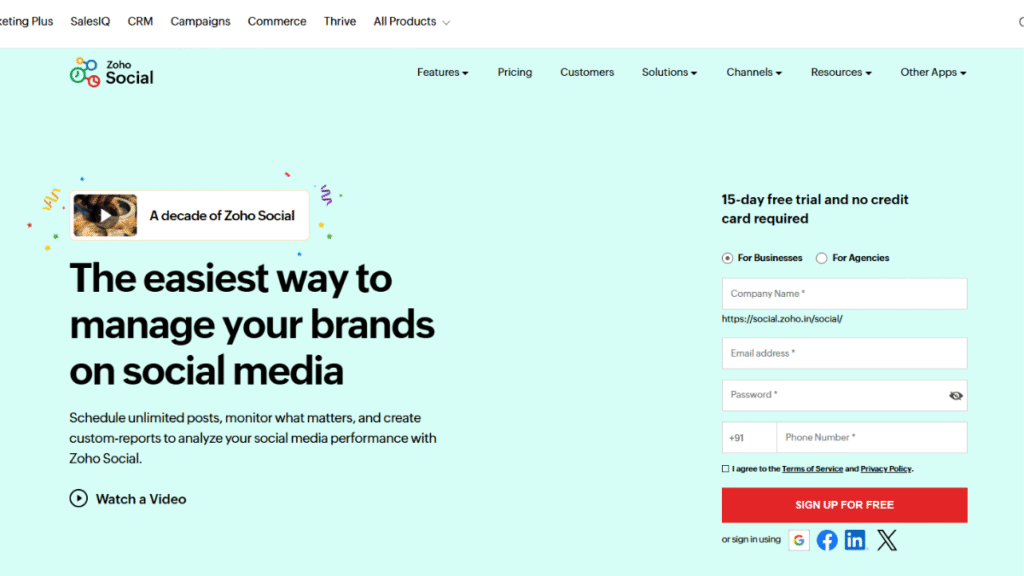
Zoho Social is a complete social media management platform that includes monitoring, analytics, and publishing tools for businesses of all sizes. It enables users to track brand mentions in real time and measure audience engagement across social channels. Zoho Social is part of the larger Zoho ecosystem, making it ideal for users already working with CRM, email marketing, and automation tools.
As one of the best tools for social listening, Zoho Social delivers customizable dashboards and insights that support sales and marketing collaboration efficiently.
Key Features:
- Real-time monitoring of brand mentions
- Integrated social analytics and performance tracking
- Team collaboration and CRM integration
- Automated publishing calendar
- Custom reports and insight dashboards
8. BuzzSumo
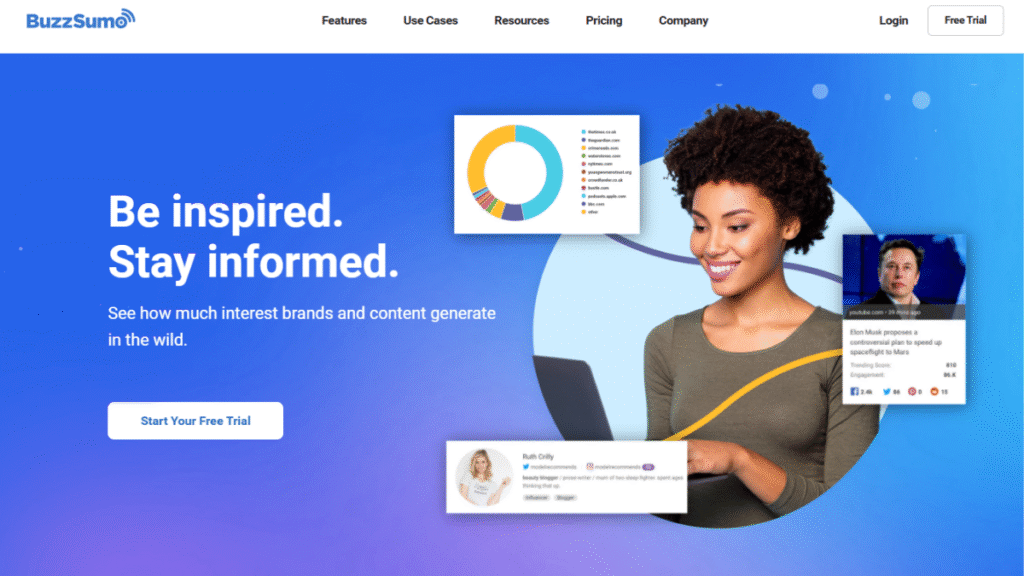
BuzzSumo helps marketers track trending content, analyze audience sentiment, and discover influencers who help amplify brand reach. It provides in-depth insights into top-performing topics and engagement data across platforms. Businesses use BuzzSumo for competitive research, campaign strategy, and content planning.
It is especially useful for identifying opportunities to improve brand messaging and expand reach through strategic collaboration.
Key Features:
- Trend and content performance tracking
- Influencer and creator insights
- Brand and competitor monitoring
- Engagement analytics and alerts
- Keyword and topic research
9. Keyhole
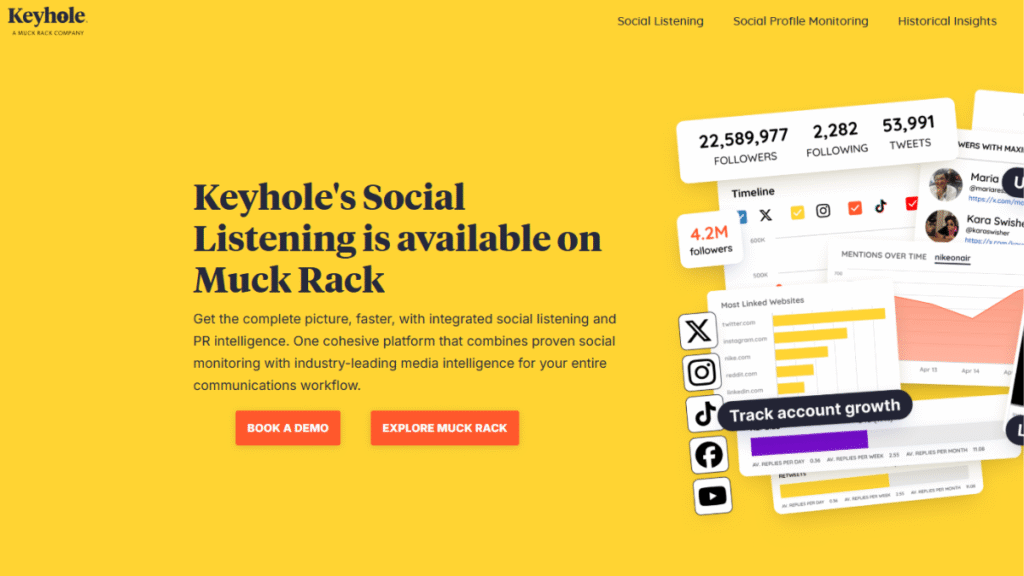
Keyhole focuses on real-time hashtag and keyword tracking, making it popular among social media marketers and event campaign organizers. It delivers accurate analytics around audience engagement, reach, and sentiment, helping brands understand the effectiveness of marketing campaigns instantly. Keyhole is especially useful for tracking influencer partnerships and evaluating ROI.
Its automated dashboards simplify complex datasets, allowing teams to make fast, informed decisions.
Key Features:
- Real-time hashtag and campaign tracking
- Influencer performance analytics
- Audience sentiment insights
- Visual dashboards and automated reporting
- Predictive trend analysis
Use Cases of Social Listening Tools
- Brand Reputation Management: Social listening tools help detect negative feedback or emerging crises before they escalate. Brands can take corrective action, issue responses, or improve service quality based on audience sentiment. Using the best tools for social listening, businesses can protect reputation while increasing customer trust and loyalty through proactive engagement.
- Competitive Intelligence: Companies track competitors’ reviews, campaigns, and product responses, learning what resonates with audiences. This allows them to modify strategic direction and gain competitive advantages. Insights also highlight market opportunities and customer preferences more effectively.
- Customer Feedback and Product Improvement: Social listening tools help analyze customer opinions and pain points across various online channels. These insights assist in redesigning features, launching new products, and meeting actual demand instead of assumptions. Brands build products guided by user experience rather than guesswork.
- Trend & Market Opportunity Discovery: Social listening identifies early signals of new trends and consumer behavior patterns. Brands use these insights to create relevant campaigns, plan content strategies, and introduce timely product innovations. By tracking trending topics, hashtags, and discussions, organizations can enter the market at the right moment. This enables businesses to stay highly competitive and establish authority as industry trendsetters.
- Influencer & Partnership Identification: The tools help discover influencers, brand advocates, and online communities actively shaping public opinion. Businesses can analyze engagement quality, audience interests, and authenticity to choose strong partnerships. Understanding influencer impact allows brands to scale campaigns with trusted voices instead of random guesses. This strategic collaboration leads to increased visibility, brand credibility, and more meaningful customer connections.
- Campaign Performance Measurement : Social listening tools measure how audiences react to marketing campaigns in real time. Businesses can evaluate campaign success, track engagement, understand sentiment, and identify areas for improvement. These insights guide optimization efforts, helping brands increase impact and avoid costly mistakes. Real-time visibility supports ongoing adjustments, ensuring better outcomes and higher marketing ROI.
Conclusion
The best tools for social listening empowers brands to transform online conversations into strategic actions that drive measurable business success. With real-time insights, sentiment analysis, and competitive tracking, companies can understand what people truly think about their products and services. This enables more effective engagement, better decision-making, and stronger customer relationships.
As digital engagement continues to grow rapidly, ignoring online conversations can result in missed opportunities or reputational risk. Investing in the best social listening platforms ensures brands stay informed, agile, and prepared to adapt to changing market dynamics. Whether using advanced enterprise solutions or starting with free tools, social listening helps companies innovate faster, improve customer experience, and build long-term trust.

Leave a Reply